Welcome to Cherry Times




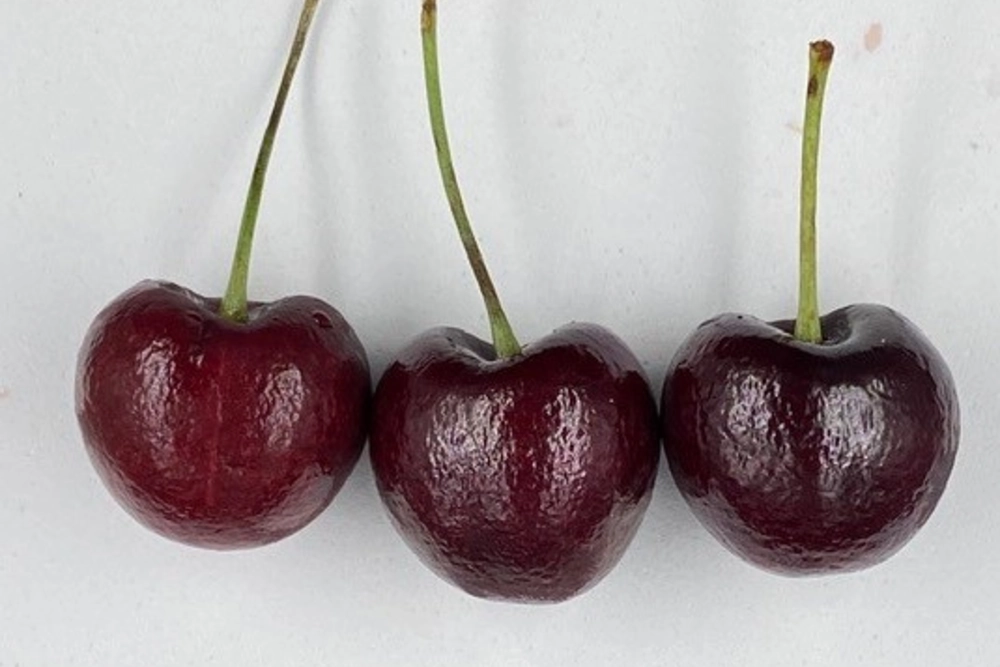 Source: Smartcgerry
For the Chilean cherry industry, long shipments from Chile to Asian markets, driven mainly by the commercial window of the Chinese New Year, represent a crucial challenge from a storage perspective.
During these weeks in transit, multifactorial physiological stress causes serious problems affecting the visual and structural quality of the fruit.
This is reflected not only in stem dehydration or weight loss, but also in changes to key internal parameters such as firmness, acidity and Brix.
It is within this particularly challenging context that the incidence of “lizard skin” (orange peel disorder) has gained increasing importance in recent seasons.
Considering that this cosmetic defect is linked to an internal osmotic imbalance, a fundamental technical question arises for the industry: given the antioxidant power of melatonin, can this elicitor have a tangible effect in counteracting the development of this disorder?
Although melatonin is commonly associated with sleep regulation in humans, in the plant kingdom it acts as a powerful antioxidant, present from germination through to senescence (Arnao and Hernández-Ruiz, 2015).
Its main function is to eliminate reactive oxygen species (ROS), molecules that accelerate cellular deterioration and are mainly produced as a result of the various forms of stress to which plants are exposed during their development (Reiter et al., 2015).
In cherries, this protective effect has been associated with lower weight loss, reduced respiration and better preservation of certain quality parameters during cold storage.
Previous studies have also shown that melatonin can influence stem condition, fruit colour and the accumulation of antioxidant compounds, although these responses depend on the cultivar, dosage and timing of application (Miranda et al., 2020).
For this reason, its use has attracted interest as a potential tool for counteracting the postharvest deterioration of cherries intended for long-distance shipment.
The study was conducted in a commercial orchard in the Los Lagos Region, using the Regina and Lapins cultivars.
The application of melatonin at concentrations of 0.3 and 0.5 mM was evaluated and compared with a control group (0 mM).
Because melatonin is a photolabile molecule, all field applications were carried out strictly during the night-time hours, at 10:00 p.m., in order to prevent photodegradation and ensure optimal uptake and assimilation by the trees and fruit.
The applications were carried out sequentially at the green fruit, veraison and harvest stages (Figure 1).
After harvest, the postharvest evaluation was divided into two analytical approaches.
On the one hand, at the Universidad Austral de Chile in Valdivia, quality parameters were assessed at harvest and a parallel trial was launched, involving weekly monitoring of “lizard skin” through dehydration inside overlapping bags.
On the other hand, to simulate commercial shipping to Asia, a second batch was sent to Ranco Cherries in Rancagua, where it was stored for 35 days at 0 °C under passive modified atmosphere conditions, followed by 3 days at 20 °C to simulate shelf life.
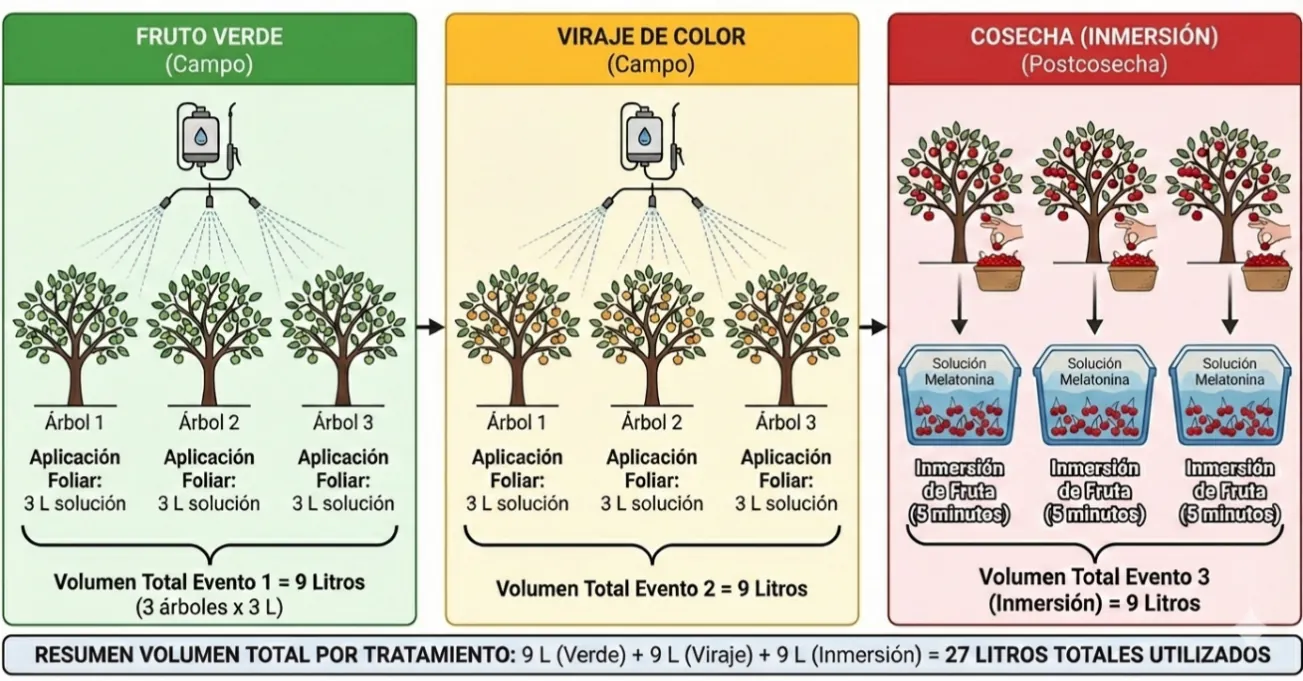 Figure 1. Diagram of the sequential application and volume flow.
The first significant change observed in the field was a marked delaying effect of melatonin on ripening (Figure 2), characterised by lower intensity of skin colour at harvest.
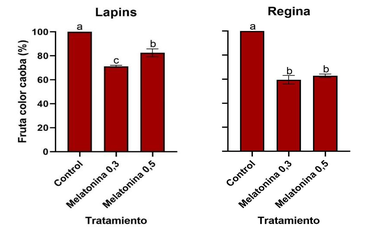 Figure 2. Percentage of mahogany-coloured fruit in cherries of the Lapins and Regina cultivars subjected to exogenous melatonin applications (0.3 mM and 0.5 mM) and in a control group at harvest. Different letters above the bars indicate significant differences among treatments within each cultivar according to Fisher’s LSD test (p ≤ 0.05). Means are reported ± standard error.
Fruit flesh firmness showed variable trends between cultivars and across the different assessment times, with no consistent improvement associated with melatonin application under the conditions considered in the study (Figure 3).
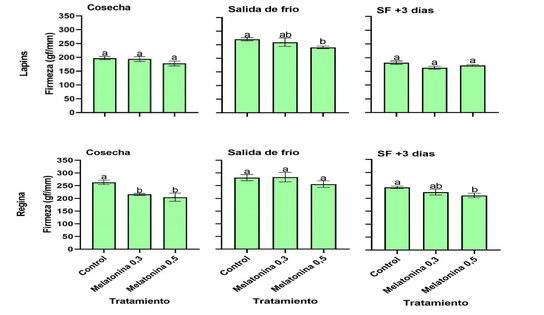 Figure 3. Firmness of cherry fruit from the Lapins and Regina cultivars following melatonin application (0.3 mM and 0.5 mM) and a control treatment at three assessment times. Different letters indicate significant differences between each dose and the corresponding control treatment for the same cultivar and assessment time, according to Fisher’s LSD test (p ≤ 0.05). Means are reported ± standard error.
In Lapins, a significant difference compared with the control was observed only at the end of cold storage, when melatonin-treated fruit was softer than the control fruit.
In Regina, the same difference was observed, but already from harvest.
Overall, a trend towards loss of firmness emerged with the use of melatonin.
It should be noted that the firmness values recorded at the end of cold storage were higher than those measured at harvest across all treatments.
This apparent increase could be explained by sample variability or by a common postharvest thermo-mechanical effect: the low temperature and high fruit turgor inside MAP packaging increase physical resistance during measurements, unlike the more elastic tissues of freshly harvested fruit analysed at room temperature (Toivonen and Brummell, 2008).
The protective effect on the stem varied depending on the cultivar and the dose used (Figure 4).
In Lapins, after 35 days of storage at 0 °C, both concentrations of melatonin maintained a significantly higher percentage of green stems compared with the control, in which a higher proportion of green-brown and brown stems was observed.
In Regina, although the melatonin treatments showed brown stems at harvest, after 30 days of storage this percentage was not higher than in the control.
This highlights that melatonin can maintain a slightly higher proportion of green stems, confirming its biological function as an agent capable of delaying senescence in vegetative tissues.
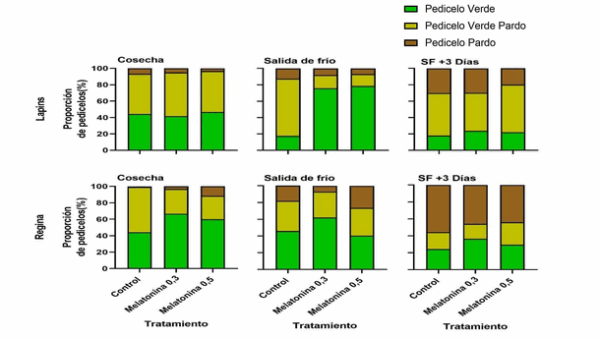 Figure 4. Changes in stem condition, expressed as a percentage, in the Lapins and Regina cultivars following melatonin application (0.3 mM and 0.5 mM) and a control treatment at three assessment times. The stacked bars represent the average percentage of stems visually classified as green, green-brown and brown for each treatment.
To accurately measure the temporal progression of this disorder, an independent trial was established to induce damage in the cherries and monitor its development weekly over time (Figure 5).
From each experimental unit, represented by one tree, a sample of 20 fruit was collected, for a total of 60 fruit per treatment.
The cherries were stored and assessed individually in cardboard trays, ensuring that there was no physical contact between the fruit and thereby facilitating progressive monitoring and unique identification throughout the weeks.
The trays were covered with overlapping, non-airtight polyethylene bags.
The technical objective of this open packaging was not to restrict gas exchange or create a functional modified atmosphere, but rather to expose the fruit to slow, constant and prolonged dehydration at a fixed temperature of 0 °C for 35 days.
At weekly intervals, on days 0, 7, 14, 21, 28 and 35, each cherry was evaluated gravimetrically on an individual basis and visually classified according to the subjective severity scale (PUC), based on the percentage of affected skin surface: Healthy (0%), Mild (5–25%), Moderate (25–50%) and Severe (50–100%).
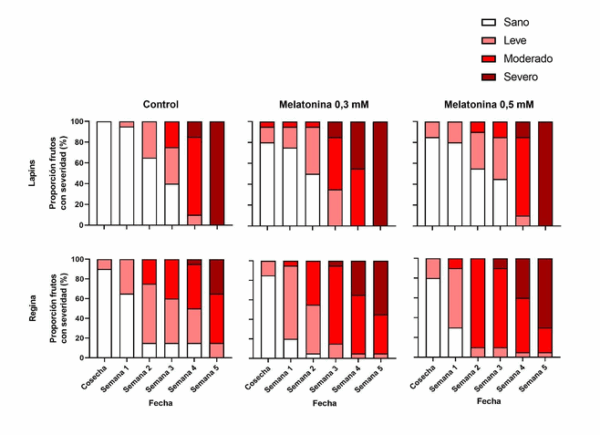 Figure 5. Changes in the severity of the “lizard skin” disorder, expressed as a percentage, in cherries of the Lapins and Regina varieties treated with melatonin (0.3 mM and 0.5 mM) and in a control sample during storage at 0 °C. The stacked bars represent the average percentage of fruit visually classified as healthy or showing mild, moderate and severe symptoms for each week of storage.
The chronological monitoring conducted over the 35 days revealed clearly different behaviour between the two cultivars, demonstrating that melatonin was not only ineffective in controlling this physiological disorder, but under certain conditions actually accelerated its development.
In the Lapins cultivar, the disorder appeared later, but showed an aggressive progression.
Although the damage remained under control during the first few weeks, tissue deterioration accelerated sharply towards the end of the trial, causing 100% of the fruit to reach the highest level of severity by day 35, with neither of the doses used providing a protective effect.
In Regina, the disorder appeared earlier, with a high proportion of fruit, approximately 35%, already showing mild severity from the first week of storage.
Regardless of the melatonin dose used, 0.3 or 0.5 mM, and regardless of the cultivar, this elicitor not only failed to reduce “lizard skin”, but actively increased its incidence.
Melatonin was not effective in controlling “lizard skin”.
The disorder developed with high severity and appeared earlier than in the control treatment.
The research also showed that both doses produced negative effects and that the response varies depending on the genotype.
Overall, it can be stated that melatonin slightly reduced firmness compared with the control fruit, while providing limited preservation of stem condition.
Other quality parameters, including weight, sugar content and colour, did not show any particularly significant effects (data not shown).
From an operational and commercial perspective, the delay in colour development observed in both cultivars before harvest could be considered an advantage, as it could allow the harvest date to be postponed.
However, both melatonin doses were shown to accelerate the onset of the “lizard skin” disorder, without producing any substantial improvement in the quality parameters analysed.
Furthermore, melatonin costs remain very high, and the product is currently available mainly in small-scale formats intended for scientific research.
It is estimated that the application cost could reach approximately US$13,000/ha (around €11,351.30/ha) for three applications (Carrión, 2025).
Therefore, under the conditions analysed in this study, its potential commercial use by the industry is not recommended.
We thank Ranco Cherries La Unión for its contribution to the supply of fruit, for providing the facilities used for the melatonin applications, and for its logistical support with transportation.
Fondecyt Regular Project #1261616.
Arnao, M. B.; Hernández-Ruiz, J. 2015. Functions of melatonin in plants: a review. Journal of Pineal Research, 59(2), 133-150.
Carrión, A. 2025. Improving cherry quality at harvest and during storage through the use of elicitors. Doctoral thesis, Universidad Miguel Hernández de Elche, Spain. 188 pp.
Miranda, S., Vilches, P., Suazo, M., Pavez, L., García, K., Méndez, M. A., González, M., Meisel, L. A., Defilippi, B. G., & del Pozo, T. (2020).
Melatonin triggers metabolic and gene expression changes leading to improved quality traits of two sweet cherry cultivars during cold storage. Food Chemistry, 319, 126360. https://doi.org/10.1016/j.foodchem.2020.126360
Reiter, R. J.; Tan, D. X.; Zhou, Z.; Cruz, M. H. C.; Fuentes-Broto, L.; Galano, A. 2015. Phytomelatonin: assisting plants to survive and thrive. Molecules, 20(4), 7396-7437.
Toivonen, P.; Brummell, D. A. 2008. Biochemical bases of appearance and texture changes in fresh-cut fruit and vegetables. Postharvest Biology and Technology, 48(1), 1-14.