Welcome to Cherry Times




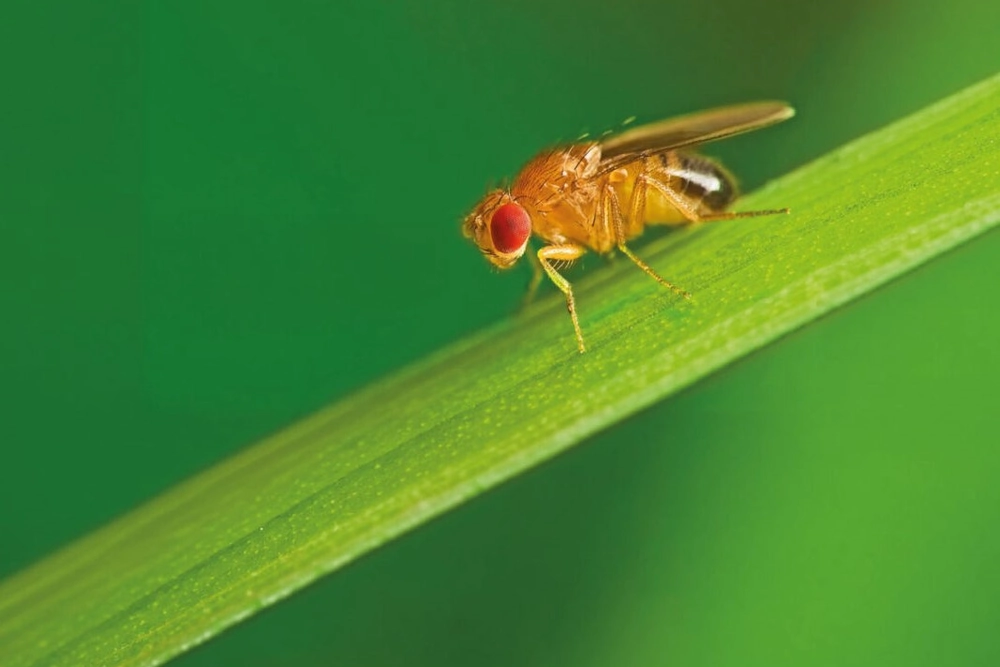 Image source: Patricio Morales
Drosophila suzukii is a pest belonging to the order Diptera. Adults measure between 2 and 4 mm. The species has a high dispersal capacity and can travel several kilometres. Unlike many other species, it lays its eggs on healthy fruit. Each female can lay approximately 350 eggs during her lifetime, each measuring around 0.6 mm in length. Damage develops from the inside out, directly compromising fruit quality and marketability.
For chemical control, insecticides belonging to the spinosyn family (spinosad and spinetoram) and the anthranilic diamide family (cyantraniliprole) are important options within the crop protection programme. However, it is essential to include other active ingredients with different modes of action to prevent the development of resistance.
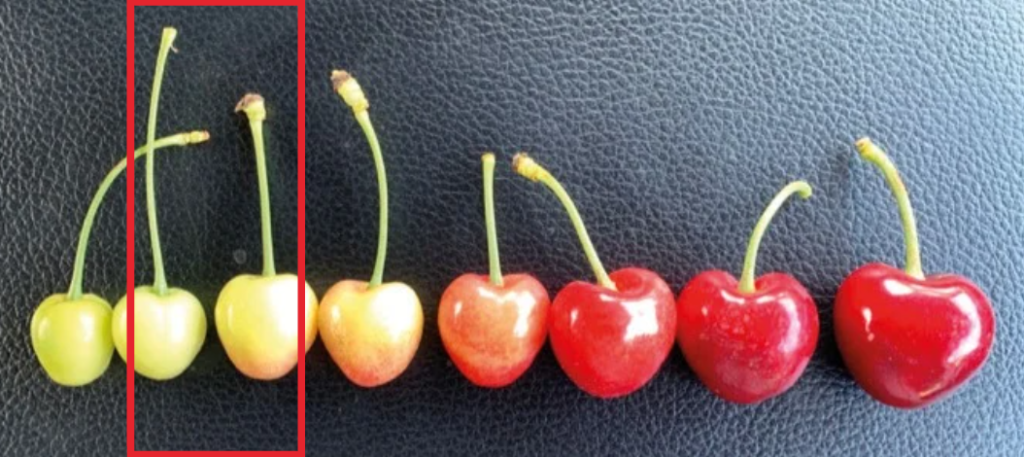
For the management of moths and D. suzukii, treatments should begin at the fruit colour-break stage and continue through the straw-colour stage. The protection programme should be maintained until the end of harvest.
Treatments are recommended at intervals of 5–6 days, adjusted according to product persistence and weather conditions. Active ingredients such as lambda-cyhalothrin, spinetoram, spinosad and cyantraniliprole should be rotated, provided they are authorised for the crop and target pest. Pre-harvest intervals and the restrictions stated on the label and imposed by the destination market must be observed.
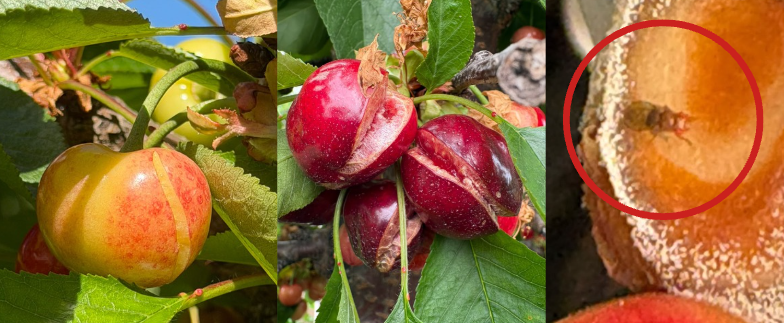
Because of the rainfall recorded this season and the presence of fruit cracking, controlling D. suzukii has become considerably more challenging. Damaged fruit is more susceptible to infestation, while rainfall can reduce the persistence and effectiveness of applied insecticides.
It is therefore recommended to intensify pest monitoring, ensure adequate spray coverage and strengthen orchard sanitation measures. In particular, cracked, overripe or fallen fruit should be removed to reduce breeding sites and population pressure during the harvest period.
Effective rotation of insecticide modes of action is essential. Consecutive applications of products belonging to the same IRAC group should be avoided to reduce the risk of resistance developing.
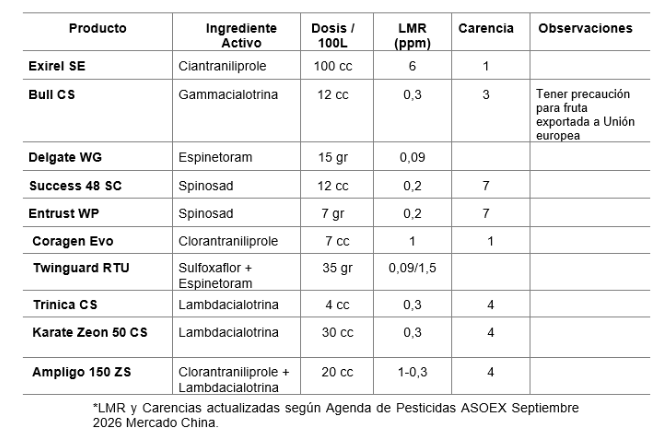
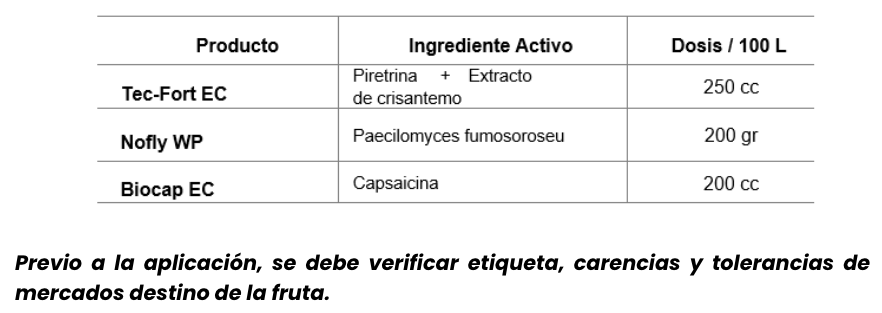
During harvest, zero-residue products or products with no pre-harvest interval should be used to control D. suzukii.
The control programme for Drosophila suzukii should begin when the fruit reaches the straw-colour stage (see image). The first treatment should be applied promptly to prevent egg laying and stop the pest from becoming established in the fruit.
It is essential to maintain a treatment schedule at 5–6-day intervals, adjusting it according to pest pressure and the persistence of the products used, and to continue protection until the end of harvest.
This pest poses a significant risk to production: females can lay eggs directly in healthy fruit, causing damage that compromises fruit quality and marketability and can lead to substantial economic losses.
For this reason, preventive control, constant monitoring and appropriate rotation of active ingredients are essential to reduce the risk of resistance.