Welcome to Cherry Times




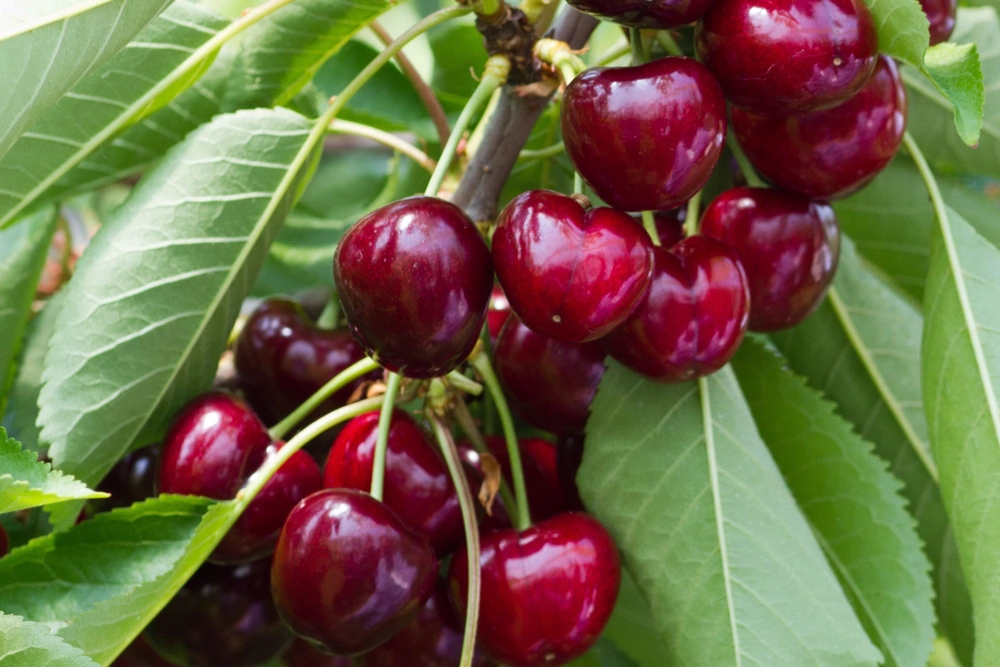 Source: Stefano Lugli
Cherry quality begins to take shape well before harvest. Final fruit size, firmness, soluble solids concentration, acidity, colour and the ability to maintain these characteristics during storage depend on physiological processes occurring simultaneously within the tree.
Mineral nutrition is part of this system, as it connects nutrient availability in the soil and water with root uptake, reserves accumulated in perennial organs, their redistribution among different tissues and the changing demands of leaves, shoots and fruit.
In a perennial, grafted crop such as sweet cherry, mineral status cannot be separated from the rootstock, cultivar, crop load, water availability, soil or phenology. The same leaf concentration may have different meanings when any of these factors changes. Likewise, a concentration compatible with adequate growth does not, by itself, guarantee that fruit size, firmness or postharvest storage potential will reach their best expression.
It is therefore useful to distinguish between three levels that are often confused: nutrient availability, tree nutritional status and fruit response. The three aspects are interconnected, but they represent different phenomena.
Leaf analysis is one of the most useful tools for assessing the mineral status of sweet cherry trees. Its interpretation requires comparing the sample with a reference range compatible with the tissue analysed and the timing of sampling.
This aspect is particularly important because different reference systems exist and their ranges are not identical. Washington State University (WSU), Chile’s Instituto de Investigaciones Agropecuarias (INIA) and several Spanish sources use their own ranges, defined or adopted for different protocols and conditions. The overlap may be considerable, but the extreme values vary enough to alter the classification of the same sample.
| Reference | N (%) | P (%) | K (%) | Ca (%) | Mg (%) |
|---|---|---|---|---|---|
| WSU – Washington | 2.00–3.03 | 0.10–0.27 | 1.20–3.30 | 1.20–2.37 | 0.30–0.77 |
| INIA – Chile | 2.8–3.2 | 0.30–0.35 | 1.4–1.8 | 1.9–2.5 | 0.4–0.5 |
| Spain – national guide (Espada Carbó, 2010) | 2.5–2.8 | — | 1.75–2.00* | 1.5–2.0 | 0.25–0.40 |
| Murcia – Integrated Production | 2.0–2.5 | 0.13–0.35 | 1.5–3.0 | 1.6–2.5 | 0.3–1.2 |
| Extremadura – Integrated Production 2026 | 1.80–3.00 | 0.14–0.35 | 1.00–3.00 | 1.00–3.00 | 0.30–0.60 |
* The Spanish national guide considers K <0.9% deficient and 1.75–2.00% adequate. WSU also publishes a range for S of 0.20–0.40%.
Sources: Sallato (2021), Corradini (2023), Espada Carbó (2010), Region of Murcia (2014) and Junta de Extremadura (2026).
The ranges retain the protocol and scope of application of each source and should not be averaged together. The comparison is useful precisely because it shows that there is no single universal numerical profile of a “properly nourished sweet cherry tree”.
An N value of 2.4%, for example, falls within the ranges published by WSU, Murcia and Extremadura, but is below the expected values published by INIA Chile and the Spanish national guide.
The sampling period also varies. WSU generally recommends recently mature leaves collected from the middle section of non-fruiting shoots or non-bearing spurs in the central part of the canopy during July–August under Washington State conditions. The Spanish national guide places sampling at harvest or 45 days after F2, while Extremadura associates its guideline levels with the period of nutritional stabilisation, approximately 12 weeks after full bloom, with a margin of ±10 days.
The analytical value therefore becomes meaningful when it is known how, where and when the sample was obtained. It can then be assessed whether this mineral status has a measurable expression in the fruit.
Nitrogen supports essential processes in sweet cherry trees: leaf expansion, protein synthesis, photosynthetic activity, vegetative growth and the formation of reserves. These reserves are particularly important because part of the N used in early spring comes from perennial organs, before root uptake during the new season reaches its maximum contribution.
From a quality perspective, experimental evidence shows a response that clearly depends on the system.
Over three seasons, from 2003 to 2005, Neilsen et al. (2007) evaluated three N concentrations in ‘Lapins’ on Gisela 5 — 42, 84 and 168 mg N L⁻¹ — applied as calcium nitrate through micro-sprinkler fertigation for approximately eight weeks after full bloom. The highest supply reduced fruit size and titratable acidity; however, firmness and soluble solids showed no significant differences attributable to N.
Swarts et al. (2017) studied 10-year-old ‘Lapins’ trees on F12-1 in Tasmania. They applied 0, 25, 50 or 75 g N tree⁻¹ as calcium nitrate through drip fertigation, divided into four weekly applications beginning approximately one month after bud break. Increasing N raised the concentration of the element in the fruit, and the highest dose produced significantly less firm fruit in assessments at harvest and after storage.
In another context, Uçgun (2019) studied ‘0900 Ziraat’ on Gisela 5 during 2015 and 2016, using doses of 0, 50, 125 and 250 g N tree⁻¹. Fertilisers were applied beneath the canopy in six equal portions, dissolved in water, between full bloom and harvest. The response was different: firmness and some colour parameters increased.
Comparison of these studies prevents a single consequence for “quality” from being attributed to N. High inputs have been associated with changes in fruit size, acidity, firmness or colour depending on cultivar, rootstock and experimental conditions. For a specific orchard, it is therefore more informative to relate leaf N to vigour, crop load and actual fruit development rather than interpret mineral concentration in isolation.
A tree characterised by strong vegetative growth may be adequately supplied with N and, at the same time, produce a response in terms of fruit size or firmness that should be measured.
Potassium has a particularly interesting relationship with the fruit. It is involved in osmotic regulation, stomatal function, photoassimilate transport and ionic balance, and its demand is closely linked to crop load.
During the 2017 and 2018 seasons, Yener and Altuntaş (2021) studied ‘0900 Ziraat’ on Gisela 6 using 0, 100, 200, 400 and 600 g K₂O tree⁻¹, supplied as soil-applied K₂SO₄ in bands approximately 20 cm deep at the canopy projection. Half was applied before bud break and the other half during flowering.
With 400 g K₂O tree⁻¹, average fruit weight increased from 8.41 to 10.13 g, firmness from 6.63 to 7.94 N and soluble solids from 15.15 to 16.36% compared with the control.
The trend observed when the application rate was increased further is particularly informative. With 600 g K₂O tree⁻¹, leaf K was virtually equivalent to that obtained with 400 g, while leaf Ca decreased from 1.74 to 1.32% and Mg from 0.47 to 0.40%. Firmness also declined to 7.12 N.
The result does not identify an optimal dose transferable to other orchards. However, it shows that the quality response may reach a zone of diminishing returns and that increasing K simultaneously modifies the K–Ca–Mg balance.
In 2015 and 2016, Ateş et al. (2022) applied K₂SO₄ to the soil beneath the canopy in a single application before full bloom, at rates of 0, 500, 1000 and 1500 g tree⁻¹, on 15–20-year-old ‘Ziraat 900’ trees on Prunus padus. The highest dose significantly increased fruit weight, firmness and soluble solids in both seasons; fruit length increased significantly in 2016, but not in 2015. Fruit K increased, while Ca and Mg decreased. Consistency between the two years was therefore greater for weight, firmness and soluble solids than for length.
The comparison with Uçgun (2019) is particularly useful. During 2015–2016, his study on ‘0900 Ziraat’/Gisela 5 began with soil containing 371 mg K kg⁻¹. Increasing K rates produced only minimal changes in the quality variables analysed.
Initial availability is therefore a necessary variable for interpreting the response. K may be limiting for certain quality characteristics in one system while providing little additional response in another system that already has a high supply.
There are also effects on postharvest condition. Bustamante et al. (2021) worked with ‘Regina’ in two commercial orchards in southern Chile for two consecutive seasons at each location — 2018/2019 and 2019/2020 in Perquenco; 2019/2020 and 2020/2021 in Puerto Octay. They compared a conventional programme of four preharvest foliar K applications with an intensive programme of seven applications. The intensive programme improved firmness and acidity in fruit grown under covers in certain location-season combinations, was associated with less cracking at harvest and reduced postharvest pitting. The magnitude and, for some attributes, the significance of these responses depended on location, season and the presence of protective covers.
This experimental design documents the response to a complete application programme, not a universal nutritional requirement or a rate that can be directly transferred to another orchard.
With calcium, the nature of the problem changes. Soil availability is only the beginning of a chain that includes root uptake, internal transport, entry into the fruit and distribution within its tissues.
Most Ca moves through the xylem flow. As the cherry grows, vascular functionality and fruit transpiration affect its accumulation. Winkler et al. (2020) demonstrated that total Ca mass per fruit may continue to increase during development, while its concentration per unit of dry matter decreases because of rapid fruit growth.
Ca is also not distributed uniformly. Among the cultivars studied by Winkler et al. (2020), ripe fruit showed Ca/dry matter ratios ranging approximately from 0.46 to 1.26 mg g⁻¹, and within each fruit the values in the stem-end region were two to three times higher than those in the stylar region.
This helps explain why high soil Ca availability, or even an adequate leaf concentration, does not allow the concentration eventually reached in the cherry fruit to be directly inferred.
Isotopic studies have added new information. Matteo et al. (2026) demonstrated using ⁴⁴Ca that local transfer occurs from the leaves of a fruiting spur to its fruit even at advanced stages of development. The experiment demonstrates transfer, but does not by itself establish which anatomical pathway is responsible.
The penetration of Ca applied directly to the surface of cherry fruit has also been experimentally demonstrated (Winkler & Knoche, 2021a, 2021b). This ability to enter the fruit represents an uptake mechanism, but its existence does not automatically translate into improved firmness or commercial condition.
The quality response must be verified experimentally.
During the 2018/2019 season, Matteo et al. (2022) evaluated 0.8% CaCl₂ foliar applications in ‘Lapins’ on Colt at 26, 39 or 62 days after full bloom, combined with natural crop load or a 50% reduction in fruit number.
The early application produced the highest average firmness at harvest, 85.2 compared with 80.0 Shore units in the control. Applications made at 39 or 62 days reduced cracking in thinned trees. After 45 days at 0 °C, several variables related to fruit condition were strongly influenced by crop load, and firmness showed a significant interaction between crop load and application timing.
The result highlights an aspect that is particularly relevant to orchard management: the response to Ca depends both on its delivery to the fruit and on the stage of development and the crop load supported by the tree.
Boron is generally associated mainly with reproductive growth, flowering and fruit set, but sweet cherry-specific literature also shows responses in fruit composition.
During 2003 and 2004, Wójcik and Wójcik (2006) worked with mature ‘Buttner’s Red’ trees on Mazzard in soil containing 0.31–0.34 mg B kg⁻¹. They compared a soil B application at bud break with spring or autumn foliar sprays. All treatments increased B in flowers and leaves, while flower density, yield, fruit weight, acidity and cracking showed no significant changes. Soluble solids and anthocyanins, however, increased.
The result very clearly distinguishes between nutritional status, yield response and compositional response.
Between 2005 and 2007, Nagy et al. (2010) studied a foliar fertilisation programme in ‘Germersdorfi 3’ on Prunus mahaleb, comparing treatments with K, Ca and B. B was the only treatment to significantly increase all four sugars analysed.
In the highest-intensity treatment, glucose increased from 5.29 to 7.22 g 100 g⁻¹ fresh weight, fructose from 5.12 to 7.11, galactose from 0.27 to 0.81 and sucrose from 0.23 to 0.70 g 100 g⁻¹. At the same time, several organic acids decreased.
The available evidence supports the conclusion that B can modify certain compositional attributes under specific conditions. Translating these findings into a general strategy requires knowledge of the tree’s initial status, the application method and the experimental conditions.
Furthermore, B and Ca have physiological interactions. Bonomelli et al. (2025), using ⁴⁵Ca on three-year-old ‘Regina’ trees, observed that B deficiency reduced recovery of soil-applied ⁴⁵Ca — 29.9% compared with 54.5% when B was at an adequate level — and altered its distribution among organs. The result documents an interaction between the two elements, but does not by itself demonstrate a specific consequence for firmness or commercial quality.
Specific evidence relating to P and Mg is more limited, but provides results of interest.
González-Villagra et al. (2025) studied a commercial ‘Regina’ orchard on Gisela 6 grown under covers in southern Chile during the 2023/2024 season. Beginning at veraison, they applied a commercial formulation containing 44% P₂O₅ as a foliar treatment: two applications at 1.5 L ha⁻¹ or three applications at 2.2 L ha⁻¹, in addition to an untreated P control.
At harvest, no significant differences were observed in average weight, average fruit size or soluble solids.
After 35 days of storage at 0 °C, the highest-intensity treatment was associated, compared with the control, with approximate reductions of 70% in pitting, 31% in dehydration, 56% in orange-peel skin and 29% in internal browning.
The study concerns a single orchard, one season and a specific commercial formulation, so the responses cannot be unequivocally attributed to P or extrapolated as a general recommendation. Its relevance lies in showing that a nutritional intervention may express much of its effect during storage rather than necessarily in variables measured at harvest.
Santos et al. (2024) evaluated five programmes in ‘Burlat’ over three seasons, from 2019 to 2021: foliar treatments with Mg or K applied individually and a positive control receiving 250 g Mg and 100 g K per 100 L of water together. Each programme was applied three times during fruit development and ripening. Some physicochemical variables, including soluble solids and colour, responded in certain years, but the magnitude and direction of the effects changed between seasons.
The comparison must be interpreted while bearing in mind that this “control” was not an unfertilised treatment, but rather a positive control with Mg + K.
Sensory analysis detected no significant effect of treatment or of the treatment × year interaction. The observed physicochemical differences therefore did not translate into a demonstrated sensory change.
| Nutrient | Direction of responses observed in the cited studies | Context required for interpretation |
|---|---|---|
| N | In ‘Lapins’/Gisela 5, high inputs reduced fruit size and acidity, while firmness and TSS showed no significant differences. In ‘Lapins’/F12-1, firmness decreased. In ‘0900 Ziraat’/Gisela 5, firmness increased and some colour parameters changed. | The direction of the response changes between cultivars, rootstocks, rates and systems; it should be related to vigour and crop load. |
| K | In systems showing a response, weight, firmness, TSS and acidity increased. At high application rates, Ca and Mg decreased. In the ‘Regina’ foliar programme study, the intensive regime was associated with less cracking at harvest and reduced postharvest pitting, with responses depending on location, season and protective covers. When soil K was already high, quality variables showed no significant differences. | Initial K status, soil, K–Ca–Mg balance, application method and season. |
| Ca | Early foliar application increased firmness. Later applications in thinned trees reduced cracking. After storage, firmness depended on the crop load × application timing interaction. | Transport to the fruit, developmental stage, crop load and application timing. |
| B | In one study, TSS and anthocyanins increased, while yield, weight, acidity and cracking showed no significant differences. In another, glucose, fructose, galactose and sucrose increased and several organic acids decreased. | Initial B status, application method, cultivar and study conditions. |
| P | At harvest, average weight, average fruit size and TSS showed no significant differences. After 35 days, pitting, dehydration, orange-peel skin and internal browning decreased. | Limited evidence obtained with a specific commercial formulation. |
| Mg | TSS and colour changed in certain seasons; the response depended on the year and sensory attributes showed no significant differences. | Strong seasonal effect and still-limited experimental evidence. |
The direction indicated refers exclusively to the control or reference treatment used in the cited studies and their corresponding experimental conditions. It does not represent a universal nutrient response or a fertilisation recommendation.
The table highlights a fundamental point: quality is a combination of responses rather than a single variable. Fruit size, firmness, composition, colour and storage potential may respond independently and even in different directions.
The case of N is particularly illustrative: firmness decreased in one system, increased in another and showed no significant differences in a third. This apparent contradiction does not invalidate the results; it demonstrates that the nutritional response is conditioned by the system in which it is obtained.
Fruit load is one of the variables most easily overlooked when interpreting an analysis.
Two trees with a similar leaf concentration may support very different amounts of fruit. Crop load modifies mineral demand and the distribution of photoassimilates, water and nutrients among organs. The work of Matteo et al. (2022), for example, demonstrates that crop load and the timing of Ca application interact for certain quality variables.
Something similar occurs with water. Root nutrient uptake depends on the functioning of the root zone and water flows, while the internal transport of certain elements, particularly Ca, is closely linked to the xylem.
The balance between nutrients adds a third level. K, Ca and Mg provide the best-documented example. Large increases in K inputs have been associated in several studies with simultaneous decreases in Ca and Mg. This behaviour supports assessing the entire cation profile when one of its components is significantly altered.
Nutrient ratios can provide additional information, but they do not replace individual concentrations. The same K ratio can result from very different combinations of the two elements and, consequently, represent different physiological states.
For cherries intended for nearby markets, evaluation at harvest may provide much of the commercial information required. For fruit intended for long-term storage or export, however, it may be insufficient.
The studies by Bustamante et al. (2021), González-Villagra et al. (2025), Swarts et al. (2017) and Matteo et al. (2022) show that certain differences related to mineral management may emerge later in the form of firmness, pitting, dehydration, cracking or other disorders.
This introduces an important technological consequence: the evaluation of a nutritional strategy should use the same time horizon expected for the fruit’s commercial destination.
If a batch must maintain its condition for four or five weeks, the relevant response is also the one observed after that period, not only the response recorded on the day of harvest.
The relationship between nutrition and quality is moving from physiological explanation toward prediction.
Sharifi et al. (2024) approached the problem using a different design from the previous studies. They did not experimentally apply a nutrient to induce a response, but instead studied 30 commercial ‘Staccato’ orchards in the Okanagan Valley over two years, integrating the mineral composition of soil, leaves, fruitlets and fruit with quality observed after four weeks of storage.
The models achieved R² values of 0.88 for soluble solids, 0.83 for firmness and 0.79 for acidity. Depending on the attribute, the selected variables included soil Ca and Mg and N, Ca, Mg, Fe, Zn or B in the different tissues.
The result demonstrates that the preharvest mineral profile contains predictive information about subsequent fruit behaviour.
However, prediction and causality are different issues. The fact that a mineral variable is useful for predicting firmness does not demonstrate that changing that nutrient alone will produce the predicted change.
This distinction will become particularly important as mineral analyses, sensors and predictive models begin to be integrated into decision-support systems.
Mineral nutrition can be represented as a chain:
soil and water → root uptake → tree mineral status → distribution among organs → fruit composition → quality at harvest → postharvest behaviour.
Each step adds information as well as potential limiting factors.
Leaf analysis makes it possible to determine the tree’s position relative to specific reference values. Soil and water help interpret nutrient supply. Vigour and crop load describe part of the demand. Fruit mineral composition provides information on the distribution achieved. Finally, fruit size, firmness, soluble solids, acidity, colour and postharvest condition show the technological expression of the system.
The available experimental data therefore make it possible to move from a view of nutrition focused exclusively on mineral concentrations toward an approach based on measurable responses in cherry fruit.
A nutritional strategy gains value when it maintains a mineral status compatible with the tree’s demand and this balance translates into the yield and quality attributes required by the commercial destination of the fruit.
Ateş, Ö., Alveroğlu, V., Turhan, E., Yalçin, G., Taşpinar, K., & Kizilaslan, F. (2022). Effects of potassium fertilization on sweet cherry fruit (Prunus avium L.) quality and mineral content. Communications in Soil Science and Plant Analysis, 53(14), 1777–1782. https://doi.org/10.1080/00103624.2022.2063322
Bonomelli, C., Arredondo, G., Nario, A., Artacho, P., & Contreras, C. (2025). Calcium allocation to the tree canopy and the edible part of sweet cherry fruit is hindered by boron soil deficiency. Agronomy, 15(3), 691. https://doi.org/10.3390/agronomy15030691
Bustamante, M., Muñoz, A., Romero, I., Osorio, P., Mánquez, S., Arriola, R., Reyes-Díaz, M., & Ribera-Fonseca, A. (2021). Impact of potassium pre-harvest applications on fruit quality and condition of sweet cherry (Prunus avium L.) cultivated under plastic covers in southern Chile orchards. Plants, 10(12), 2778. https://doi.org/10.3390/plants10122778
Corradini, F. (2023). Referencias para análisis foliares: valores esperados para la prognosis de deficiencias nutricionales. Boletín INIA N.º 483. Instituto de Investigaciones Agropecuarias, INIA La Platina, Santiago, Chile. 172 p. https://biblioteca.inia.cl/handle/20.500.14001/69019
Espada Carbó, J. L. (2010). Abonado de los frutales caducifolios. In S. Ruano Criado (coord.), Guía práctica de la fertilización racional de los cultivos en España (pp. 205–212). Ministerio de Medio Ambiente y Medio Rural y Marino. ISBN 978-84-491-0997-3. https://www.mapa.gob.es/dam/mapa/contenido/agricultura/publicaciones/02_fertilizacion-baja-.pdf
González-Villagra, J., Muñoz-Alarcón, A., Pirce, F., Müller, E., & Ribera-Fonseca, A. (2025). Effects of foliar phosphorus application at harvest and postharvest in sweet cherry (Prunus avium L.; cv. Regina) produced in southern Chile. Horticulturae, 11(9), 1052. https://doi.org/10.3390/horticulturae11091052
Junta de Extremadura. (2026). Norma Técnica Específica de Producción Integrada en Cerezo. Version of 25 March 2026. https://www.juntaex.es/documents/77055/840285/NT_PI_CEREZO%28Produc%29marz2026.pdf
Matteo, M., Zoffoli, J. P., & Ayala, M. (2022). Calcium sprays and crop load reduction increase fruit quality and postharvest storage in sweet cherry (Prunus avium L.). Agronomy, 12(4), 829. https://doi.org/10.3390/agronomy12040829
Matteo, M., Zoffoli, J. P., Van der Heijden, G., & Ayala, M. (2026). Unraveling ⁴⁴Calcium movement from fruiting spur leaves to developing fruit in sweet cherry (Prunus avium L.). Trees, 40(4), 90. https://doi.org/10.1007/s00468-026-02778-3
Nagy, P. T., Thurzó, S., Szabó, Z., Nyéki, J., Silva, A. P., & Gonçalves, B. (2010). Influence of foliar fertilization on mineral composition, sugar and organic acid content of sweet cherry. Acta Horticulturae, 868, 353–358. https://doi.org/10.17660/ActaHortic.2010.868.47
Neilsen, G. H., Kappel, F., & Neilsen, D. (2007). Fertigation and crop load affect yield, nutrition, and fruit quality of ‘Lapins’ sweet cherry on Gisela 5 rootstock. HortScience, 42(6), 1456–1462. https://doi.org/10.21273/HORTSCI.42.6.1456
Región de Murcia. (2014). Orden de 29 de mayo de 2014, de la Consejería de Agricultura y Agua, por la que se regulan las normas técnicas de producción integrada en el cultivo del cerezo. Boletín Oficial de la Región de Murcia, 125, 2 June 2014.
Sallato, B. (2021). Leaf Tissue Analysis. WSU Tree Fruit, Washington State University. Updated June 2021. https://treefruit.wsu.edu/orchard-management/soils-nutrition/leaf-tissue-analysis/
Santos, M., Pereira, S., Ferreira, H., Sousa, J. R., Vilela, A., Ribeiro, C., Raimundo, F., Egea-Cortines, M., Matos, M., & Gonçalves, B. (2024). Optimizing sweet cherry attributes through magnesium and potassium fertilization. Horticulturae, 10(8), 881. https://doi.org/10.3390/horticulturae10080881
Sharifi, M., Wolk, W., Asefpour Vakilian, K., Xu, H., Slamka, S., & Fong, K. (2024). Integrating soil, leaf, fruitlet, and fruit nutrients, along with fruit quality, to predict post-storage quality of Staccato sweet cherries. Horticulturae, 10(11), 1230. https://doi.org/10.3390/horticulturae10111230
Swarts, N. D., Mertes, E., & Close, D. C. (2017). Role of nitrogen fertigation in sweet cherry fruit quality and consumer perception of quality: at- and postharvest. Acta Horticulturae, 1161, 503–510. https://doi.org/10.17660/ActaHortic.2017.1161.80
Uçgun, K. (2019). Effects of nitrogen and potassium fertilization on nutrient content and quality attributes of sweet cherry fruits. Notulae Botanicae Horti Agrobotanici Cluj-Napoca, 47(1), 114–118. https://doi.org/10.15835/nbha47111225
Winkler, A., & Knoche, M. (2021a). Calcium uptake through skins of sweet cherry fruit: Effects of different calcium salts and surfactants. Scientia Horticulturae, 276, 109761. https://doi.org/10.1016/j.scienta.2020.109761
Winkler, A., & Knoche, M. (2021b). Penetration of sweet cherry skin by ⁴⁵Ca-salts: pathways and factors. Scientific Reports, 11(1), 11142. https://doi.org/10.1038/s41598-021-90727-0
Winkler, A., Fiedler, B., & Knoche, M. (2020). Calcium physiology of sweet cherry fruits. Trees, 34, 1157–1167. https://doi.org/10.1007/s00468-020-01986-9
Wójcik, P., & Wójcik, M. (2006). Effect of boron fertilization on sweet cherry tree yield and fruit quality. Journal of Plant Nutrition, 29(10), 1755–1766. https://doi.org/10.1080/01904160600897471
Yener, H., & Altuntaş, Ö. (2021). Effects of potassium fertilization on leaf nutrient content and quality attributes of sweet cherry fruits (Prunus avium L.). Journal of Plant Nutrition, 44(7), 946–957. https://doi.org/10.1080/01904167.2020.1862203