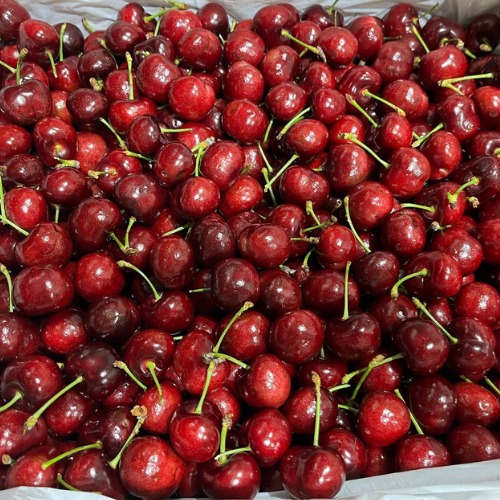
The British cherry season is putting the supply chain's ability to adapt to the test. The exceptional heat recorded in southern England has accelerated ripening and reduced yields, while also compressing the harvest schedule. Despite these challenges, fruit quality remains high and demand continues to support the market.
With the season now well underway, growers are reporting a significant change in timing: the traditional six-week harvest window has been reduced to five due to above-average temperatures. The heat affected some early fruit as it reached maturity, without compromising overall quality.
Several of the main cultivated varieties are performing particularly well, including Kordia, Karina and Regina, which continue to show particularly strong quality characteristics.
Yields at 70–80% and no market oversupply
The decline in production has also affected the commercial balance. Average yields are currently only 70–80% of a normal season and, despite the greater concentration of the harvest, the British market has avoided a situation of oversupply.
Intensive promotional activity by retailers has also helped maintain this balance, supporting the movement of available volumes. Some retailers have also turned to imports to fill any gaps left by domestic production.
Among the early varieties, Folfer produced particularly large fruit in June. However, only limited quantities fell within the usual size standards required by supermarkets.
This situation has prompted suggestions within the industry that the supply of premium packs dedicated to larger-sized fruit could be expanded, helping to better reflect and enhance the actual characteristics of the crop.
Scotland takes over and extends the season
With the English season expected to approach its conclusion in early August, the centre of gravity of British production is gradually shifting north.
Scotland, which has escaped the extreme heat experienced further south, is expected to begin its harvest around the beginning of August and continue through to the end of September.
Its role has a significant peculiarity: Scottish production accounts for 40% of the UK's overall supply window, but only 10% of total volumes. The coming weeks could therefore highlight an interesting balance between limited availability, product value and continuity of supply.
Imports reshape the competitive landscape
The import landscape is also evolving. During the first part of the season, competitively priced cherries from Spain, France and Belgium created more challenging conditions for UK growers.
However, these origins have now concluded their seasons, while supplies from Greece and Turkey are also declining. Germany, Romania and Moldova are expected to continue supplying the market for a few more weeks.
The situation is more complex for North American fruit: supplies are limited and prices remain high, partly as a result of strong demand in local markets.
Fruit World International exceeds 100 days on UK shelves
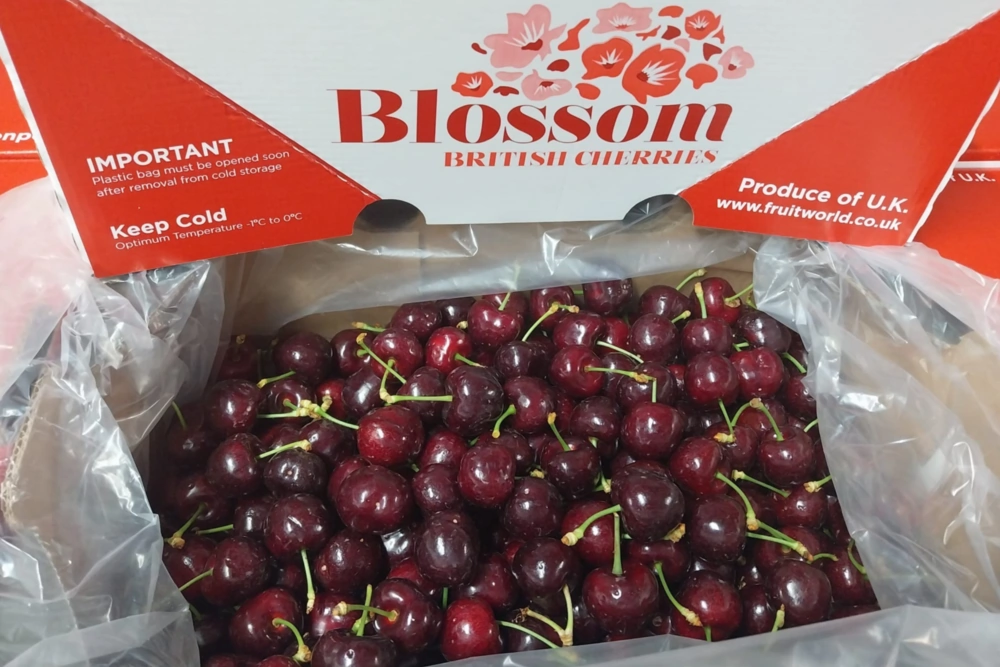
Against this backdrop, Fruit World International, which markets cherries under the Bonanza and Blossom brands, stands out. The company has managed to maintain a presence on UK shelves for more than 100 days, a notable achievement within the country's cherry market.
Following a slow start to domestic sales, Fruit World International is reporting an improvement in demand. At the same time, airfreight exports to international customers have already begun, with a significant presence in Europe, the Middle East and Africa.
A second half of summer worth watching
The outlook for the British cherry season therefore remains cautiously optimistic. The heat has reduced yields and shortened the English harvest, but quality, promotions and the absence of excessive supply have helped keep the market balanced.
Attention is now shifting to Scotland and the evolution of international supplies. With the commercial window continuing through September, the British cherry industry is looking to the coming weeks as a potentially favourable period, when the ability to maximise quality and availability could prove decisive.
Text and image source: producepropack.com
Cherry Times - All rights reserved