All commercial sweet cherry trees are either budded or grafted.
The part of the tree above the graft/bud union is known as the scion, and the part below the graft/bud union is known as the stock or rootstock.
Modern sweet cherry scion breeding programs have focused mainly on achieving improved characteristics such as yield, taste, fruit size, fruit firmness, fruit color, precocity, disease and fruit cracking resistance.
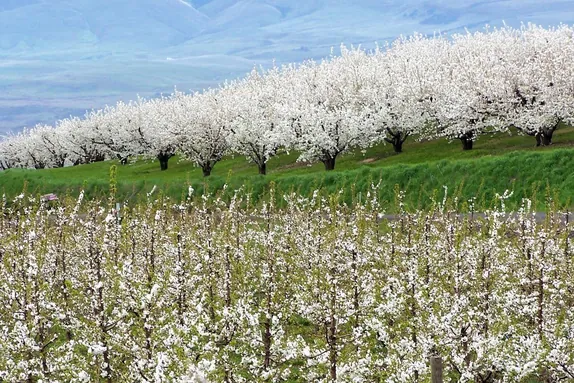
Rootstock breeding
In contrast, modern rootstock breeding programs have largely focused on increasing precocity, reducing vigor or, in some cases, adaptation to certain soil and climatic conditions.
In recent years, there has been a substantial increase of available rootstocks that provide growers with a complete range of vigor from full vigor, full size to true dwarfing rootstocks that reduce vigor by 50% or more.
These dwarfing rootstocks facilitate the harvest of premium quality fruit from high-density, pedestrian orchards.
Furthermore, when matched with ultra-high-density training systems, such as slender spindle axis, dwarfing rootstocks may reach full production by fourth leaf.
[...]
Want to know more? The full article is reserved for subscribers to the Cherry Times newsletter! Sign up for free to receive each new exclusive in-depth article directly in your inbox and stay up-to-date with quality advice and analysis. Don't miss this unique opportunity!
Sign up for free to the Cherry Times newsletter
Cherry Times - All rights reserved