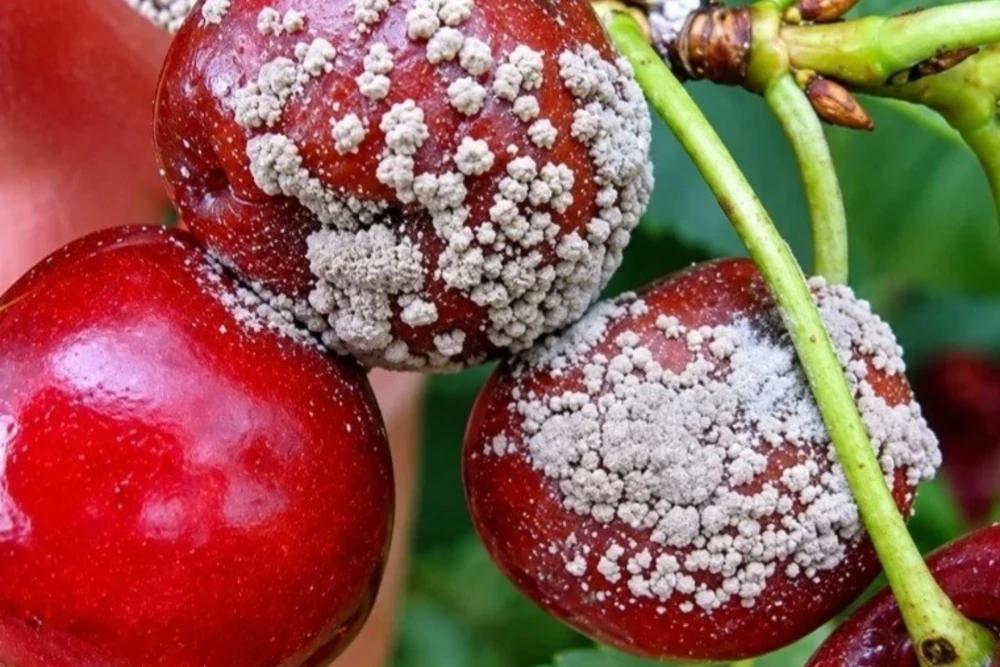
Diaporthe species occupy remarkably diverse ecological roles: they may live quietly within healthy plant tissues as endophytes, survive on dead material as saprophytes, or become destructive parasites when conditions favor disease. Their success depends on a flexible infection strategy. To establish themselves, these fungi must overcome the host’s physical and chemical defenses, alter or degrade cell-wall components, neutralize toxic compounds, transport nutrients, and, in some cases, produce metabolites that damage plant tissue.
Diaporthe eres, a causal agent of canker in wild cherry, illustrates how complex this interaction can be. Although the pathogen is widely recognized, important questions remain about why symptoms vary, how infection progresses through different tissues, and which factors determine whether a tree tolerates or succumbs to disease. The experiment, conducted in collaboration between four Serbian research centers and a university, revealed that branch age strongly influenced symptom expression.
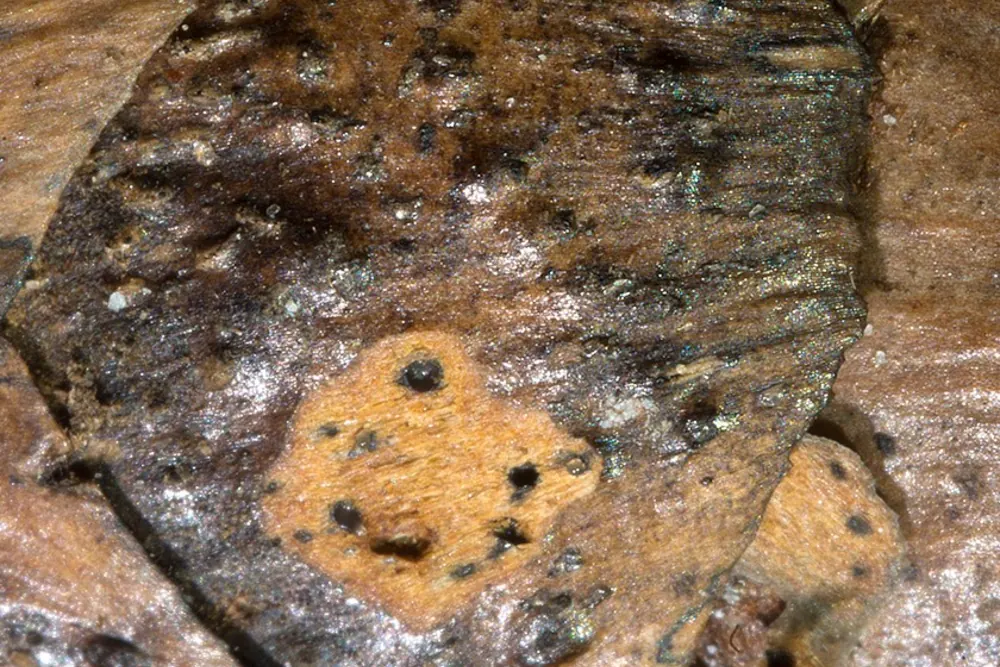
Branch age influences lesion development
After 81 days, perennial branches developed the longest and widest necrotic lesions, annual branches showed intermediate damage, and leading shoots displayed the smallest areas of necrosis. This pattern is especially interesting because younger and older tissues protect themselves in different ways.
LEADING SHOOTS
Smallest areas of necrosis
ANNUAL BRANCHES
Intermediate damage
PERENNIAL BRANCHES
Longest and widest lesions
Qualitative comparison observed 81 days after infection; the supplied text does not report numerical lesion measurements.
Young branches are physiologically active: they respire rapidly, divide cells more frequently, contain abundant growth hormones, and maintain an active phloem. They also tend to accumulate phenolic compounds that contribute to chemical defense.
Older branches, by contrast, contain more lignified fibers, thicker cell walls, fewer living parenchyma cells, and a thicker bark layer. These features offer greater mechanical strength, yet the observed lesion development suggests that structural reinforcement alone may not prevent the pathogen from colonizing established woody tissue.
Tolerance varies among trees
Variation among individual trees was equally important. Statistical differences were detected in both lesion dimensions and the frequency of branch dieback. Trees classified as tolerant generally developed smaller necrotic areas and experienced less dieback, whereas sensitive individuals suffered more extensive symptoms.
Tolerant trees
Lesions: generally smaller
Dieback: less frequent
Sensitive individuals
Symptoms: more extensive
This finding provides the first clear evidence that the expression of D. eres disease in wild cherry depends not only on the infected part of the crown but also on the inherent tolerance of the host individual. Even so, most trees responded in broadly similar ways, indicating that host origin may be less influential than the developmental condition of the tissue at the time of infection.
A balance between chemical activity and structural resistance
Taken together, the results point to a consistent age-related gradient. Cankers occurred on leading shoots, annual branches, and perennial branches, but their size increased with branch age.
One possible interpretation is that actively growing tissues can mount faster biochemical responses, particularly through phenolic defenses, whereas older tissues may respond more slowly despite their stronger physical barriers. The balance between chemical activity and structural resistance therefore appears central to understanding disease development.
Rather than assuming that thicker bark automatically provides better protection, management strategies should consider the physiological state of each tissue and the pathogen’s ability to exploit aging or stressed branches. In practical terms, the findings support closer monitoring of mature branches and prompt removal of severely affected wood.
Source: Vemić A, Lazić S, Rakonjac Lj, Lučić A, Stajić S, Vukin M, Popović V, 2026. Influence of Individual Tree Variability and Branch Age of Wild Cherry (Prunus avium) on Damage Caused by Diaporthe eres. South-east Eur for 17(2): 26019. https://doi.org/10.15177/seefor.26-019.
Image source: Cemas
Melissa Venturi
Ph.D. in Agricultural, Environmental, and Food Sciences and Technologies – Fruit Tree Physiology and Cultivation - Bologna, Italy
Cherry Times - Tutti i diritti riservati