A project by the Universidad Autónoma de Chile, supported by the Fundación para la Innovación Agraria (FIA), is developing a bioinput obtained from ozonized grape seeds to reduce gray mold in cherries during postharvest.
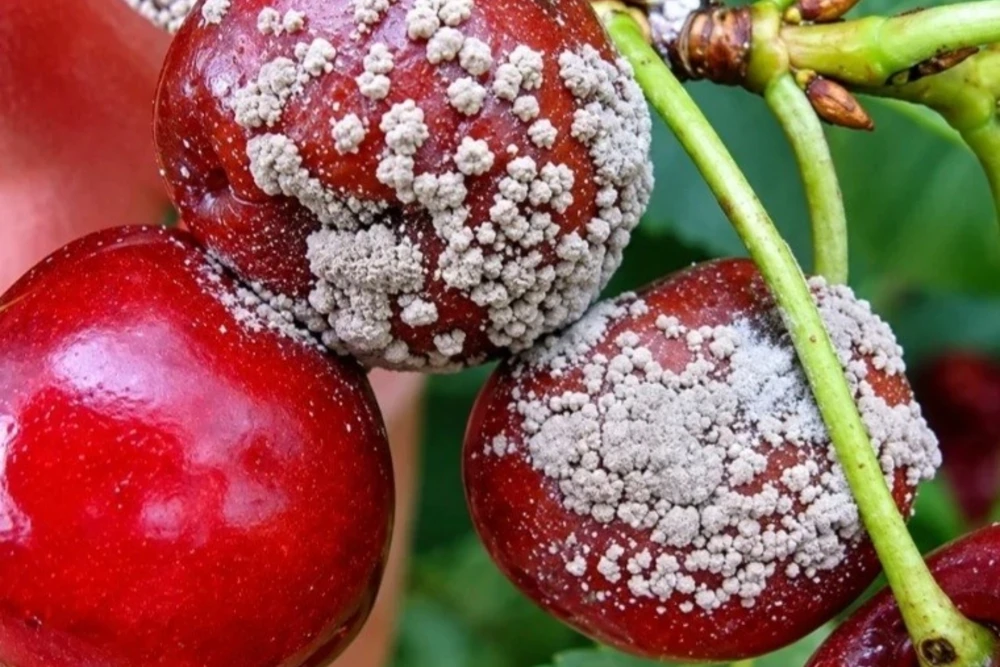
Gray mold, caused by the fungus Botrytis cinerea, is one of the problems that can compromise cherry quality after harvest, particularly during storage, transport and marketing.
To address this issue, a research team from the Universidad Autónoma de Chile is working on an alternative obtained from a by-product of the wine industry.
The initiative, entitled “Green Technology for the Fruit Growing of the Future: Ozonized Grape Seed Oils against Gray Mold in Cherries”, is supported by the Fundación para la Innovación Agraria (FIA) and involves the use of ozonized grape seed oil to limit fungal growth and reduce fruit losses during postharvest.
Grape seeds as an alternative for gray mold management
The project aims to valorize grape seeds, a by-product of the wine industry, to obtain an oil that is subsequently subjected to a controlled ozonation process. The research will assess its ability to counteract Botrytis cinerea, the microorganism responsible for gray mold.
The proposal brings together two activities of particular importance to the Maule Region: wine production and cherry production.
The use of material derived from the wine industry could make it possible to develop an alternative aimed at protecting a fruit of high commercial value, following an approach linked to the circular economy.
“We are studying how to transform a by-product of the wine industry into a useful tool for fruit growing. We want to offer an alternative that can help protect cherry quality, reduce losses and promote cleaner and more sustainable production processes”, said Dr. Yaneris Mirabal Gallardo, researcher at the Universidad Autónoma de Chile and project leader.
Trials will measure the effects on cherry quality
The research includes laboratory tests followed by trials on cherries stored under controlled conditions. In addition to determining its ability to reduce gray mold, the research team will analyze whether the application of the oil may affect the commercial characteristics of the fruit.
The parameters to be evaluated include firmness, color, weight, flavor and appearance of the cherries. These factors will be essential in determining whether the alternative can move from the experimental stage toward possible application in postharvest processes.
Angela Blanco, FIA innovation manager, said: “Cherry exports require applications of fungicides before packing.
Reducing these treatments and preventing decay in a cleaner way represents an important opportunity, while also reducing workers’ exposure to chemicals”.
The research aims for broader-scale application
In addition to determining the effectiveness of the bioinput, the research team will study the conditions required for possible larger-scale use, taking into account technical, economic and practical aspects in packing facilities.
The research also considers the possibility that this type of solution could later be evaluated on other fruits susceptible to fungal diseases, including blueberries, strawberries and table grapes.
The development of this ozonized oil therefore creates a link between two production chains present in Maule: the valorization of wine industry by-products and the protection of fruit during postharvest.
The trial results will make it possible to determine to what extent this alternative could become a useful tool for reducing losses and introducing new management strategies in fruit growing.
Image source: Reporte Agricola
Valentina Lagos
Reporte Agricola
Cherry Times - All rights reserved