The new Chilean cherry season is developing under a cloud of uncertainty. Although the country continues to firmly lead the global ranking of major exporters, the 2024–2025 campaign is shaping up to be a complex one, marked by a significant downward revision of production forecasts.
Between adverse weather conditions, targeted agronomic decisions and natural plant cycles, the available volumes are lower than last year, with a direct impact on commercial strategies, logistics and prices.
According to Nicolás Michelini, commercial director of Quelen Fruit, the initial estimate by the Cherry Committee — 131 million boxes — is no longer realistic. “Today, expectations range between 115 and 120 million boxes, well below the 126 million harvested in the previous season,” he explains.
A significant decline that reshapes market balances and forces a redefinition of priorities toward key destinations, first and foremost China.
Climate, pruning and alternate bearing
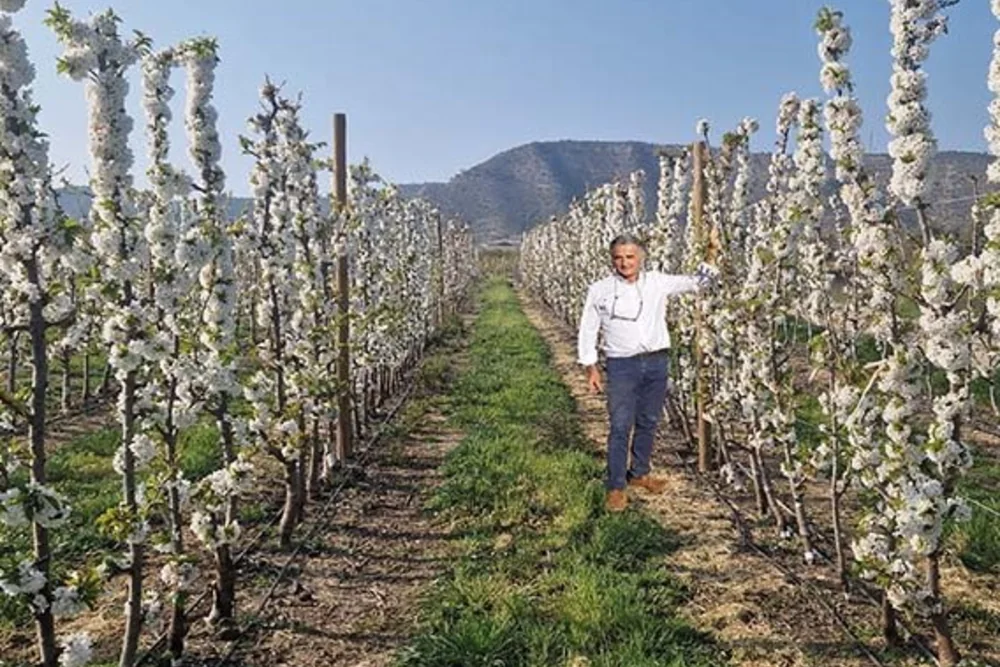
Among the main causes of the decline in production are spring frosts, which severely affected crucial growing areas, compromising flowering and fruit set.
This was further compounded by the effect of more drastic pruning carried out after last season — abundant but economically disappointing — aimed at rebalancing the plants.
Finally, the phenomenon of alternate bearing (añerismo), physiological in stone fruits, contributed to a lighter fruit load. “It was predictable: after a heavy year, trees are naturally less generous,” confirms Michelini.
Earlier exports and logistical performance
Paradoxically, while volumes decrease, the export campaign is experiencing unprecedented acceleration. Shipments, compared to the same period in 2023, show an +85% increase.
However, this is more an early start than an actual rise, caused by the early fruit maturation. Air shipments are also up 40%, with direct effects on prices: the high early availability has applied downward pressure on opening price lists.
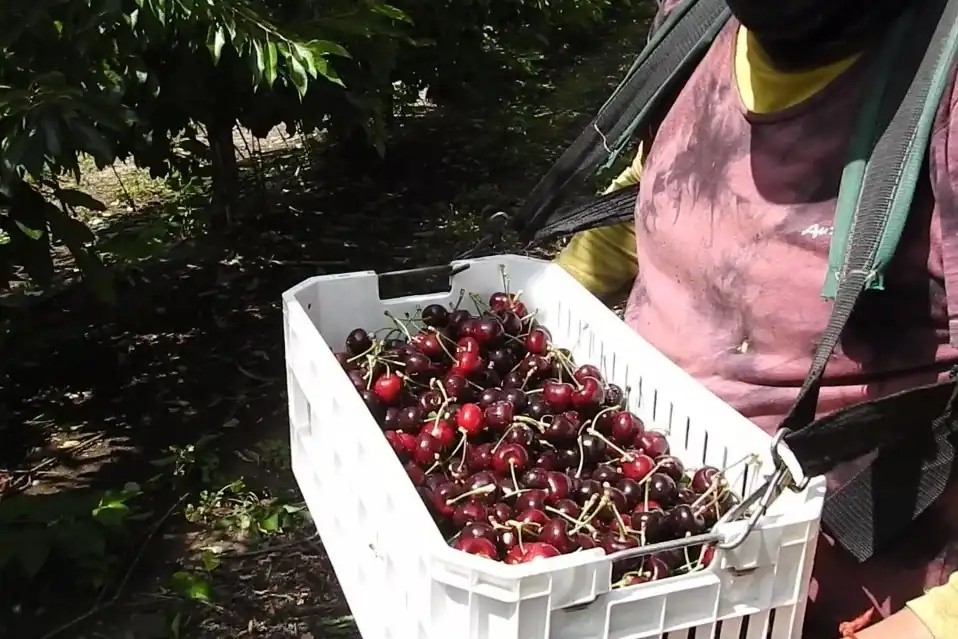
Despite this, Quelen Fruit’s first shipments revealed important quality improvements: early varieties, such as Santina, show more uniform and larger calibers, shifting from a Jumbo/2J Jumbo mix to a more consistent 2J Jumbo standard, highly appreciated and profitable in Asian markets.
From a logistical perspective, the supply chain proved efficient: no congestion in processing facilities, ports or ground transport.
The Cherry Express service remains crucial for ensuring freshness and speed in connections with Hong Kong, Shanghai and the main redistribution hubs in Southeast Asia.
New formats and genetics
Consumer dynamics are changing. International retail chains are requesting smaller packages, under 500 grams, ready for direct consumer sales, marking a gradual transition away from the classic 2.5 kg format.
At the same time, interest in innovative varieties such as Sweet Aryana and Areko is growing, as well as in bicolored cherries and larger, crunchy-fleshed fruit.
Even in a more difficult year, the Chilean supply chain shows adaptability, investing in added value and strategic positioning.
The current scarcity could generate upward price pressure in the coming weeks, especially if quality and logistics remain consistent.
The trajectory remains clear: production efficiency, varietal diversification and environmental sustainability are key to strengthening Chile’s global leadership in cherries.
Source: masp.lmneuquen.com
Image source: Radiolas Nieves
Cherry Times - All rights reserved