What was, a few months ago, a reason for celebration due to the record number of boxes to be exported to the Asian giant in the 2024/25 season has now turned into a problem. The unions are calling for calm, as there are still several weeks until the holidays and prices are already starting to rise.
Even though there is still some time until the Chinese New Year, which will be celebrated on January 29, one of the main gifts for the occasion, Chilean cherries, is experiencing a sustained drop in prices, due to the supply of Chilean fresh fruit flooding the markets of the Asian giant.
The cherry, considered a gift among relatives and friends to wish prosperity and health, is being sold at up to 50% less than last season's prices, and price drops have also been registered for the most sought-after and scarce varieties.
It is worth noting that China receives about 90% of Chilean cherries, and although projections in mid-September were cause for celebration among unions and producers, as shipments were expected to increase by 59% to almost 658,000 tons, a projection that represented a record for the fruit.
However, this historic figure is now the cause of the collapse in prices, in addition to the fact that there are still three weeks to go until Chinese New Year, when it is expected that 50% of the volume will be marketed.
According to Antonio Walker, president of the National Agricultural Society (SNA), the main problem of this season is the excess supply caused by the export of 55% more cherries than last year.
“Chinese New Year is on January 29 and the best prices are those of the two weeks before, so even though it is too early to make a complete analysis, what we can say is that what has been sold so far is at prices much lower than our expectations,” he said.
The former Minister of Agriculture and union leader emphasized the need to “empower an organization to help us standardize the quality of the exported fruit. This is a task we must carry out as farmers and give power to an institution that gives us clear rules of the game, which we support,” with the goal of exporting the best possible quality and not everything that is produced, to avoid excess supply.
It is worth noting that Chilean cherry orchards are estimated to exceed 70,000 hectares, and they alone represent nearly half of the country's fresh fruit exports. For Walker, this means it is necessary to diversify export destinations, so that China is not the only main recipient. We need to look to other markets like the United States, Europe, Latin America, and we have the big challenge of opening the Indian market.
Early Overstock
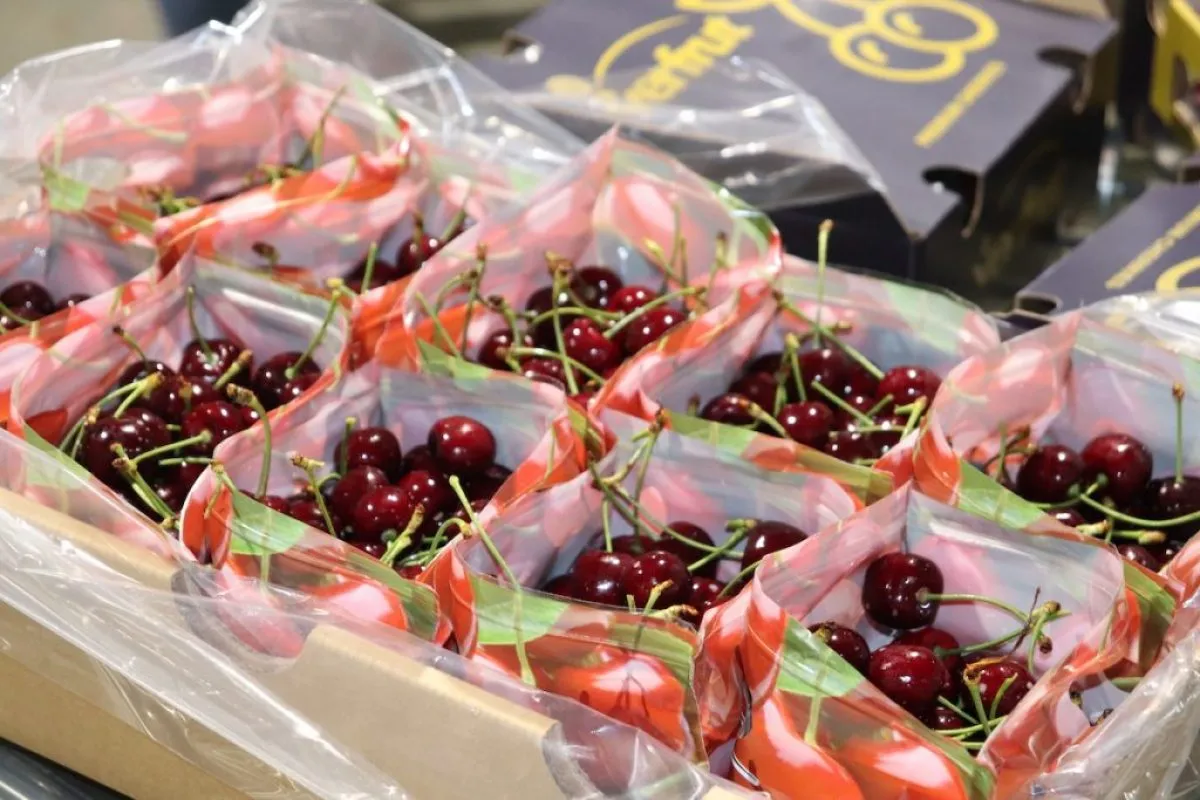
Claudia Soler, executive director of the Chilean Fruit Cherry Committee, adds that this situation is due to the fact that “many fruits were shipped in months without holidays, which has generated an overstock in China.”
Soler explains that “the plantations planted between 2019 and 2021 are now delivering their production, because last season we had floods that affected the estates and we didn’t have the expected growth. Now, this season, we are absorbing the growth of the plantations, which is why we have a growth of between 40% and 50% in exports.”
Maintaining High Quality Standards
Víctor Catán, president of the Chilean Fruit Producers Federation (Fedefruta), reiterated the need to maintain high quality standards for the fruit to sustain the values, in the face of the price drop recorded in cherry exports to China.
“In recent days, we have received discouraging news regarding the sale of cherries, with prices falling, with some fruits arriving with some condition and packaging problems, which, combined with the higher supply, have caused the prices to collapse,” explained Catán.
In light of this situation, the president of the fruit industry association added, “We want to have an optimistic view and believe that in the coming days, with the approach of Chinese New Year, demand may increase and this, in turn, could generate a price increase that may slightly mitigate the current scenario.”
“As Fedefruta, as we have done for several months and on repeated occasions, we want to emphasize the importance of taking great care with the quality of the fruit and the very high standards that characterize us, to be able to sustain the prices following the increase in supply and avoid commercial effects,” he said.
Finally, he urged fruit producers to “stay alert and calmly and attentively monitor the behavior of the cherry market in China in the coming days.”
It is noted that, according to information provided by cherry producers, the market slightly improved on the last day, due to the increase in demand for the fruit, “which is a good sign,” emphasized Catán.
Source: Redagrícola
Image: SL Fruit Service; Marca Chile
Cherry Times - All rights reserved