Rainfall recorded in central and southern Chile is creating favorable conditions for the spread of fungal and bacterial pathogens, with potential consequences for several fruit crops. Among the most exposed species are cherry trees, blueberries, pome fruit trees and grapevines, particularly during the development of flowers and young shoots.
Highlighting these plant health risks is Daina Grinbergs, researcher and head of the Plant Pathology Laboratory at the Instituto de Investigaciones Agropecuarias (INIA) Quilamapu, who emphasizes the importance of preventive measures to limit infections and protect crop quality.
The combination of high humidity and moderate temperatures can promote the multiplication and spread of numerous pathogenic microorganisms, increasing orchard vulnerability during some of the most delicate stages of the production cycle.
Cherries and blueberries: infections may become apparent after harvest
One of the most critical aspects concerns the ability of certain fungi to infect plant tissues without immediately causing visible symptoms.
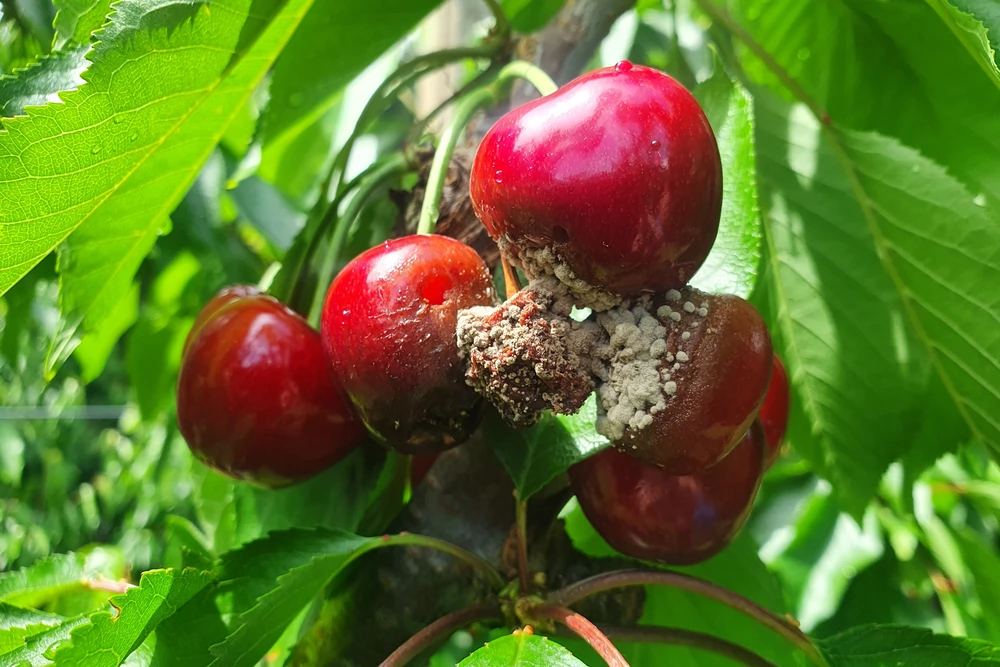
This is the case with pathogens such as Botrytis and Alternaria, which can colonize flowers and subsequently cause fruit rot, with damage becoming apparent only during ripening, harvesting or storage.
For the cherry industry, this process represents a particularly significant challenge, as the late appearance of symptoms can compromise the commercial quality of cherries and limit their access to international markets.
According to Grinbergs, the appearance of rot during harvesting or storage makes it more difficult to determine whether a shipment of fruit can withstand long-distance transport to foreign markets or should instead be directed to the domestic market.
The problem, therefore, extends beyond production losses in the orchard and can affect subsequent stages of the supply chain, influencing export opportunities and the commercial management of the harvest.
For this reason, monitoring environmental conditions and plant health plays a central role from the earliest stages of fruit development.
Wood diseases: humidity promotes pathogen spread
The consequences of rainfall are not limited to flowers and fruit. Excess moisture can also contribute to the spread of microorganisms responsible for wood diseases, which affect various tree species.
Among the pathogens identified by INIA are bacteria belonging to the genera Pseudomonas and Xanthomonas, as well as fungi such as Cytospora, Chondrostereum, Calosphaeria and Neofusicoccum.
Under favorable climatic conditions, these organisms can become more active and find greater opportunities to spread within orchards.
One of the main control strategies involves reducing sources of inoculum by identifying and removing infected woody debris.
Leaving contaminated plant material in the orchard can contribute to pathogen survival and facilitate their subsequent dispersal.
Particular attention should also be paid to wounds on trees, which can serve as potential entry points for the pathogens responsible for infections.
Disease prevention in cherry orchards: protective covers, treatments and pruning management
In a context characterized by frequent rainfall, plant health management requires a preventive approach that combines agronomic practices with crop protection strategies.
In cherry orchards equipped with protective covering systems, for example, these structures can help reduce direct exposure of the canopy to rainfall and, consequently, some of the conditions that favor pathogen development.
Grinbergs also highlights the usefulness of preventive fungicide treatments, including both chemical and biological products, combined with appropriate rotation of active ingredients as part of broader disease management strategies.
Regarding wood diseases, the removal of infected material should be accompanied by careful management of orchard operations.
In particular, it is advisable to minimize unnecessary wounds and pay close attention to pruning cuts, which can provide entry points for various pathogenic microorganisms.
The aim is to simultaneously reduce the presence of inoculum and the risk of infection, particularly during periods when weather conditions increase disease pressure.
Cherry quality and exports: prevention begins in the orchard
The recommendations from INIA Quilamapu highlight how closely the management of fungal and bacterial diseases is linked to the commercial quality of fruit.
For a crop such as cherries, which may be destined for distant markets, fruit health at harvest is not the only factor to consider: infections acquired in the orchard may become apparent at later stages, affecting the product's storage potential.
In this scenario, controlling sources of inoculum, protecting vulnerable plant tissues and continuously monitoring orchards are essential tools for reducing risks.
The challenge for growers will therefore be to anticipate conditions favorable to infection, taking action before symptoms appear and safeguarding fruit quality throughout the entire commercial supply chain.
Source: reporteagricola.cl
Image source: Stefano Lugli
Cherry Times - All rights reserved