Developed in the temperate valleys of Jujuy, trials of varieties with low chilling requirements are achieving high standards of sweetness and firmness, opening an unprecedented market window for fruit production in the Southern Hemisphere.
30 September 2025 marked an important milestone for regional fruit production, with the harvest of Argentina’s first fresh cherries in an experimental plot located in the temperate valley of Jujuy, in the northwest of the country.
The project, which comprises approximately 2,000 trees and six cultivars planted between 2022 and 2023, is led by Güizzo Frutas Frescas S.A., a company with extensive experience in early-season cherries, in collaboration with grower Oscar Machuca, of Finca Machuca in Monterrico, Jujuy, and Dr Viviana Curzel, lecturer and researcher at the Faculty of Agricultural Sciences of the National University of Jujuy (UNJu).
Notable results from the second season
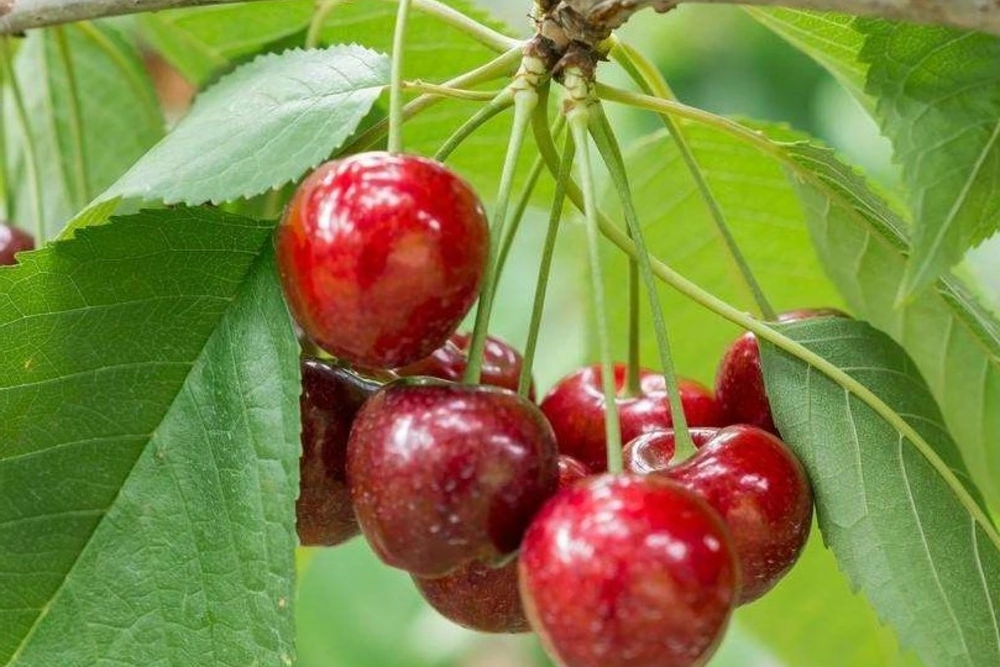
During this second evaluation cycle, the Minnie Royal and Royal Lee cultivars, first-generation varieties from Zaiger’s prestigious breeding programme, showed very promising agronomic results:
- Sugar content: particularly high values, ranging from 25 to 29 °Brix, delivering an exceptional sensory experience.
- Colour: intense, uniform shades corresponding to levels 2 to 3 on the CTIFL colour chart.
- Firmness and size: firm, crisp fruit with average diameters ranging from 22 to 24 mm, consistent with the genetic characteristics of these varieties.
These results were made possible by a rigorous precision orchard management protocol, which included summer defoliation, notching combined with Promalin applications, branch bending, the use of growth regulators, and specific doses of dormancy-breaking products applied at key stages to ensure adequate fruit set.
Competitive advantages of the temperate valley of Jujuy
The area offers unique agroclimatic conditions, making it particularly strategic for the production of cherries and ultra-early stone fruit:
- Short, mild winters: averaging 20–25 chill portions, followed by rapid heat accumulation after dormancy ends.
- Favourable rainfall patterns: rainfall is concentrated mainly in summer, coinciding with the vegetative growth phase and significantly reducing weather-related risks during harvest.
- High solar radiation and low humidity: factors that directly favour the development of fruit colour and flavour.
Thanks to these advantages, the project reached harvest in week 40 for the second consecutive year, matching the timing of the earliest harvests in northeastern South Africa and preceding production in Mendoza, Argentina, and the Coquimbo Region of Chile by 15–20 days.
Strategic vision and varietal diversification
For engineer Nicolás Güizzo, executive and technical manager at Güizzo Frutas Frescas S.A., bringing high-quality fruit to market in late September represents a major commercial advantage for both the domestic market and future exports, while acknowledging the challenges inherent in an area that is marginal for this crop.
With this in mind, the project plans to introduce new varieties with low chilling requirements in the near future, including those developed by Bloomfresh.
Dr Viviana Curzel highlighted that Jujuy has more than 40 years of experience in producing early-season stone fruit, supported by 25 years of local research into species with very low chilling requirements.
This cherry trial confirms the region’s potential to supply the market during highly profitable commercial windows and to open up new export opportunities.
Source: mundoagro.io
Image source: Raintree Nursery
Cherry Times - All rights reserved