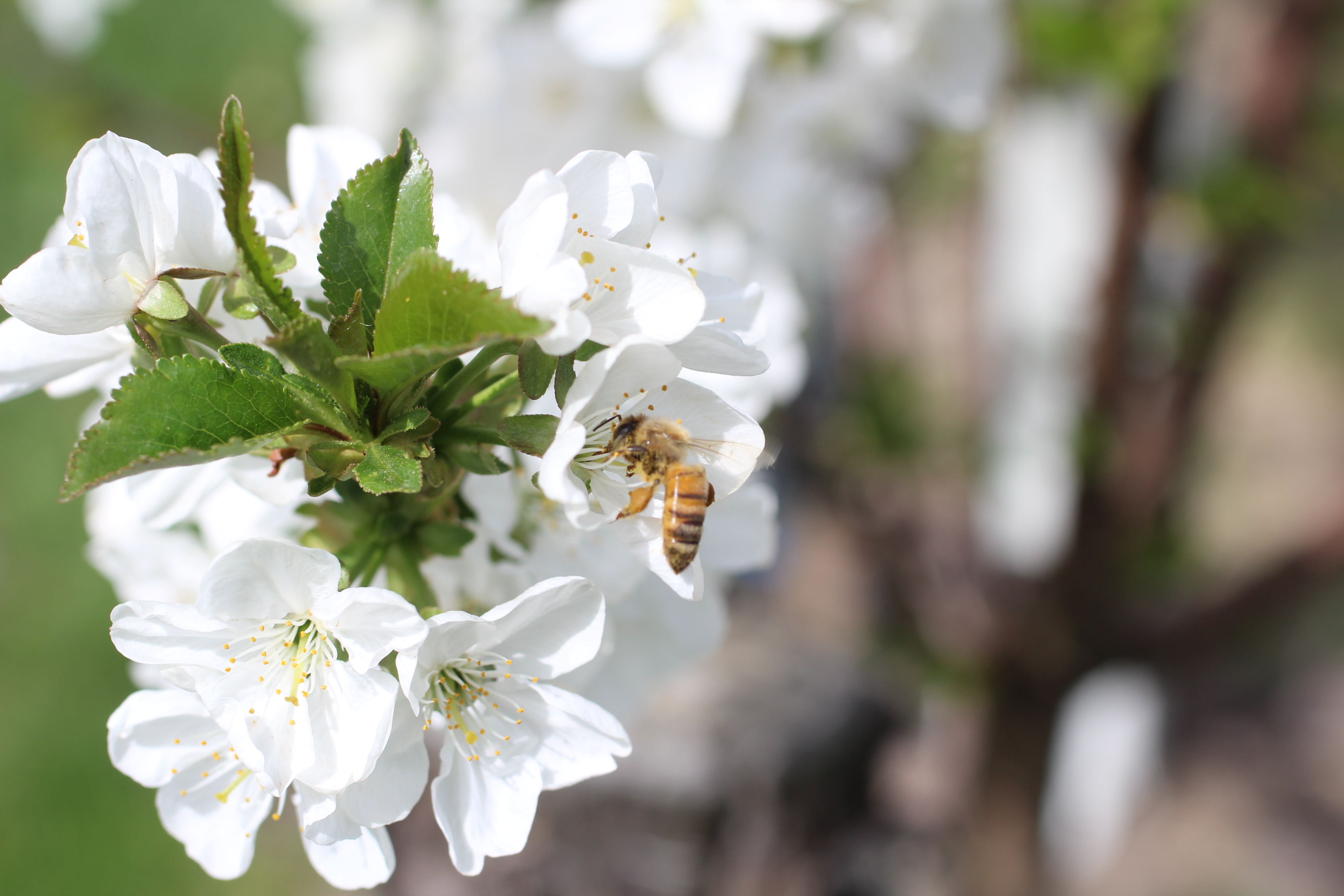
Commercial cherry production in Peru is still in its early stages, although several factors suggest that the country could develop competitive advantages in certain high-Andean areas.
(Agraria.pe) Over the past two decades, Peru has consolidated its position as a global leader in fresh fruit exports, particularly table grapes, blueberries, avocados and citrus fruits. This growth has been driven by a combination of climatic advantages, availability of suitable land, low-cost labor, private investment, technological innovation and trade openness.
According to the study “Global cherry production and consumption: development opportunities in Peru”, prepared by the Ministry of Agrarian Development and Irrigation (Midagri), cherries are emerging as an alternative of particular interest.
“It is one of the highest-value fresh fruits in international trade, characterized by growing demand in Asian markets, particularly during holidays and periods of high consumption”, the study reports.
Furthermore, the development of new varieties with lower chilling requirements has expanded production opportunities in areas previously considered marginal for this crop.
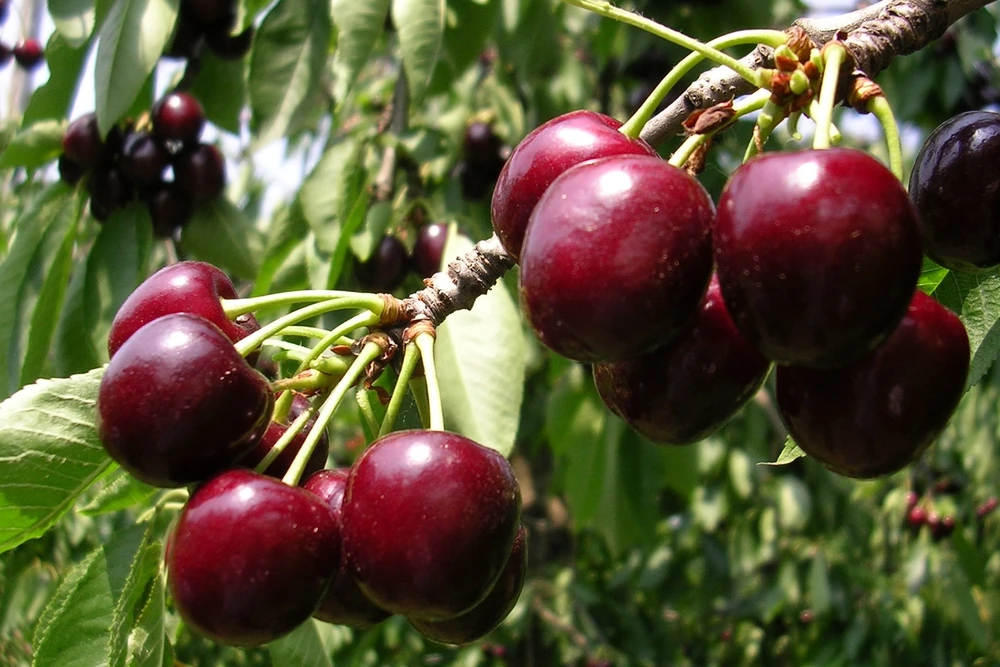
Production
The report nevertheless specifies that commercial cherry production in Peru is still at an early stage, although several factors suggest that the country could develop competitive advantages in certain high-Andean areas.
“Among these factors are the availability of water resources, the experience accumulated by the agro-export sector, existing logistics infrastructure and the entrepreneurial capacity demonstrated in the rapid adoption of new crops such as blueberries and strawberries”, the document states.
In this regard, the experience of the blueberry industry represents a significant precedent. “In just over a decade, Peru went from being a marginal player to becoming one of the world’s leading exporters of this fruit”.
Although cherries present significantly greater agronomic challenges, this process demonstrates the ability of the Peruvian agro-export sector to develop competitive industries based on innovation, technological adaptation and an international market focus.
Production potential
“For this reason, it is appropriate to objectively assess the production and commercial potential of cherries in Peru, identifying both the opportunities and the limitations that will determine their possible development in the coming years”, the study states.
The Midagri report establishes that the Andean regions of Peru have agroclimatic characteristics that could support the future development of cherry production.
“The combination of altitude, temperature variation and relatively low winter temperatures allows for a higher accumulation of chilling hours than that recorded along the coast”, the document states.
“Furthermore, the high solar radiation characteristic of the Andes promotes photosynthetic processes and may contribute to the development of fruit with suitable levels of color and sugar content”, the report explains.
High-Andean areas
Areas that therefore deserve an agronomic assessment include the high-Andean zones of Arequipa, Moquegua and Tacna, particularly at higher elevations; the highlands of Lima, especially Yauyos, Huarochirí and Canta; the Mantaro Valley in Junín; the Callejón de Huaylas in Áncash; the inter-Andean valleys of Cusco; and the high-Andean areas of Cajamarca.
“However, the actual suitability of these areas will need to be validated through detailed agroclimatic studies, varietal trials and specific economic analyses”.
Current situation
Unlike other export crops that are now firmly established in Peru, such as blueberries, table grapes and avocados, cherries are still in an experimental and pre-commercial phase.
The study nevertheless reports that, over the past decade, agronomic trials have been carried out to identify varieties adapted to the country’s climatic conditions, particularly in high-Andean areas.
“The progress observed in recent years has generated positive expectations regarding the possibility of creating a future cherry export industry, particularly to supply high-value markets such as China”, Midagri states.
The search for cherry varieties suited to Peruvian conditions is not recent. “Several agro-export companies and specialized nurseries have been evaluating genetic material for around 10 years, mainly in Peru’s highland areas”, the study states.
Varietal adaptation
Trials have focused on regions such as Arequipa, Junín, Ayacucho, Áncash (Huaraz), Cajamarca and Huancavelica, where altitude conditions make it possible to achieve levels of winter chill closer to the crop’s requirements.
The results obtained have made it possible to identify materials with lower chilling requirements and better adaptation to local conditions.
First harvests
Several specialists cited in the study agree that this year could represent a turning point for cherry cultivation in Peru.
According to estimates, the first crops with commercial value could be obtained as a result of the genetic adaptation work carried out over the past few years.
“However, achieving significant exportable volumes will require a longer process, estimated at between 7 and 10 years”.
According to the study, the main challenge will continue to be identifying varieties capable of combining low chilling requirements, productivity, firmness and commercial quality compatible with international market requirements.
Industry development
“The development of a cherry export industry in Peru will depend on the convergence of several factors, including the crop’s agronomic adaptation to national agroclimatic conditions, the availability of suitable genetic material, the introduction of production and post-harvest technologies, and the ability to take advantage of opportunities offered by the international market”, the Midagri report states.
Advantages
Although Chile maintains a leading position in global cherry production and exports, particularly to the Chinese market, Peru has conditions that could support the gradual development of a competitive export supply.
The study “Global cherry production and consumption: development opportunities in Peru” highlights the diversity of altitude ranges and microclimates, accumulated experience in the production and export of high-value fruit, the availability of logistics infrastructure for foreign trade, the extensive network of trade agreements and a strategic position that could make it possible to serve specific off-season market windows.
“Likewise, growing international demand for cherries, particularly in Asia, opens opportunities for new suppliers capable of providing high-quality fruit during periods of lower global supply availability”, the document reports.
International positioning
In this context, the study adds, Peru could position itself in specific segments of the international market, provided that it succeeds in developing a consistent supply in terms of quality, volume, harvest period, traceability and compliance with the phytosanitary and commercial standards required by destination markets.
According to the ministry’s study, the country has important agroclimatic, entrepreneurial and logistics advantages; however, it will need to overcome certain limitations related to chilling hours, local research, genetic availability, required investment and international competition.
The Chancay factor
The opening of the Chancay Multipurpose Port Terminal represents one of the most significant changes for the competitiveness of Peruvian agricultural exports to Asia.
The new infrastructure makes it possible to significantly reduce maritime transit times to China, from approximately 33-40 days to around 21-23 days.
“This reduction is particularly important for highly perishable products such as cherries”, the Midagri study reports.
In 2025, the port of Chancay handled 62% of Peruvian agricultural exports bound for the Chinese market, rapidly consolidating its position as the main logistics platform for agro-export trade with Asia.
Logistics effects
“For a fruit with high post-harvest sensitivity such as cherries, every day saved in transport can translate into better levels of firmness, quality conditions and commercial value upon arrival”, the report states.
The combination of experience, modern logistics infrastructure, preferential access to Asian markets and the potential to serve early commercial windows provides a solid foundation for the development of this crop.
The Andean regions of Peru have agroclimatic characteristics that could support the future development of cherry cultivation.
- According to the United States Department of Agriculture, over the past 25 years, production and consumption have recorded steady growth, with an average annual growth rate of 3.8% for production and 3.7% for domestic consumption.
- The global fresh cherry market is experiencing a period of historic expansion, characterized by balanced growth between global production (+3.8% average annually) and global domestic consumption (+3.7% average annually) over the past 25 years.
- Global exports are showing an upward trend, with a projected peak of 939,000 tonnes in the 2025/2026 season, corresponding to marginal growth of 0.9% compared with the previous year.
- Chile accounts for approximately 97% of the total volume of cherries exported from the Southern Hemisphere.
- For the 2025/2026 season, China expects domestic demand of 1.498 million tonnes, supported by domestic production of 900,000 tonnes and a record import volume of 600,000 tonnes.
Source: Agraria.pe Editorial Team
Image source: Stefano Lugli
Cherry Times - All rights reserved