


Here is the new Cherry Times Magazine
07 Oct 2024
Cherry Times Magazine is back in print and digital format full of content, news and information on the world of cherries. Pick up your free copy at Fruit Attraction (Madrid) in the Press Area!


Future profitability depends on protecting origin through technical excellence as the absolute standard. In this document, I underline the need for sector-wide governance with real auditing powers, fully acknowledging the considerable political difficulty this entails.
We are talking about validated models that are already operating successfully in other markets and categories. Breeders, for example, protect their intellectual property by requiring minimum export standards for their varieties. If we protect a private brand with such rigor, why are we not doing the same with the heritage that has taken us two decades to build as a country?
Articulating this pact represents the most complex political challenge of the decade. However, the weight of this operational difficulty should not slow the evolution needed to ensure the sustainability of our fruit’s positioning.
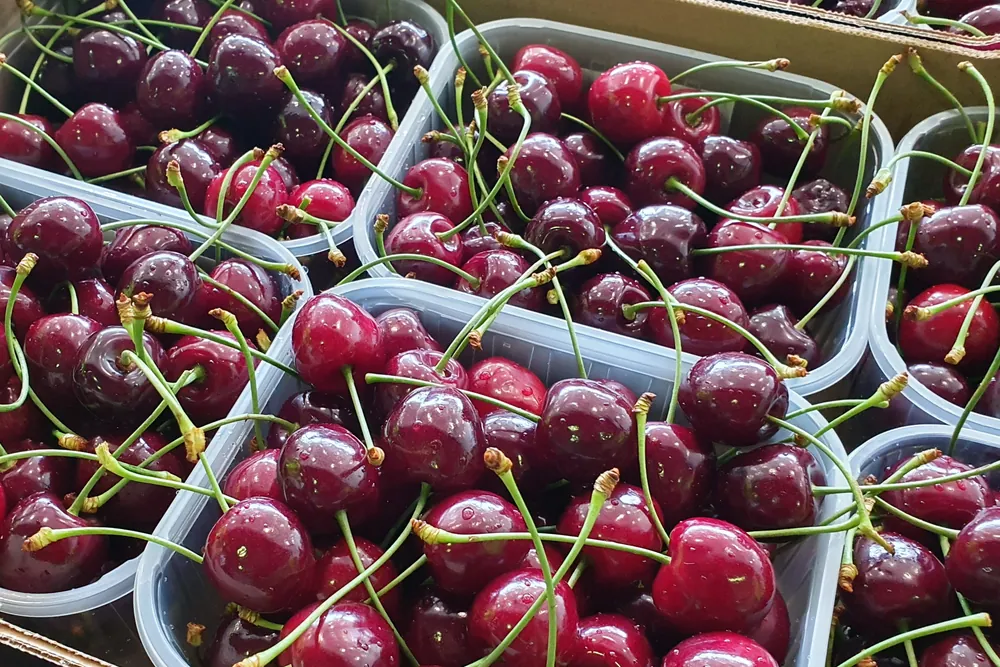
The cherry sector in Chile is currently facing the need to rethink its business model, a challenge it shares with much of the national fruit mix. In recent years, the market has shown clear elasticity, disproving the old assumption that demand from the Chinese market would absorb any increase in supply at fixed prices. Today, market penetration is consolidated in key markets within China and is advancing strongly in expanding markets. This organic growth, together with the massive influx of volumes, is forcing the sector to confront a fundamental strategic dilemma regarding the future identity of the category.
This central challenge must be addressed with deep strategic honesty. The sector must define whether its goal is to maintain cherries as a coveted luxury product or to transition toward a mass-consumption model. Both paths require radically different business architectures and cost structures. Attempting to implement both strategies simultaneously and under the same commercial umbrella dilutes perceived value and confuses a consumer who is now making far more informed choices.
The current scenario also presents the enormous challenge of coordinating ourselves in a context of internal competition, where the “Chile versus Chile” model threatens to erode overall profitability. Although the country currently enjoys a virtual monopoly in the Southern Hemisphere, global genetics continue to advance at a rapid pace. The hard lessons learned from national agricultural exports of species such as table grapes and blueberries should constantly remind us of our vulnerability. The only way to consolidate our position in the Chinese market is through a product of absolute and unquestionable quality. Consistent perfection in terms of size, firmness, color, and sweetness represents the true technical barrier that will protect us from competitors who will inevitably seek to enter the market.
Achieving this level of protection requires unprecedented industrial maturity. The sector must urgently ask itself whether, as an industry, it is capable of making the difficult decision not to export to China fruit that does not have the quality required to maintain the product’s historical profile. Sending fruit with quality defects solely to recover production-chain costs causes serious reputational damage, ultimately compromising the overall value of the country brand.
The commercial architecture of the next decade requires a definitive solution to the paradox of economies of scale. It is imperative to abandon the ambition of maintaining differentiated quality standards and instead safeguard a single category of technical excellence, capable of legitimizing luxury positioning while also opening up new and more frequent consumption occasions. Achieving this structural consistency in a product that is moving toward mass production is a strategic imperative that calls for a rethink of branding strategies, based on the premise that the prestige of Chilean cherries will survive only if technical excellence ceases to be an exception and becomes the standard for the entire sector.
The analysis of the last two seasons forces us to ask a fundamental economic question about the future of the sector. It becomes inevitable to ask whether it is possible to foresee sustained growth in supply while maintaining the historically high prices that characterized the early years of the category. Commercial theory establishes that, in order to sustain a premium price, a product must operate according to the principle of scarcity. In the luxury goods sector, margins and product appeal are protected by limiting the units available in order to preserve exclusivity, while economies of scale absorb large volumes through operational efficiency and high-turnover formats. In recent years, the national industry has attempted to defy this commercial law by shipping enormous volumes on the premise and expectation of an exclusive return on investment.
This clash between economic theory and production reality has generated the most critical diagnosis of the recent period, revealing that fruit does not move with the speed required by the current size of the market. The main challenge of past seasons lay not only in speculative decisions to accumulate stock, but also in the insufficient sales velocity in the face of the constant influx of containers. The commercial ecosystem in China requires a dynamic flow, but the slowdown in sales has caused stagnation across distribution channels.
When wholesale turnover loses agility, an inevitable commercial collision occurs in the market. Fruit arriving in a given week is unable to clear retail outlets before the volume from the following week arrives. This overlap of stocks triggers a chain reaction in which operators apply heavy price penalties to older fruit or to varieties showing lower quality. Organoleptic performance. The goal of these aggressive discounts is to force the sale of accumulated volumes in order to free up logistical and financial space.
The impact of this maneuver extends beyond the affected containers and drags down the perceived value of the entire category. Stock liquidation generates uneven commercial quality that progressively erodes Chinese consumer confidence. The willingness to pay significant premiums for fruit disappears when the buyer is faced with an oversupplied market and a product showing evident variability in condition. The Chinese ecosystem penalizes inconsistency, proving that success no longer depends solely on reaching the destination, but on the ability to clear supply as quickly as it is unloaded at the port.
To sustain the expected growth, leaders in agricultural exports must understand that the profitability of increased volumes depends on uninterrupted turnover based on excellence. If the sector decides to consolidate certain channels under the profile of a scarce, high-value product, it must establish strict quality standards. At the same time, volumes intended to secure market share must adapt to the dynamics of a broader scale, where commercial agility and technical consistency are the true drivers of daily profitability.
The positioning of national agricultural exports in the Chinese market enjoys a temporary advantage that the sector must not confuse with permanent dominance. Although the country currently holds the majority share in the Southern Hemisphere during its marketing window, global fruit genetics are advancing at an accelerated pace. Historical experiences with emblematic species such as table grapes and blueberries provide a valuable lesson for the sector.
These precedents clearly illustrate how seemingly unassailable commercial advantages can quickly erode with the emergence of new players capable of supplying the market with renewed characteristics. Operational complacency in the face of the apparent absence of competitors of comparable scale represents a vulnerability that the sector has an obligation to proactively mitigate. The definitive consolidation of leadership in China requires the structuring of a commercial defense based strictly on qualitative excellence. Creating a solid barrier to entry against emerging competitors is not achieved by saturating distribution channels, but through the systematic supply of an exceptional product.
This protection is based on guaranteeing precise uniformity across the four key organoleptic attributes for the category: size, firmness, color, and sweetness. By standardizing perfection in these variables, the national industry raises consumer expectations, establishing a benchmark that any new competitor will find extremely difficult and costly to match, thereby effectively safeguarding brand value.
Achieving and maintaining this quality barrier requires a level of industrial maturity without precedent in every link of the production chain. The sector must rigorously question its structural willingness to make the difficult decision not to export to the Chinese market those volumes that do not have the quality required to sustain the product profile. The practice of shipping defective stocks, driven by the urgency to recover operating costs, generates a profound negative externality. This influx of non-uniform fruit dilutes overall market positioning, negatively affects returns, and leads buyers to question the premium historically attributed to origin.
Strategic planning for the next decade requires technical quality to cease being a mere attribute of differentiation and become an essential standard. Protecting the profitability and prestige of cherries requires understanding that commercial sovereignty does not lie in the total volume shipped, but in the ability to guarantee an impeccable consumer experience in every transaction. If the sector aspires to neutralize the threat of commoditization and maintain the preference of an increasingly informed market, it must recognize that technical discipline is the only investment capable of ensuring the long-term commercial and financial sustainability of the business.
The structural evolution of the Chinese market forces the sector to answer the most complex question of this commercial transition. It is necessary to analyze whether it is truly feasible to build and manage two parallel markets operating according to the logic of aspirational luxury based on scarcity and the mass-consumption model, both originating from the same geographical area. In economic theory, attempting to implement both schemes simultaneously generates a critical risk of cannibalization in the perception of the end consumer. The sector must eradicate the idea that penetrating expanding markets within China justifies the introduction of lower-quality fruit, because a consumer entering this category evaluates their purchase with an unforgiving level of expectation.
If the experience does not justify the expense, repeat purchases disappear and the prestige of the entire country of origin is devalued.
Defending luxury positioning requires operating with respect for exclusivity. For the category to maintain its ability to generate extraordinary returns, especially in key and consolidated markets, the model must be fed by a sense of scarcity and attributes of extreme quality. The high-end model does not tolerate inconsistencies, and its profitability is justified only by offering a perfect sensory experience that validates its status as an object of prestige. However, traditional gift and festive-product sales channels alone are not capable of absorbing the expected growth, which places the country before the paradox of economies of scale.
Absorbing volumes, compared with the 700,000 tons estimated for the 2027 season, requires the industry to begin developing accessibility strategies that facilitate daily consumption in the Chinese market without compromising the product’s premium status. This transition does not necessarily require an immediate transformation of processing lines at origin, but rather a strategic vision that enables the development of convenient formats and logistics capable of preserving the fruit’s technical integrity at every stage. In a market moving toward maturity, technical excellence is not an optional attribute of a single segment, but the only tool capable of preventing increased supply from devaluing the value that has historically been built.
Ensuring the sustainability of the sector will depend on the collective ability to manage this complex commercial architecture. The country must face the reality that rising volumes, if not supported by an uncompromising technical standard across all channels, will dilute the prestige of the national brand. This paradox forces us to rethink strategies from a national sector-wide perspective, based on the premise that organoleptic excellence must cease to be the exception and become the norm in every sphere. Exploring these new consumption occasions, while maintaining an unwavering commitment to quality, is not a tactical decision, but a discipline for protecting our common heritage.
The structural transformation of the Chinese market marks the end of the era of organic growth driven exclusively by volumes. The agricultural export sector faces the urgent need to manage its production scale before the pressure of oversupply irreparably erodes the capital accumulated over twenty years. This situation requires the sector to overcome the operational inertia of past seasons and recognize that the business model needs a profound evolution. Future profitability will depend on the ability of the entire sector to redesign, from the ground up, the ways in which commercial value is captured and defended at destination.
In this new phase, technical expertise ceases to be an isolated element of differentiation and becomes the central pillar of commercial strategy and financial sustainability. Establishing a fundamental quality barrier at origin, where size, firmness, color, and sweetness are indispensable components of the model, is the only effective safeguard against the progressive commoditization of the category. The sector must internalize the concept that selection of supply, from both orchards and packing facilities, is a collective strategic decision. Insisting on exporting fruit that does not meet these parameters generates systemic reputational damage, since technical excellence is now the minimum requirement for operating.
The consolidation of this strategic safeguard requires an unbreakable sector-wide pact that goes beyond the rhetoric of good intentions and is institutionalized through rigorous control protocols. Experience shows that sector fragmentation, driven by individual financial pressures, makes voluntary agreements insufficient to protect an asset that, by definition, is shared. It is therefore essential to establish a governance structure for industry associations, equipped with technical audit powers, to guide the creation of a National Quality Brand to be adopted exclusively.
This standard should not be interpreted as a mere moral statement, but as the definitive institutional filter ensuring that export flows do not compromise the integrity of the national market position. This level of rigor is not a foreign concept in fruit growing; management models for protected varieties already operate according to mandatory minimum export standards in order to safeguard the value of their intellectual property. The current challenge is to extend this private-label discipline to a commitment to origin that protects the sector’s common heritage.
The implementation of this strategic architecture entails the crucial need to manage the financial impact deriving from non-exportable volumes. Although the decision to limit shipments of fruit that does not comply with technical standards imposes an immediate economic sacrifice on the grower, this adjustment represents the only strategic investment capable of guaranteeing the future profitability and heritage of the sector. Articulating this governance undoubtedly represents the most complex political challenge of the decade.
However, the weight of this operational difficulty must not delay the evolution needed to ensure the sustainability of the positioning that defines our competitive advantage. The strategic response to these volumes does not lie in saturating international markets, but in the systematic revitalization of domestic consumption and in a decisive push toward value-added industries, allowing production to be channeled productively while ensuring that the excellence projected abroad remains unchanged.
The strategic reality suggests that, although no competitor currently appears to have the scale required to challenge national leadership, complacency represents the greatest systemic risk. The recent history of table grapes and blueberries reminds us that competitive advantage is fleeting when genetic innovation and new global production techniques close the gap. Therefore, losing sight of technical perfection paves the way for future operators to enter the market with superior offers at a time when any institutional response will be too late. Chilean cherry exports are sufficiently mature to lead this paradigm shift.
The definitive consolidation of their global position will depend on the creation of a shared vision, in which internal competition gives way to unrestricted protection of the national brand. Ensuring sustainable development in the face of the 700,000 tons estimated for 2027 will require the creation of a collaborative culture, in which organoleptic perfection is the only valid credential to ensure that economies of scale do not dilute, but instead enhance, the Chilean cherry product.
Eduardo Bywaters
North America Market Manager
Westfalia Fruit. Santiago, Chile
Image source: Stefano Lugli

07 Oct 2024
Cherry Times Magazine is back in print and digital format full of content, news and information on the world of cherries. Pick up your free copy at Fruit Attraction (Madrid) in the Press Area!

25 Aug 2026
In Chile, artificial intelligence, drones and multispectral imaging are transforming cherry farming. New technologies improve yields, treatment precision, water efficiency and crop management, while accelerating the development of increasingly automated and data-driven orchards.






12 Oct 2026
Rainfall in south-central Chile is raising the risk of fungal and bacterial diseases in orchards. INIA Quilamapu warns that cherry, blueberry, pome fruit and grapevine crops are vulnerable, highlighting monitoring, preventive measures and the removal of infected timber.

12 Oct 2026
In Argentina, Jujuy’s temperate valleys bring cherry harvests forward to late September. Low-chill varieties reach 25-29 °Brix, creating new commercial and export opportunities and arriving 15-20 days ahead of production in Mendoza, Argentina, and Chile’s Coquimbo region.