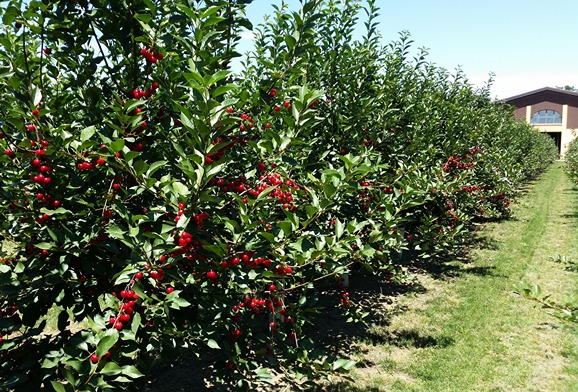
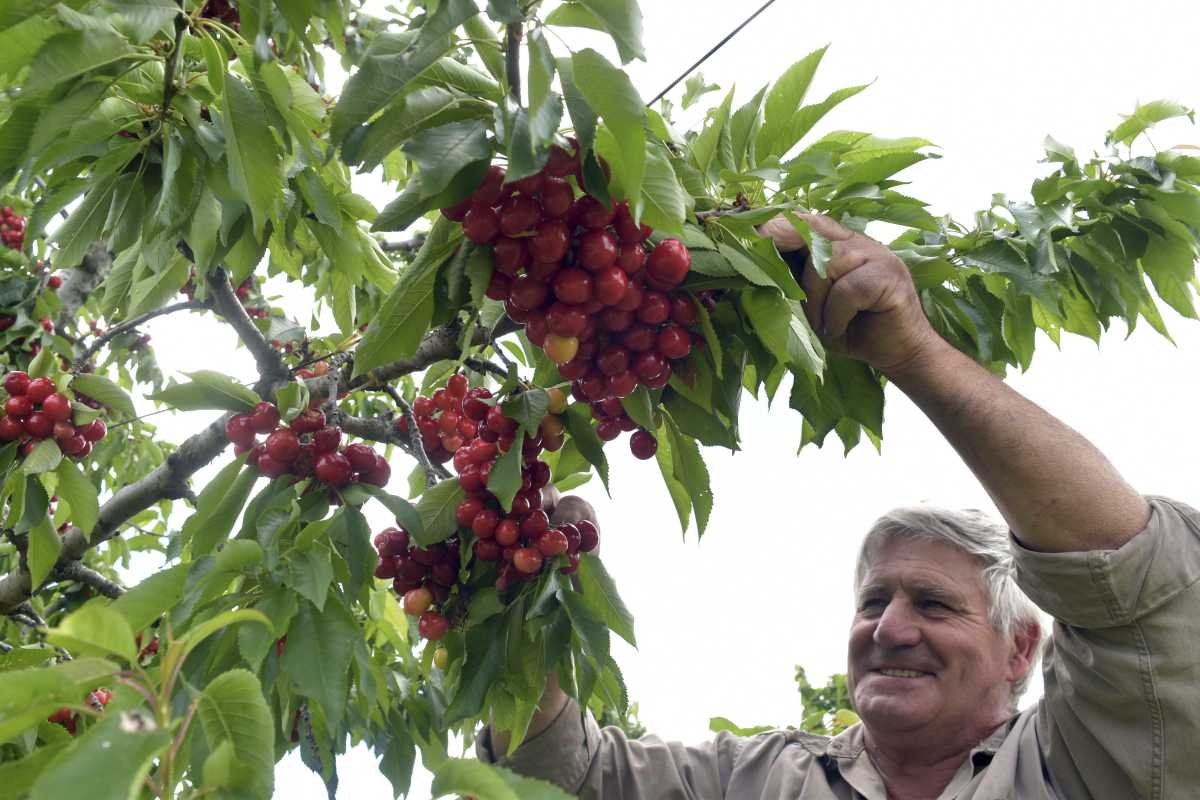
Improving fruit quality is a primary objective in modern sweet cherry production. The commercial value of cherries depends not only on their external appearance, but also on the balance between sugars and organic acids, the content of bioactive compounds, and the intensity of their aroma.
In this context, a recent study conducted on the ‘Meizao’ cultivar evaluated the effectiveness of 5-aminolevulinic acid (5-ALA) — a naturally occurring plant molecule and a precursor of chlorophyll biosynthesis — as a physiological regulator capable of enhancing both fruit quality and sensory characteristics.
The researchers applied three foliar concentrations of 5-ALA (50, 100, and 150 mg/L) during the fruit enlargement stage and compared them with an untreated control. A combined analysis of morphological, physiological, and biochemical parameters, supported by principal component analysis (PCA), identified 100 mg/L as the most effective concentration for improving the overall quality of the cherries.
Effects on fruit quality
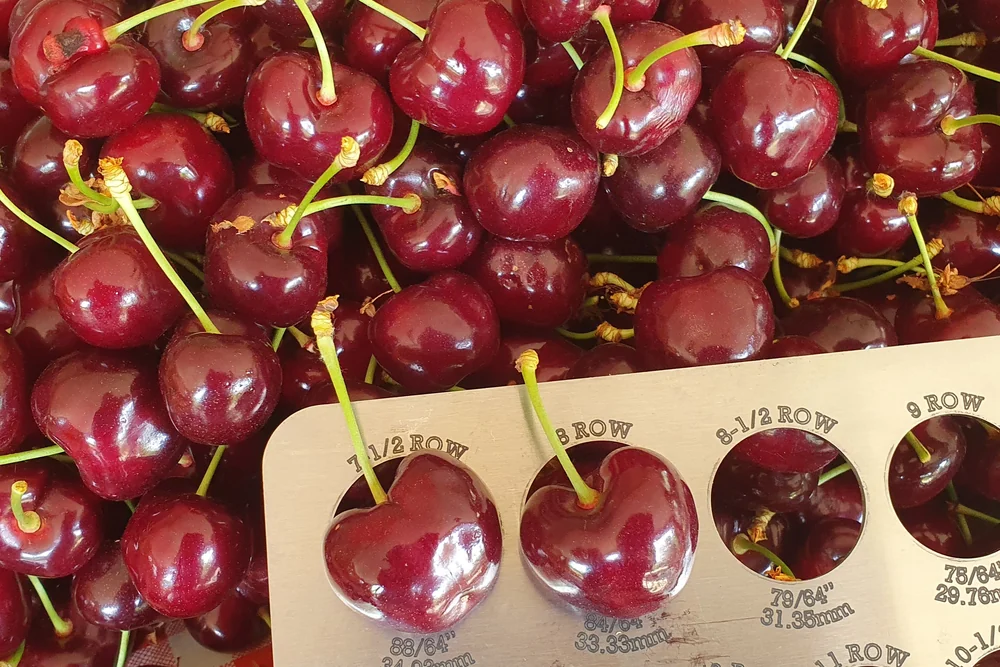
This treatment significantly increased fruit weight, fruit size, and color parameters, while also enhancing leaf photosynthetic efficiency, as demonstrated by improvements in the main chlorophyll fluorescence parameters.
The 100 mg/L 5-ALA treatment also resulted in a marked increase in the major sugars, with sucrose increasing by more than 200%, fructose by approximately 174%, glucose by 109%, and total soluble sugars by 54% compared with the control. At the same time, malic acid content decreased, leading to a higher sugar-to-acid ratio, a key determinant of fruit flavor balance.
Several nutraceutical compounds also showed favorable changes, including increases in flavonoids, total phenolics, tannins, and amino acids. In contrast, anthocyanin content was lower than in the control, suggesting a shift in phenolic metabolism toward other classes of antioxidant compounds.
Aroma profile
Volatile metabolite profiling using headspace solid-phase microextraction coupled with gas chromatography-mass spectrometry (HS-SPME-GC-MS) identified a total of 125 volatile metabolites belonging to 16 chemical classes.
In particular, the application of 100 mg/L 5-ALA promoted the accumulation of aliphatic hydrocarbons and ketones, together with the enrichment of numerous compounds responsible for woody, fruity, herbaceous, citrus, floral, sweet, and vanilla aroma notes.
Metabolic pathway analysis further revealed that the biosynthesis of secondary metabolites was the main pathway affected by the treatment, indicating a substantial reprogramming of the fruit's secondary metabolism.
Physiological mechanisms
According to the researchers, these effects are mainly attributable to the ability of 5-ALA to enhance photosynthetic efficiency, thereby increasing the availability of ATP and NADPH required for carbon fixation and the synthesis of sugars and secondary metabolites.
The greater supply of assimilates would therefore promote both the accumulation of compounds responsible for nutritional quality and the production of aroma precursors, ultimately improving the sensory attributes of the fruit.
However, the authors also emphasized that their conclusions are based on a single-year experiment conducted on one cultivar under a single growing environment. Consequently, multi-year studies, multi-location trials, and further molecular investigations will be necessary to confirm the physiological mechanisms involved and to define the most effective application strategies under commercial production conditions.
Potential applications
Overall, the study demonstrates that the appropriate use of 5-ALA, particularly at a concentration of 100 mg/L, represents a promising agronomic strategy for simultaneously enhancing the commercial quality, nutritional value, and aromatic complexity of ‘Meizao’ sweet cherries.
Source: Guo, H., Zhang, J., Wang, H., Yang, X., Su, X., Liu, J., & Li, P. (2026). Effects of 5 aminolevulinic acid on fruit quality and volatile metabolites of Meizao sweet cherry. Scientific Reports 16, 17917. https://doi.org/10.1038/s41598-026-49051-8
Image source: Stefano Lugli
Andrea Giovannini
PhD in Agricultural, Environmental and Food Science and Technology - Arboriculture and Fruitculture, University of Bologna, IT
Cherry Times – All rights reserved