Battistini Vivai is a 'historical' company with more than 70 years of activity and composed of a young and motivated team, a combination of solid experience with strong roots in the agricultural tradition of Romagna region (Italy) and an ambitious and innovative approach.
What distinguishes your company on the nursery scene?
Thanks to our origins and our distinctive traits, we have a solid presence in various international markets, which are very different from each other and are constantly growing. This is an important stimulus for research into new varieties that can satisfy our increasingly demanding customers, who also require assistance with practical advice on the agronomic and technical management of future plantings.
In what aspects can you define yourself as a nursery specialising in cherries?
The cherry trees and rootstocks we produce are intended for all agricultural entrepreneurs, whether small or large, but we pay attention to many factors, including how companies are structured, the choice of rootstocks that are best suited to their soils, the varietal choice and the destination of the final product in the various consumer markets. Even the availability of labour is a key aspect to take into account.
How do you deal with the wide availability of new cherry varieties resulting from breeding programmes?
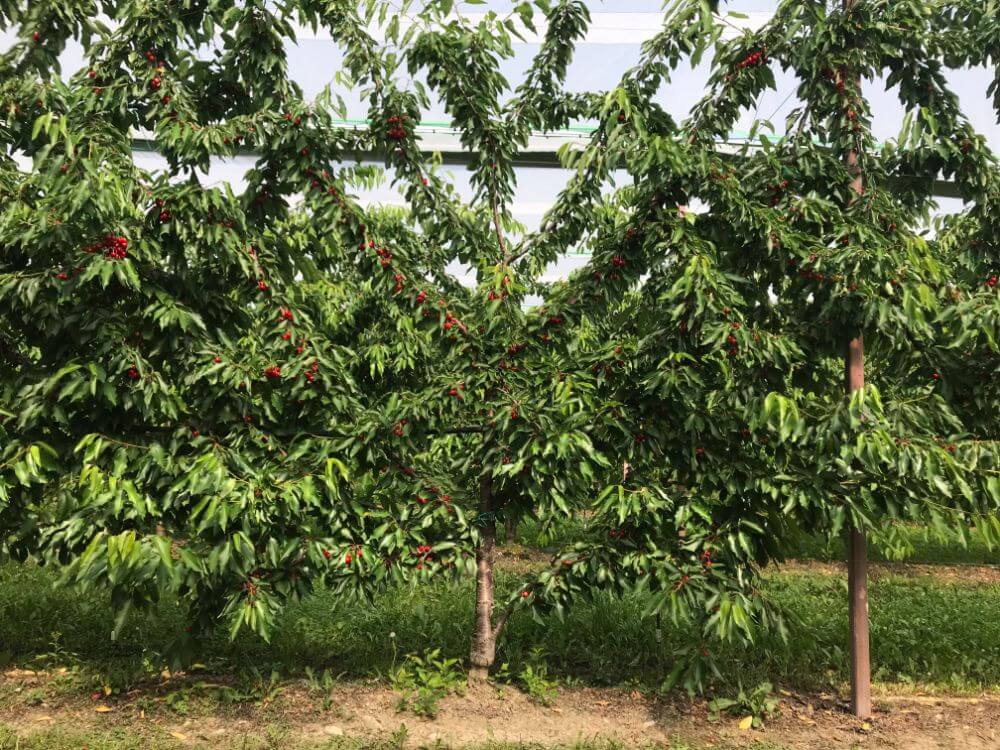
Within the cherry sector, Battistini nurseries invests every year to introduce more and more reliable varieties that can have an impact on the market, trying to optimise the production result, always in strong cooperation with our end customers, because their satisfaction makes our company have reason to exist and continue to grow. The future is all to be built, one cherry at a time.
Cherry cultivation is not exempt from the challenges facing the fresh produce supply chain. What are currently the hottest issues for the producers and the market?
Looking to the future, the aspects that will have the most development will concern a certain 'production sustainability', so self-fertile varieties with resistance to negative climatic factors will be increasingly common. Disease-resistant and health-certified varieties will be sought. This is true regardless of whether we are talking about cherry, apricot or peach, because we must not forget that our stakeholders are professional farmers who have to earn money and unfortunately we have to take into account that this income is getting thinner and thinner every year, as a result of ever more prevailing globalisation and accelerated climate change.
What are the distinguishing features of the products and services you offer your farmer customers?
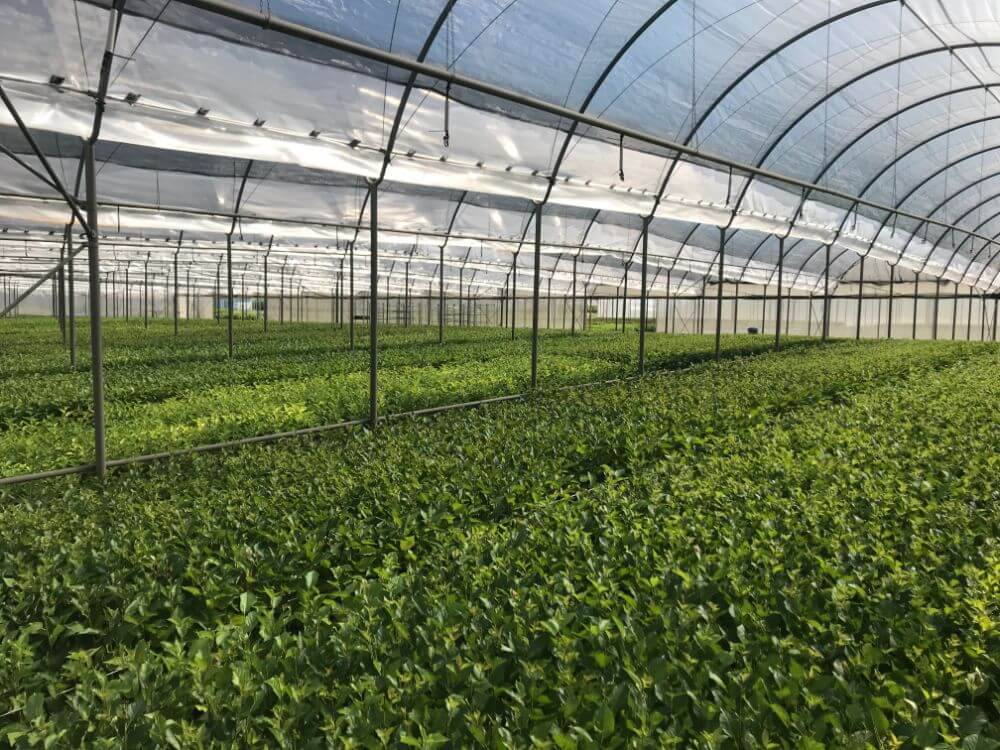
As mentioned earlier, the advantages and special features of our products within our sector concern the production of high quality, certified materials at the highest level and therefore able to facilitate orchard management within the various farms.
Calendar of self-fertile varieties
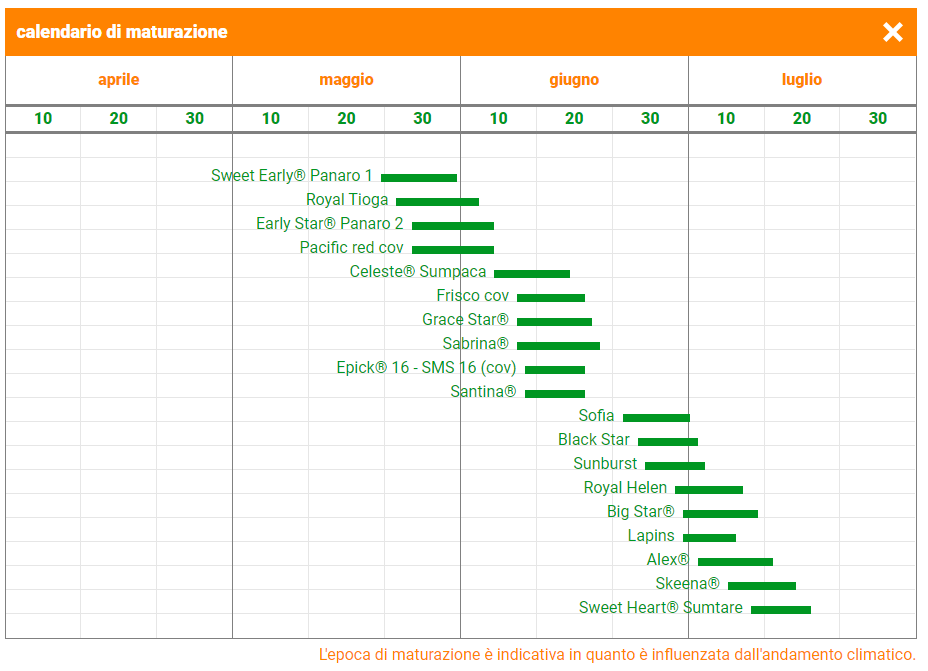 Calendar of early varieties
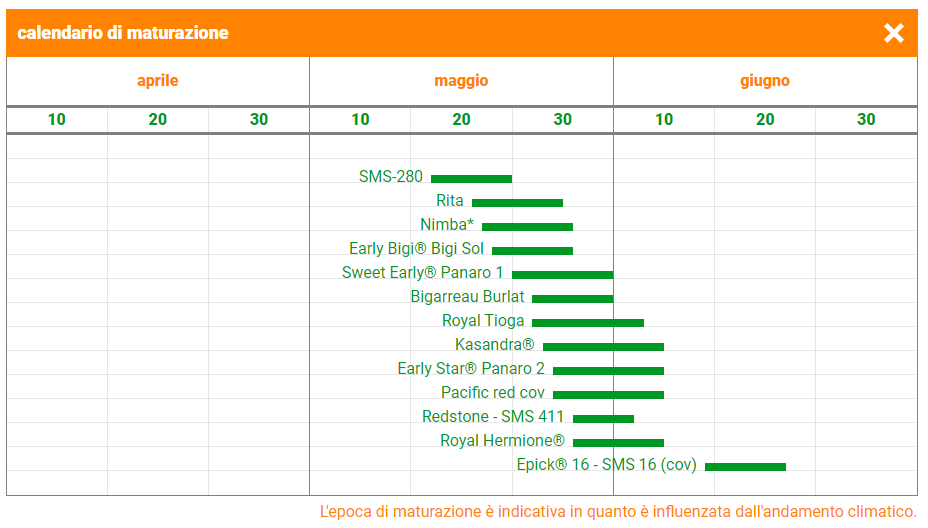 Calendar of intermediate varieties
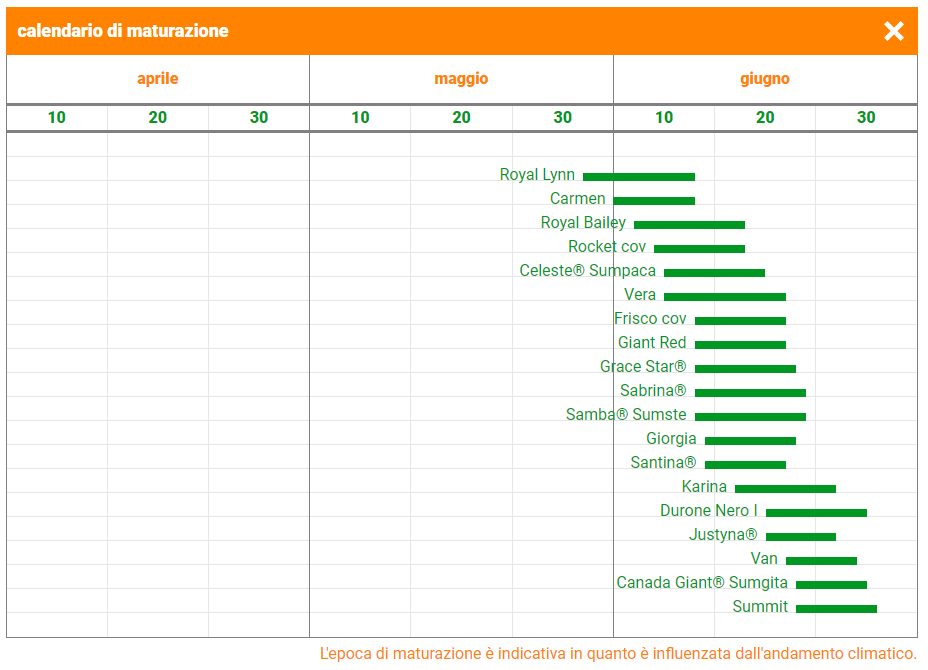 Calendar of late varieties
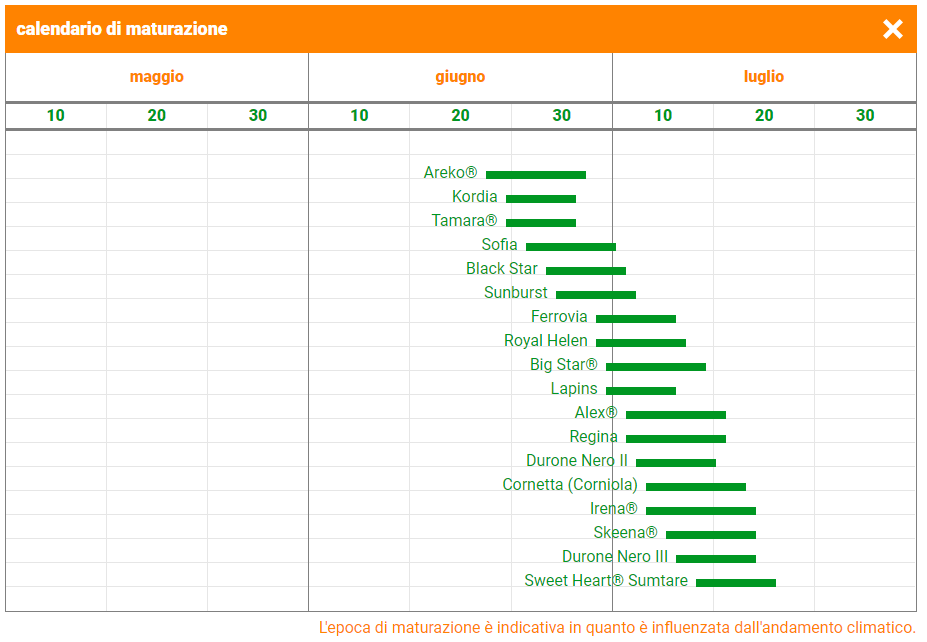
Contact Battistini Vivai
Web E-mail
Cherry Times - All rights reserved