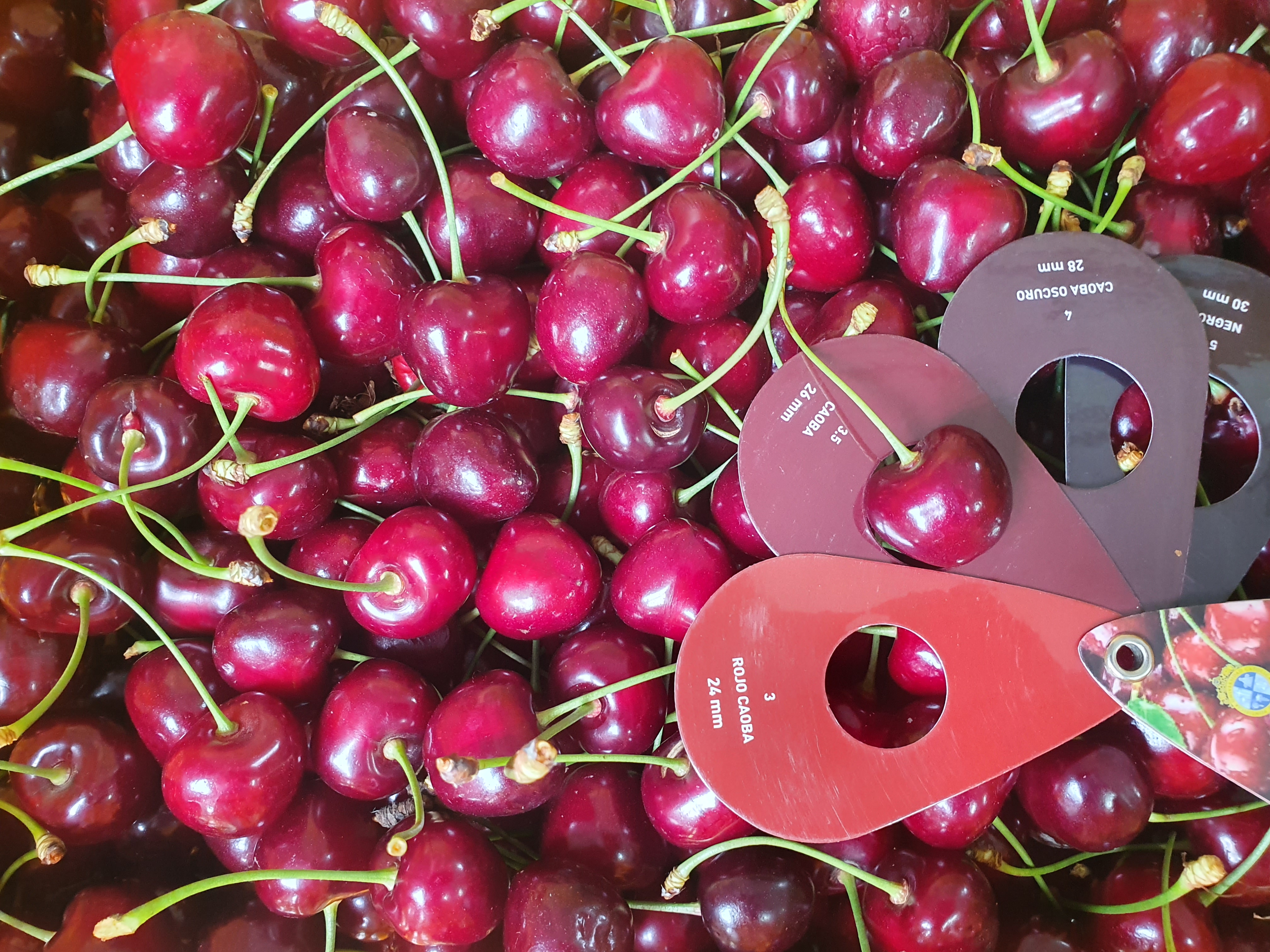
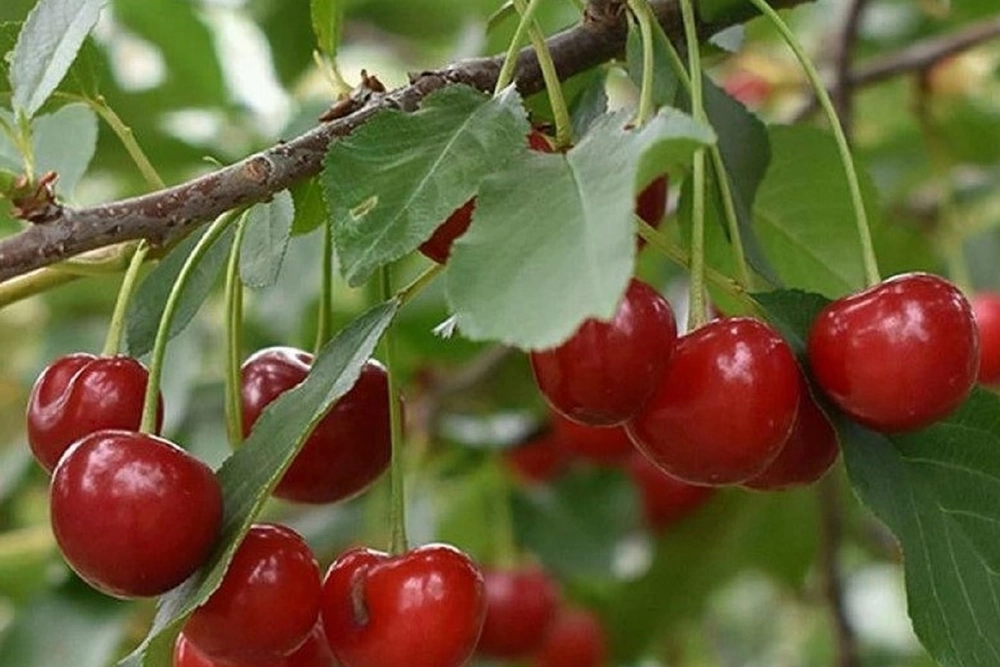
While harvest estimates in Washington and California have been revised downward due to cold snaps, unusually warm winter temperatures and off-season rains, changes in weather patterns have proved favorable for cherry growers in Canada.
Ricky Chong, director of Business Development at Canadian grower and distributor World Fresh Exports, said that climate shifts have favored growers in British Columbia (BC), the country’s leading cherry-producing region, allowing them to obtain fruit of excellent quality this season.
“We had a couple of spring frosts that actually helped the crop,” he told Portalfruticola.com. “We estimate a harvest equal to 70% of a normal year, and a lighter crop load generally means less stress on the trees. This tends to translate into larger sizes, higher Brix levels and better quality.”
The executive explained that the cherry orchards located in southern Canada, near the border with Washington State, also experienced the spring cold snaps that in April affected growers in the Yakima Valley, in the northwestern United States.
Spring frost and superior quality in British Columbia
According to the British Columbia Cherry Association (BCCA), trees south of the border were at a more advanced bud development stage when the low temperatures occurred. This made them more vulnerable to adverse conditions and caused significantly greater damage, reflected in a second seasonal forecast that was 12% lower than the industry’s initial estimate.
By contrast, frost damage on the Canadian side was minimal and helped thin the fruit load just enough to improve quality. In addition, with the return of normal weather conditions and rains recorded before the risk of cracking or production losses emerged, growers in British Columbia experienced a season with no particular setbacks.
“We are now seeing that the harvest is about six days ahead of normal harvest dates. We expect an excellent harvest and solid demand,” said Chong.
“The harvest began on June 8 and will continue at least until August 25. New varieties will soon allow it to be extended into September,” he added.
Early harvest and record prospects for 2026
As if that were not enough, the executive added that, with around 5 million boxes of 9 kilos, equivalent to about 45,000 metric tons, British Columbia’s 2026 harvest would be one of the most abundant recorded by local growers in recent years.
Chong nevertheless clarified that this is an unofficial estimate. He explained that the Canadian cherry industry is known for keeping its data confidential and does not publish production forecasts before the start of each season.
Nonetheless, the figures are encouraging and reflect the steady expansion of the cultivated area, which according to Chong now exceeds 7,000 acres (about 2,833 hectares).
This forecast also confirms the sector’s recovery after the severe frosts that hit the Okanagan and Similkameen valleys in 2024. That year, sales fell by about 68% compared with the previous year, reaching a historic low of 7,695 tons, according to government data.
Sector recovery after frosts in Okanagan and Similkameen
The 2025 season marked a strong recovery, with production more than tripling compared with the previous year. According to the BCCA, the abundant harvest was the result of the rest the trees had after the 2024 disaster, to the point that the industry struggled to find enough labor to pick all the available fruit. This year, they say, the situation has returned to normal, with a more balanced campaign spread throughout the entire season.
The Canadian cherry industry is currently undergoing a varietal renewal process, maintaining its focus on cultivars developed locally by Summerland Varieties (SVC). Chong indicated that demand remains solid for all varieties, particularly Kootenay, Skeena, Sentennial and Staccato.
“The new varieties, such as Sansia and Safirah from SVC, are replacing traditional varieties such as Santina, Lapins and Sweetheart, offering larger MM sizes, higher Brix levels, firmer fruit and better stem retention,” he added.
New Canadian varieties for larger fruit sizes
Although between 70% and 80% of production is destined for export, Chong emphasized that Canadian growers are very discreet about the markets they supply.
“Our main markets are practically our best-kept secret; our competitors are listening,” he commented, laughing.
The executive explained that growers in British Columbia have designed their agronomic practices to meet the requirements of the world’s most demanding markets. This includes specialized phytosanitary programs, thinning to obtain larger sizes, and harvesting only when the fruit reaches high Brix levels and the appropriate color.
“All our fruit is produced under the Systems Approach, which means we can export to any market,” he said.
Canadian exports to the European Union and Asia
That “any market” includes highly demanding destinations such as the European Union, China, Thailand, Taiwan, South Korea and Japan.
With a portfolio of premium customers, one of the few obstacles to the continued expansion of Canadian exports is distance. For this reason, Chong explained that the industry’s focus is on opening new markets through improvements in packaging and logistics.
“This means reducing packaging volume and developing new formats capable of maintaining the freshness and shelf life of cherries during long transit times to distant destinations such as Dubai and Jakarta, while always preserving the cold chain,” he concluded.
At the same time, the BCCA continues to promote domestic consumption. Until August 15, the association is celebrating Canadian Cherry Month, inviting consumers to take part in the “Flip for Canadian Cherries” campaign, which encourages them to turn over cherry packages in supermarkets to check for the “Product of Canada” label printed on the bottom.
With an abundant harvest such as the one expected for 2026, the greater the number of cherry consumers, the better it will be for the industry.
Source: www.portalfruticola.com
Image source: World Fresh Exports
Cherry Times - All rights reserved