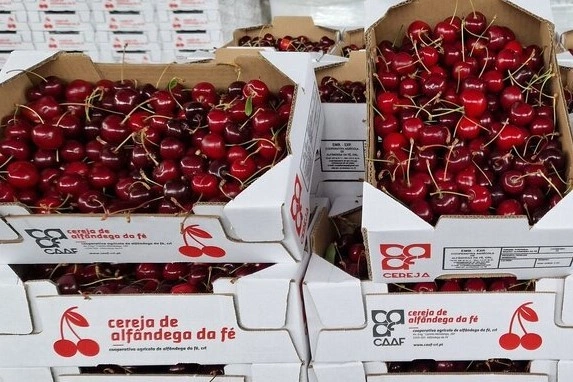
The limited storage life of sweet cherries is one of the major challenges in postharvest management. Their high susceptibility to dehydration, enzymatic browning, firmness loss, and decay results in substantial economic losses during storage, transport, and marketing.
In this context, a recent study evaluated the effectiveness of thermosonication (TS), a technology combining ultrasound with moderate heat, as an innovative approach to improve the storability of 'Meizao' sweet cherries. The results showed that the optimal treatment, consisting of ultrasound at 40 kHz and 480 W combined with a temperature of 40 °C for 15 minutes, effectively preserved fruit quality during 12 days of refrigerated storage at 4 °C.
From a quality standpoint, thermosonication significantly reduced postharvest deterioration. After 12 days of storage, the treatment decreased decay incidence by 7.99% compared with the control, reduced weight loss by 0.34%, and maintained flesh firmness at 1.14 times that of untreated fruit.
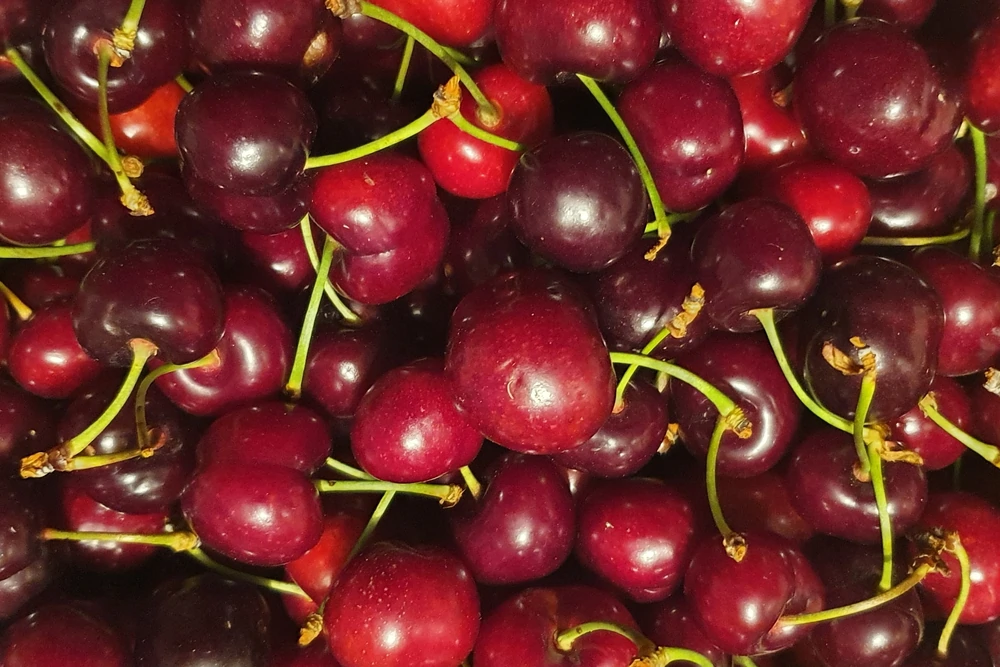
Fruit quality
In addition, skin colour, soluble solids content, reducing sugars, vitamin C, and phenolic compounds were better preserved, all of which are key parameters influencing both the commercial quality and nutritional value of sweet cherries.
These positive effects are likely attributable to the synergistic action of ultrasonic cavitation and moderate heating, which reduces the microbial load, slows respiratory metabolism, and limits the physiological changes associated with tissue senescence.
Thermosonication also reduced the activity of peroxidase (POD) and polyphenol oxidase (PPO), two enzymes directly involved in enzymatic browning and postharvest quality deterioration. At the same time, catalase (CAT) activity, one of the major antioxidant enzymes in plant cells, increased by 33.69% compared with the control.
This enzymatic balance helped limit the accumulation of reactive oxygen species and slowed the oxidative processes responsible for quality loss during storage.
Cellular integrity
Electrical impedance spectroscopy and scanning electron microscopy analyses revealed that the treatment induced only minor changes in membrane permeability and tissue microstructure without compromising cellular integrity.
These findings demonstrate that the treatment intensity is sufficient to exert a preservative effect while remaining gentle enough to avoid structural damage to the fruit, a fundamental requirement for industrial application.
Metabolomic analysis further clarified the biochemical mechanisms underlying these effects. Thermosonication induced the up-regulation of 286 metabolites, with a marked increase in antioxidant flavonoids and isoflavonoids, including sakuranetin and diosmetin-7-O-β-D-glucoside.
In parallel, RT-qPCR analysis confirmed the activation of the main genes involved in the phenylpropanoid and flavonoid biosynthetic pathways (PaPAL, Pa4CL, PaCHS, and PaCAD), demonstrating that the treatment directly stimulates the metabolic pathways responsible for phenolic compound synthesis.
Flavonoid biosynthesis
Enhanced flavonoid biosynthesis therefore appears to be the primary molecular mechanism through which thermosonication strengthens the fruit's antioxidant defence system and contributes to maintaining quality during storage.
Overall, the study demonstrates that thermosonication is a promising technology for the postharvest preservation of sweet cherries. The combination of ultrasound and moderate heat effectively reduces both qualitative and quantitative losses, helping preserve the commercial quality of the fruit throughout storage.
These findings provide encouraging prospects for integrating thermosonication into modern postharvest management systems for the sweet cherry industry. However, further research will be required to facilitate commercial adoption by evaluating its industrial-scale application and optimizing the energy efficiency of large-scale processing operations.
Source: Zuo, L., Wen, Y., Li, H., Zhang, C., Hao, F., Li, J., Leng, Y., & Ren, D. (2026). Effect of thermosonication on quality and shelf-life of sweet cherry following cold storage. Food Chemistry: X, 35, 103834-103834. https://doi.org/10.1016/j.fochx.2026.103834
Image source: Stefano Lugli
Andrea Giovannini
PhD in Agricultural, Environmental and Food Science and Technology - Arboriculture and Fruitculture, University of Bologna, IT
Cherry Times – All rights reserved