A specialist in fruit crop production at INIA Quilamapu has warned that excess water during winter and early spring can cause serious problems for tree roots and negatively affect bud break and flowering.
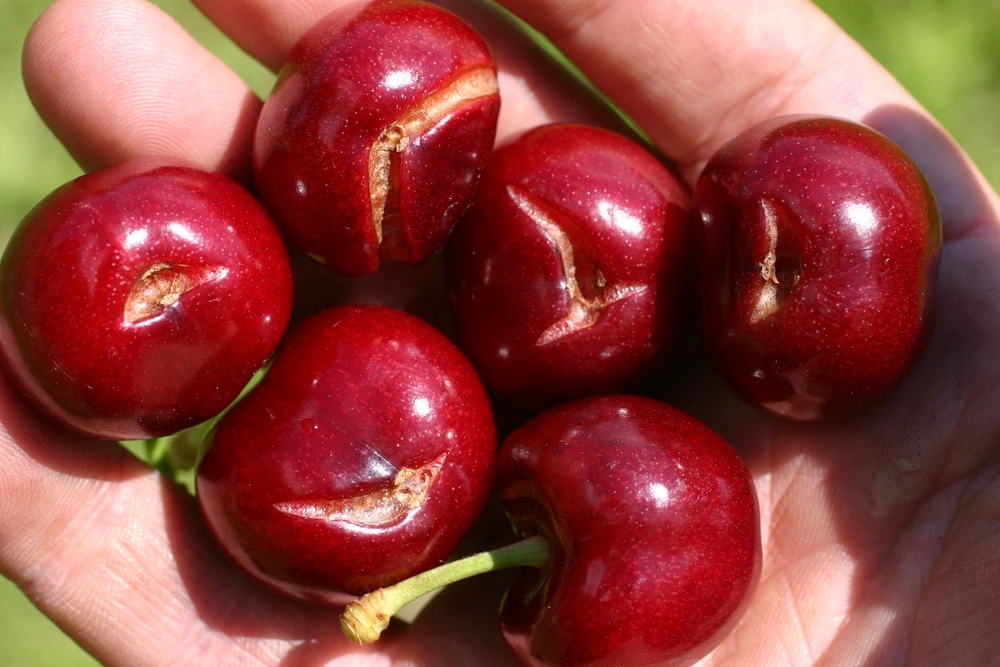
Rainfall close to harvest could also increase the risk of fruit cracking and rot.
The weather conditions forecast for spring, which is expected to bring rainy periods and above-average temperatures due to El Niño, pose significant challenges for the national cherry sector.
According to Cristian Balbontín, a fruit crop production specialist at INIA Quilamapu, one of the main risks is waterlogging in orchards during winter and early spring, which can cause root asphyxia and affect subsequent stages of tree development.
Roots and tree development
The researcher explained that the emergence of cherry trees from dormancy depends primarily on the chilling accumulated by the buds; therefore, root condition does not directly alter this process.
However, he noted that bud break and flowering require the metabolic and hormonal support provided by the root system: this is precisely where excess water can have a significant impact.
“In saturated soil, oxygen is depleted within a few hours,” Balbontín said. Under these conditions, he explained, roots switch to fermentative metabolism, which causes tissue acidification and death, reducing the tree’s ability to absorb water and nutrients.
At the same time, carbohydrate reserves are consumed and the synthesis of cytokinins, hormones essential for flowering and early fruit growth, decreases.
Importance of drainage
The INIA Quilamapu researcher stressed that the consequences of waterlogging in orchards manifest as irregular bud break, which disrupts the synchronization of flowering and, consequently, pollination. This is compounded by reduced availability of micronutrients such as boron and zinc, whose uptake is particularly impaired when the soil is poorly oxygenated.
He also noted that excess water can accelerate the loss of available nitrogen, directly affecting subsequent fruit growth.
Faced with this situation, Balbontín recommended identifying in advance the areas of the orchard most at risk of waterlogging, particularly the lowest parts of the plots, and ensuring rapid water drainage.
To this end, he suggested installing or improving surface drainage in low-lying areas and headlands, as well as carrying out preventive cleaning of channels, ditches and culverts before the rains.
Prevention and tree nutrition
He also recommended subsoiling in areas with compacted soil or clay layers, provided the soil is dry. Regarding tree nutrition, he identified foliar applications of boron and zinc before the pre-flowering stage as a possible preventive measure to compensate for reduced root uptake.
Another concern is the incidence of disease caused by Phytophthora spp., an organism belonging to the oomycete group, which is very common in soils and causes severe damage to roots.
According to the researcher, the risk increases when soil saturation is combined with above-average temperatures: conditions that favor its development and make preventive management particularly important.
Rainfall before harvest and its impact on quality
Rainfall close to the harvest period, which runs from October to January depending on the region of the country, presents an additional challenge for cherry growers, as it is associated with fruit splitting, or cracking, and the resulting rot.
Cristian Balbontín explained that fruit susceptibility to cracking is not determined solely in the period before harvest but begins to develop early, during the cell division that takes place in the weeks following fruit set.
“During that period, a significant part of the thickness and quality of the cuticle is established, determining the fruit’s resistance to water entry.”
The researcher emphasized that “INIA is pursuing an ongoing line of research into the factors that help preserve and improve fruit quality under climatic stress conditions, such as those forecast for this season.”
Solutions for cherry quality
In this context, he noted that the application of hormonal inducers, particularly jasmonates, has shown favorable results in improving the fruit’s impermeability.
He added that the Fruit Quality Laboratory at INIA Quilamapu is evaluating various technological solutions, including hormonal regulators, biostimulants and storage systems, aimed at reducing the impact of adverse weather conditions on cherry quality and postharvest storage life.
Source: redagricola.com
Image source: Stefano Lugli
Cherry Times - All rights reserved