Sweet cherry cultivation represents a significant component of fruit production in the Balkan countries, with Serbia, Greece, and Bulgaria among the leading producers in the region (ranking 9th, 12th, and 17th worldwide, respectively).
The pedoclimatic conditions of the area—characterized by sufficiently cold winters to meet the chilling requirements of cultivars and relatively mild springs—are generally favorable for sweet cherry development, particularly in hilly zones and in the plains of southern and central Bulgaria.
Across the Balkans, including Romania, Serbia, and northern Greece, production systems rely on both traditional local cultivars and high-quality international varieties, frequently grafted onto semi-dwarfing or vigorous rootstocks (such as Maxma 14 or Gisela) to optimize productivity, adaptability, and orchard management.
Production orientation and research context
Production is primarily oriented toward the fresh market and export to the European Union.
A study conducted at the Agricultural Academy in Sofia (Bulgaria) evaluated the phenological expression of six sweet cherry cultivars (‘Ferrovia’, ‘Regina’, ‘Kordia’, ‘Skeena’, ‘Lapins’, and ‘Canada Giant’) grafted onto the Maxma 14 rootstock and grown in southern Bulgaria.
The objective was to precisely describe the phenological stages of each cultivar and assess their temporal variability over two consecutive years of observation.
Monitoring and climatic influence
Monitoring was carried out according to the international BBCH scale, focusing on three critical developmental stages: bud swelling (BBCH 51), full bloom (BBCH 65), and fruit maturity (BBCH 87).
Data analysis revealed that phenological stages were significantly influenced by seasonal climatic conditions, particularly temperature fluctuations during dormancy release and flowering.
For most cultivars, the onset of the vegetative season in the second year of monitoring occurred 2–8 days earlier than in the previous year, indicating a phenological shift associated with more favorable thermal conditions prior to bud break.
Flowering dynamics and stage compression
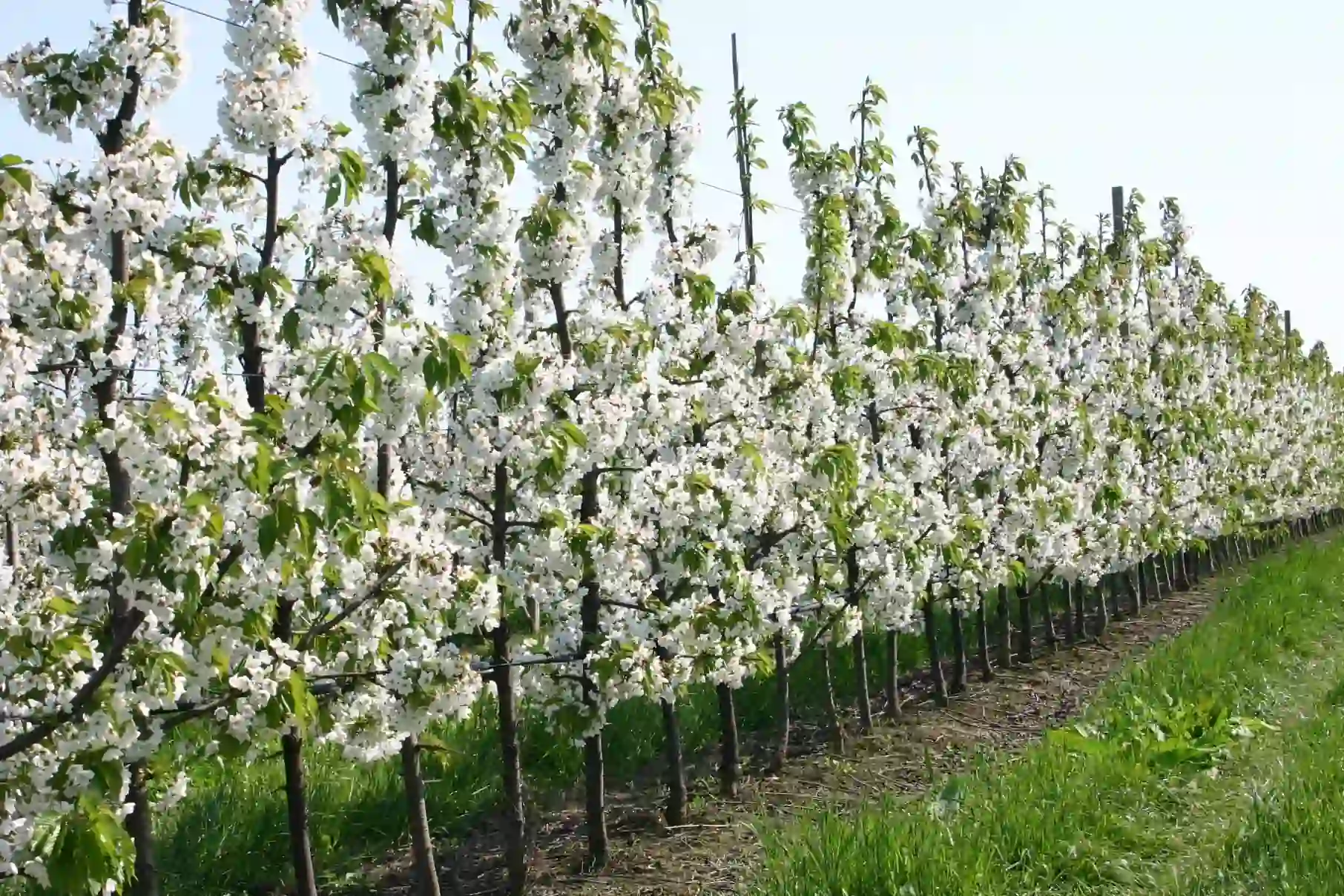
Similarly, the full bloom stage (BBCH 65) was advanced by 4–8 days in the second year and showed a reduction in anthesis duration of 2–5 days.
These findings demonstrate not only variation in the timing of phenological onset and completion but also a compression of stage duration in response to annual climatic differences.
Further implications concern pollination dynamics and the potential exposure of flowers to adverse events, such as late spring frosts or thermal stress.
Cultivar variability and agronomic implications
Analysis of phase duration highlighted cultivar-specific differences in the transitions from BBCH 51 to BBCH 65 and from BBCH 65 to BBCH 87; however, all cultivars exhibited phenological trends consistent with annual thermal conditions.
Overall, the total length of the vegetative season and flowering period varied among cultivars but remained highly sensitive to environmental factors.
These results indicate that, under controlled experimental conditions on Maxma 14 rootstock, cultivar phenological response is flexible rather than fixed.
Seasonal patterns and management strategies
While the rootstock allows the expression of varietal differences, the timing of key developmental stages remains closely linked to seasonal climatic patterns.
This has important agronomic implications, as understanding mean phenological values and their variability can support orchard management strategies, including frost protection, irrigation scheduling, and harvest planning.
Source: www.researchgate.net
Image souce: Stefano Lugli
Melissa Venturi
University of Bologna (IT)
Cherry Times - All rights reserved