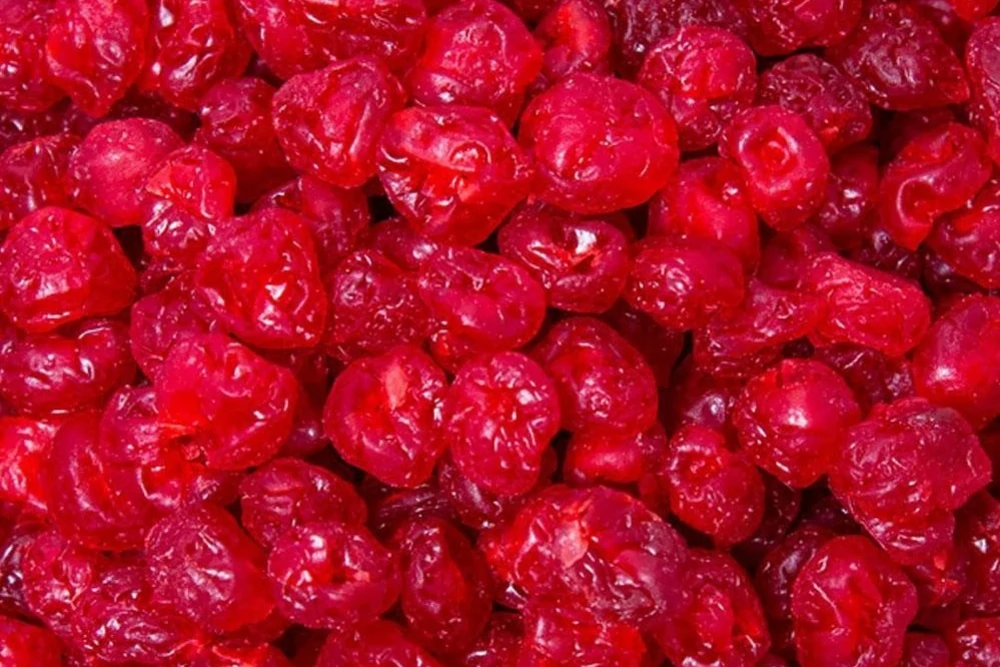
Solar drying can extend the shelf life of fresh cherries while making storage, transport and commercialization easier. A study comparing different airflow configurations found that a single-fan indirect solar dryer offered the best balance between drying time, energy use and product quality.
Fresh cherries are highly perishable because of their high moisture content, which limits their storage stability. Drying reduces moisture content and water activity, extending shelf life and facilitating storage, transportation and commercialization.
Because conventional drying processes can be energy-intensive, solar energy offers a promising preservation strategy.
Drying performance and energy efficiency
The study used an indirect cabinet-type solar dryer equipped with three 50 W axial fans. Cherries of the 0900 Ziraat cultivar were pitted and dried under five conditions: passive drying without ventilation (P); active drying with one fan (F1), two fans (F2) or three fans (F3); and conventional open-air sun drying.
The researchers monitored moisture content, drying rate and effective moisture diffusivity, alongside energy consumption, specific moisture extraction rate (SMER), specific energy consumption (SEC) and thermophysical properties. Final product quality was assessed using the colorimetric coordinates L*, a* and b*, and the browning index.
Airflow configuration significantly affected drying performance. F1 achieved the highest average moisture removal rate, at 0.001398 g water/g dry matter·min, while open-air drying had the lowest rate, at 0.000609. F1 also had the shortest drying time: approximately 3,360 minutes, compared with 6,000 minutes for conventional sun drying.
Effective moisture diffusivity ranged from 9.62 × 10⁻⁹ to 1.43 × 10⁻⁸ m²/s. Increasing airflow did not necessarily improve overall efficiency: active configurations required more energy than passive and open-air drying. F2 achieved the highest SMER, while F3 recorded the highest SEC, highlighting the trade-off between process intensification and energy demand.
F1 produced the highest average values for specific heat, thermal conductivity, thermal diffusivity and density.
Product quality and preferred configuration
Naturally dried cherries generally retained a color closer to that of fresh fruit. However, F1 offered the best technological compromise, substantially reducing drying time while maintaining relatively good color quality.
The authors identify the single-fan indirect solar dryer as the preferred configuration.
Technology sustainability and future research
Further research should investigate photovoltaic power supply, thermal control systems and pretreatments to improve energy efficiency and preserve bioactive compounds. Industrial-scale validation is still needed, since the findings are based on a prototype system.
Solar drying can turn a highly perishable fruit into a stable, storable product. It may also contribute to food-waste reduction and renewable-energy use, supporting greater sustainability across the food supply chain.
Source: treecrop.com
Image source: Mangoes
Cherry Times - All rights reserved