Bacterial canker of sweet cherry is widely recognized as one of the most damaging diseases for modern cherry production. For commercial growers, it is not just a phytosanitary issue but directly affects orchard longevity, production stability, and long-term profitability. In major cherry-producing regions, an increasing number of growers are seeking effective and sustainable methods to manage bacterial infections without excessive reliance on traditional chemical treatments.
Understanding bacterial canker
Bacterial canker of sweet cherry is mainly caused by Pseudomonas syringae, a pathogen that thrives in cool and humid environments and infects trees through wounds or natural openings. In commercial orchards, the disease often develops asymptomatically, especially when trees are under environmental or physiological stress.
Unlike many other cherry diseases and treatments, bacterial canker is difficult to eradicate once established. For this reason, early diagnosis and prevention are essential for orchard managers.
Early recognition of key infection symptoms
Recognizing symptoms
One of the main challenges in identifying bacterial canker symptoms in cherry trees is that they can resemble other stress-related issues. However, several signs are strong indicators of infection.
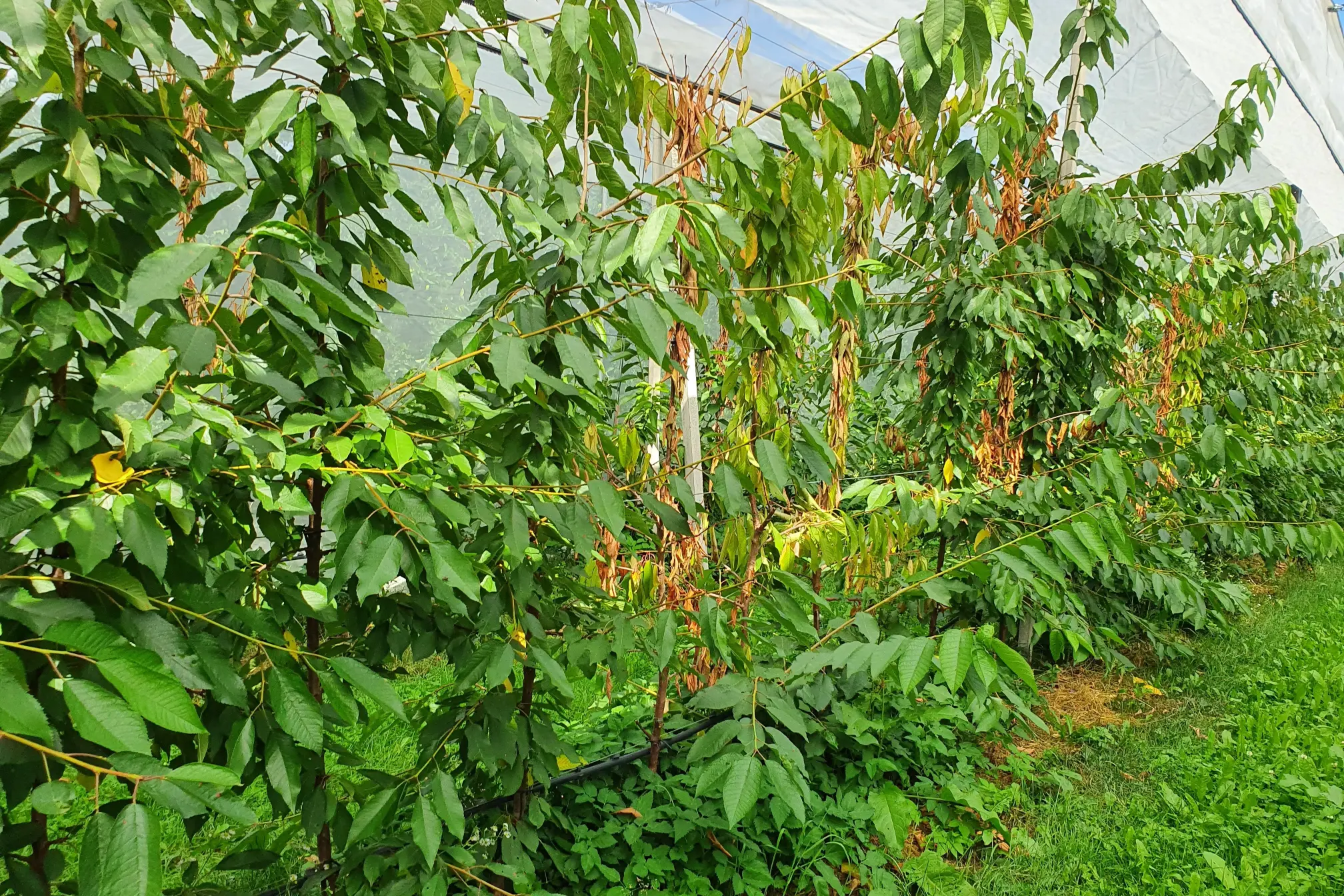
Growers often observe sap exudation from the trunk, a phenomenon known as gummosis, which is one of the most evident warning signs. This is typically followed by branch dieback, bud necrosis, and irregular canopy growth. Over time, these symptoms can lead to significant decline, especially in high-density commercial orchards.
Early diagnosis plays a crucial role in controlling bacterial canker, as delayed intervention often results in wider spread of the pathogen throughout the orchard.
Control and challenges
Why bacterial canker is so difficult to control
Managing bacterial canker in commercial cherry orchards is complex because the disease is closely linked to environmental conditions and tree stress.
Low temperatures, frequent rainfall, and frost create the ideal conditions for infection. At the same time, factors such as poor soil drainage, inadequate nutrition, and mechanical damage increase susceptibility. This combination makes it difficult to rely on a single solution.
Traditional treatment methods for bacterial canker often focus on disease suppression rather than long-term prevention; for this reason, many growers are now adopting more integrated approaches.
Prevention strategies
Developing a preventive orchard management strategy
Effective disease management in cherry orchards begins with prevention. Orchard design, site selection, and air circulation influence disease pressure. Well-drained soils and balanced planting density help reduce moisture-related risks.
Pruning practices also play a key role in prevention. Since infections often occur through wounds, scheduling pruning during dry conditions can significantly reduce disease entry points. In commercial operations, even small adjustments in timing can have a considerable impact.
It is equally important to maintain trees in overall good health. Balanced fertilization and proper irrigation reduce stress, making trees less vulnerable to infection. This is a key principle of integrated pest management (IPM) in cherry orchards, where plant health is considered the first line of defense.
Biological control
The role of biological control in modern orchards
As growers look for more sustainable solutions, biological control of bacterial canker is gaining increasing importance. Microbial-based products, particularly those containing beneficial bacteria such as Bacillus species, are proving to be valuable tools in commercial fruit systems.
These biocontrol agents for cherry diseases work by competing with pathogens, colonizing plant surfaces, and enhancing the plant’s natural defenses. In many cases, they also contribute to improving soil microbiology, supporting overall plant resilience.
For growers seeking biological treatments for cherry trees or aiming to reduce chemical inputs, biological solutions offer a practical and scalable alternative.
Management and timing
For a deeper analysis of how microbial solutions are applied in real orchards, this guide on bacterial canker treatment provides further insights into integrating biological strategies with orchard management practices.
Timing and phytosanitary risk management in disease control
Effective management of bacterial canker in cherry orchards largely depends on timing. High-risk periods, particularly early spring and autumn, require proactive protection strategies.
Applying preventive treatments before rainfall, protecting pruning wounds, and carefully monitoring environmental conditions can significantly reduce infection rates. This approach aligns with modern sustainable agriculture practices in cherry production, where prevention replaces reaction.
Sustainable approach
A shift toward sustainable disease control in cherry orchards.
The future of managing bacterial diseases in cherry trees is moving toward integrated and systemic strategies. Rather than relying exclusively on chemical interventions, growers are combining cultural practices, biological solutions, and precise timing to achieve more consistent results.
This shift is driven not only by regulatory pressure but also by the need to ensure long-term orchard sustainability and improve return on investment.
Conclusion
Bacterial canker is unlikely to disappear from commercial cherry production, but its impact can be significantly reduced with the right approach. By focusing on prevention, strengthening tree health, and integrating biological control strategies, growers can build more resilient orchard systems.
For large-scale operations, adopting these best management practices for bacterial canker in commercial cherry orchards is becoming essential, not only for disease control but also for the future of sustainable fruit production.
Source: Novobac
Image source: Stefano Lugli
Cherry Times - All rights reserved