Phytosanitary management of cherry tree wood must be based on a model that integrates different modes of action. It cannot therefore rely on a single tool, since many of the available solutions are synergistic and not mutually exclusive.
The winter dormancy period visibly begins with leaf fall, a stage that creates a favorable window for infection by various pathogens due to the numerous natural wounds caused by leaf abscission. Proactive management during this window is crucial: a diagnostic error or failure to carry out preventive treatments at this stage inevitably results in a loss of production potential in subsequent seasons.
The technical importance of this period lies in the drastic reduction of the initial inoculum load. A precise balance between chemical control, biological control and cultural practices is the only way to limit colonization by pathogens that threaten the trees. It is essential to understand that the effectiveness of any protection program begins with the correct taxonomic identification of the organisms capable of colonizing the wood.
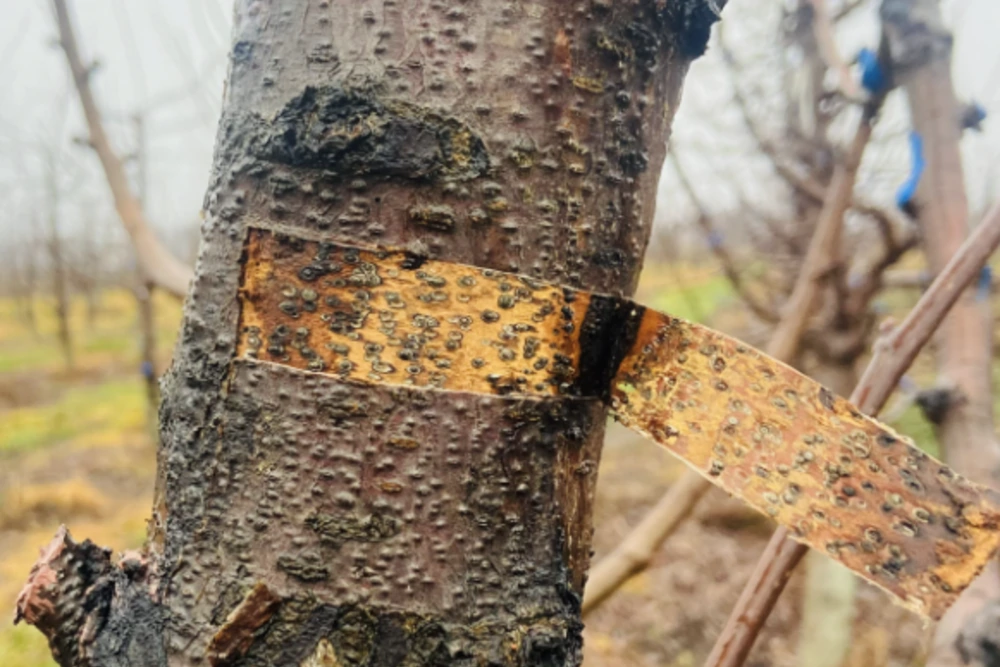
Etiological differentiation
The etiological differentiation between bacterial diseases and wood-decay fungi is essential for selecting the appropriate active substances. The indiscriminate application of products without a prior diagnosis leads to biological inefficiency and unjustified expenditure.
In addition to the main pathogens, monitoring should consider the presence of:
- Chondrostereum purpureum
- Schizophyllum commune
- Cadophora sp. and Callophorina sp.
- Eutypa lata
Pillars of cultural and preventive management
Cultural practices represent the first biosecurity barrier. Their technical implementation is not optional: the aim is to reduce the tree’s physiological vulnerability and close the entry points created by environmental conditions and cultivation operations.
The following practices must be integrated to reduce the risk of infection:
- Nutrition and vigor management: ensure balanced nitrogen fertilization to prevent the development of excessively succulent and vulnerable tissues.
- Healthy plant material: use only certified plants sourced from nurseries and supplied with phytosanitary certification.
- Pruning schedule: strictly carry out pruning during periods of low environmental risk, in the absence of rainfall and frost.
- Sanitary pruning: surgically remove diseased wood to eliminate active sources of inoculum before crop-load regulation or renewal pruning operations.
- Management of infected material: immediately and completely remove pruning debris from the orchard and burn or bury it.
- Operational hygiene: thoroughly disinfect pruning shears, saws and other tools after each operation, using potassium permanganate or peracetic acid combined with hydrogen peroxide.
- Wound protection: immediately coat pruning cuts and apply fungicides or bactericides.
- Sun protection: use protective products such as phospholipids or kaolinite to prevent heat stress in the wood during the summer months.
- Trunk painting: create a physical barrier against temperature fluctuations and external agents.
- Prevention of solar radiation damage: protect the wood from sunburn to prevent cracks that could become entry points.
- Wildlife control: actively manage physical damage caused by rabbits.
- Frost control: adopt active or passive systems to limit cold injuries, which are among the main entry points for P. syringae.
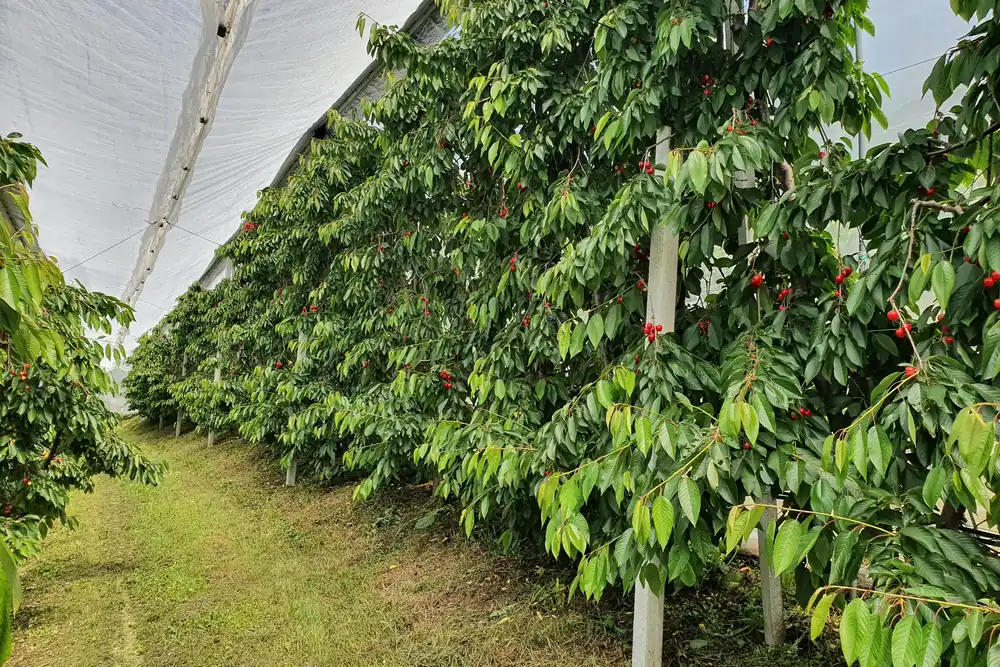
- Structural design: adopt training systems suited to the climatic zone to optimize ventilation and light exposure.
Inoculum control and reduction strategy
The primary objective of the control strategy during winter dormancy is to “reduce the inoculum load” by sanitizing plant surfaces and protecting the critical points through which spores and bacteria can penetrate.
In my opinion, it is essential to include and alternate different modes of action according to the phytosanitary issues and pressures present in the orchard, bearing in mind that none of these solutions excludes the others. The following are some alternatives that can be used to establish a phytosanitary program based on their respective modes of action and application timings.
Tools for controlling bacterial diseases
Tools for controlling bacterial diseases (Pseudomonas syringae)
- Particulate copper compounds: cuprous oxide, copper hydroxides and copper oxychloride.
- Soluble copper compounds: pentahydrates, copper-calcium compounds and copper gluconates, characterized by high mobility and effectiveness.
- Bactericides and antibiotics: pyraclostrobin, dodine and antibiotics such as gentamicin combined with oxytetracycline, kasugamycin and streptomycin.
- Oxidizing agents: peracetic acid and hydrogen peroxide.
- Secondary metabolites: strategic use of Wert and Bactofus.
- Microorganisms: Bacillus.
Tools for controlling wood-decay fungi
Tools for controlling wood-decay fungi (Cytospora, Calosphaeria, silver leaf disease)
- Contact fungicides: mancozeb, dodine or captan.
- Systemic fungicides – benzimidazoles: thiophanate-methyl, carbendazim and benomyl.
- Strobilurins: pyraclostrobin and azoxystrobin.
- Triazoles: tebuconazole, difenoconazole and fenbuconazole.
- Carboxylic acids: Carboxigram Zn.
- Oxidizing agents: peracetic acid and hydrogen peroxide.
- Secondary metabolites: strategic use of Wert and Bactofus.
- Microorganisms: use of Bacillus and Trichoderma.
During the leaf fall period, treatment with a copper source should always be combined with a contact fungicide to control both bacteria and wood-decay fungi. The number of applications during this stage will depend largely on adverse weather conditions and the time required for leaf abscission to be completed. Between three and five applications may be required, carried out every five to seven days.
Critical intervention: canker surgery
The physical removal of fruiting bodies and the cleaning of necrotic tissues are crucial for stopping the systemic progression of the disease and reducing the inoculum load in the orchard. The operational protocol can be based on tissue removal and involves the following steps:
Tool disinfection is mandatory after every operation and must be carried out using 2% potassium permanganate or 10% sodium hypochlorite.
Scrape the canker, completely removing the necrotic material and always leaving a margin of healthy tissue around the lesion. Then seal the wound using commercial pruning sealants such as Coraza (Bionativa), Fitosil (Fitologycal), Silitec Q Poda (Lansa) or Podexal F 500 (Basf).
Technical note
Technical note: to enhance the performance of Silitec or Podexal, add 100 cc of Crop Defense Poda (Agroqtral) and a source of chitosan to each gallon (3.785 liters) of sealant to promote tissue healing.
Disposal of waste material: removed material must be collected in sealed bags, transported outside the production area and then buried or burned.
Localized spraying with a backpack sprayer in areas where cankers or gumming are present, using secondary metabolites such as Wert (Tavan) at 4%, has also delivered excellent results.
Biostimulation and strengthening of the immune system (SAR/ISR)
Modern plant protection integrates the strengthening of the plant’s immune system, enabling it to respond actively to pressure from pathogens. This strategy is essential in every orchard, since there will always be trees affected by underlying bacterial or fungal diseases.
Strengthening systemic acquired resistance, or SAR, is therefore essential to enable the plant to coexist with the pathogen and express its production potential. In my opinion, this intervention is crucial and should be applied when the plant is active and has leaves, since its mode of action requires systemic movement.
Elicitors can be introduced whenever the plant is physiologically active and generate synergy with strategies based on the use of bactericides and fungicides.
Available options
There are numerous available options, which can be applied either to the foliage or to the soil. These include:
- Potassium phosphite: Fosfimax 60/40.
- Salicylic acid: Rezist.
- Chitosan: Resisgard, Biomovens, Biorrend.
- Acibenzolar-S-methyl: Bion 50 WG.
- Pseudomonas protegens: Taniri WP.
- Laminarin: Vacciplant.
Soil applications can also be used to introduce biological consortia to counteract certain soil-borne pathogens. For this purpose, I recommend applying Consorcio AZO SL at a rate of 2 l/ha or Biolife Rhizo at a rate of 1 kg/ha, always accompanied by a carbon source.
Phytosanitary management of cherry tree wood must therefore follow a model based on the integration of different modes of action. It cannot rely on a single tool, since many of the available solutions are synergistic and not mutually exclusive.
It is essential to maintain constant monitoring throughout the season, focusing on periods of greatest vulnerability to infection, such as leaf fall, bud break, flowering, pruning operations and frost events.
Text and image source: mundoagro.io
Cherry Times - All rights reserved