The Tasmanian Institute of Agriculture (TIA) is working with Tasmania’s cherry industry to better understand how gibberellic acid (GA₃) can be used to improve sweet cherry firmness under cool-climate production systems. The project is one of eighteen being delivered through Hort Innovation Frontiers’ supported program, “Sustainably growing horticulture value in cool climate Australia (AS20004)”.
GA₃ is widely used in commercial cherry orchards to improve fruit firmness and size, but growers still have questions about the best application rate and timing, particularly under rain covers. These questions are especially relevant to Tasmania, where cool growing conditions can extend fruit development while also providing an opportunity to target valuable late-season markets.
Three seasons of trials in Tasmanian cherry orchards
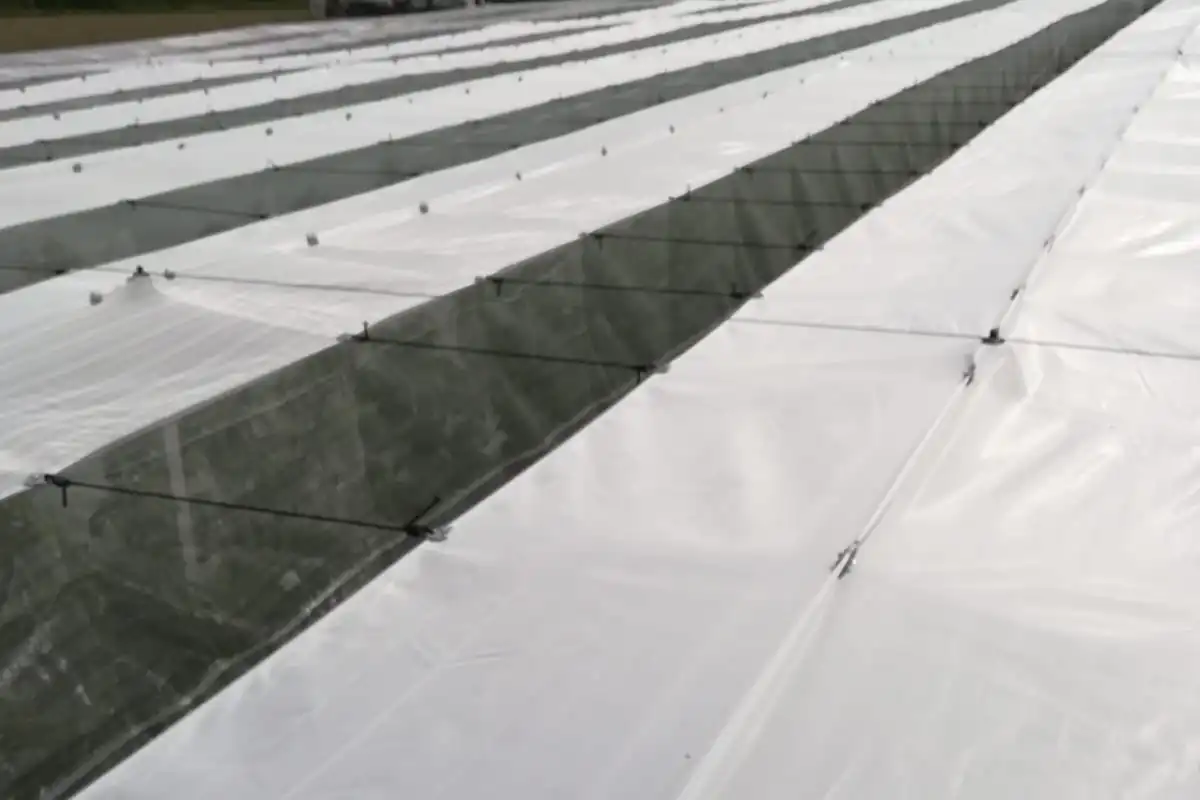
Over the past three seasons, TIA researchers have tested a range of GA₃ programs in commercial ‘Lapins’ orchards under netting and rain covers. The trials included different rates, from 44 to 132 ppm, and application timings, including shuckfall and translucent green, to better understand how GA₃ performs under local production conditions.
Results at a glance
Average firmness
≈ +20%
in treated fruit compared with untreated fruit
Rates tested
44–132 ppm
across three seasons of trials
Maturity delay
A few days to 2 weeks
depending on the program, with delays of up to two weeks at higher rates
Interpretation of the results from the three seasons shows that GA₃-treated fruit were, on average, approximately 20% firmer. GA₃ also increased fruit size, dry matter and stem pull force. There was no indication that it generally increased fruit cracking.
Fruit firmness
Average difference reported between GA₃-treated and untreated fruit.
Average change reported in the study. The graphic highlights the percentage and does not represent absolute firmness values.
The results show that more GA₃ does not necessarily lead to a proportional increase in firmness. Lower rates produced substantial improvements, highlighting the need to match rate and timing to the production objective rather than simply increasing the amount applied.
Application rates tested
The trials compared programs ranging from 44 to 132 ppm.
44 ppm 132 ppm
Firmness and harvest timing
GA₃ can delay fruit maturity. In the field trials, some lower-rate programs delayed maturity by a few days, while higher rates delayed it by up to two weeks. For growers, a predictable delay could be used to extend the harvest period or target a later market window. The challenge is finding the right balance between firmness, fruit size and harvest timing.
Observed maturity delay
The delay varied according to the application program.
Some lower-rate programs
A delay of a few days
Higher-rate programs
A delay of up to two weeks
Effects on return bloom and further research
The project has monitored return bloom because previous research suggested that GA₃ may reduce flower bud development in the following season. Across the three seasons, there was no consistent overall reduction in return bloom. Bloom was reduced in some situations, however, highlighting the influence of interactions between season, orchard conditions and the GA₃ program.
The project is moving from asking whether GA₃ works to understanding how it works. PhD student Naveed Ur Rehman Rana (Fig. 1) is investigating how GA₃ influences cell-wall components and naturally occurring plant hormones during fruit development and ripening. Fruit has been sampled repeatedly, from shortly after GA₃ application through to harvest, to track changes over time.
Upcoming field trials will investigate how application timing can improve firmness, with or without delaying maturity, and whether responses differ between cultivars with contrasting firmness.
Alieta Eyles
Cherry Growers Australia
Source: Freshplaza
Image source: Stefano Lugli
Cherry Times - All rights reserved