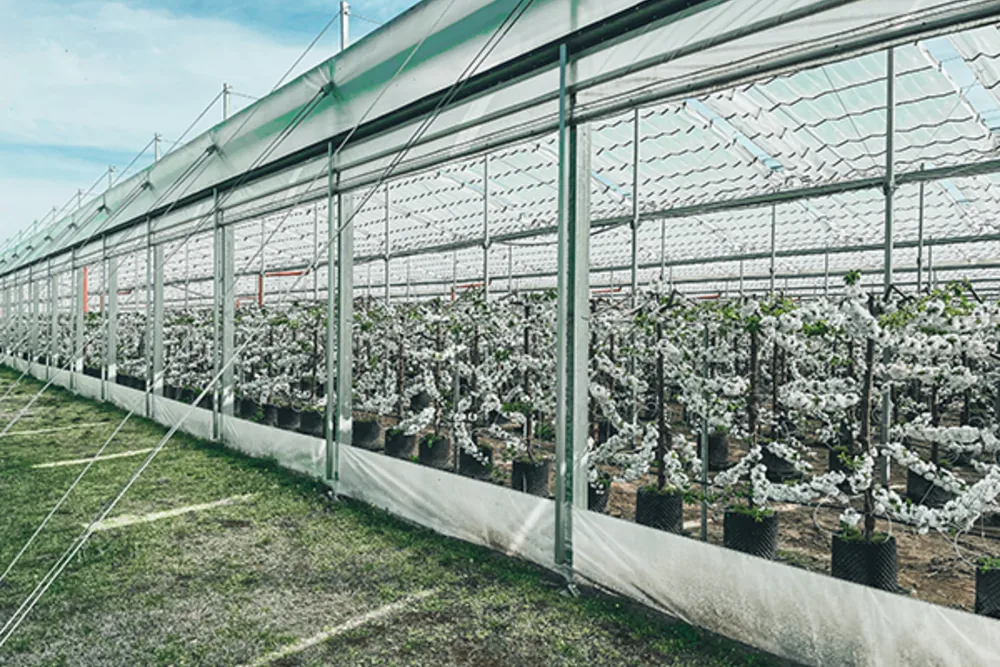
A positive season for the Etna PDO Cherry, particularly for the prized Mastrantonio variety, a symbol of the heroic agriculture practised on the volcano.
Following the difficulties experienced last season due to adverse weather conditions, 2026 is showing great promise: high quality, steady production and fruit with excellent firmness and sugar content.
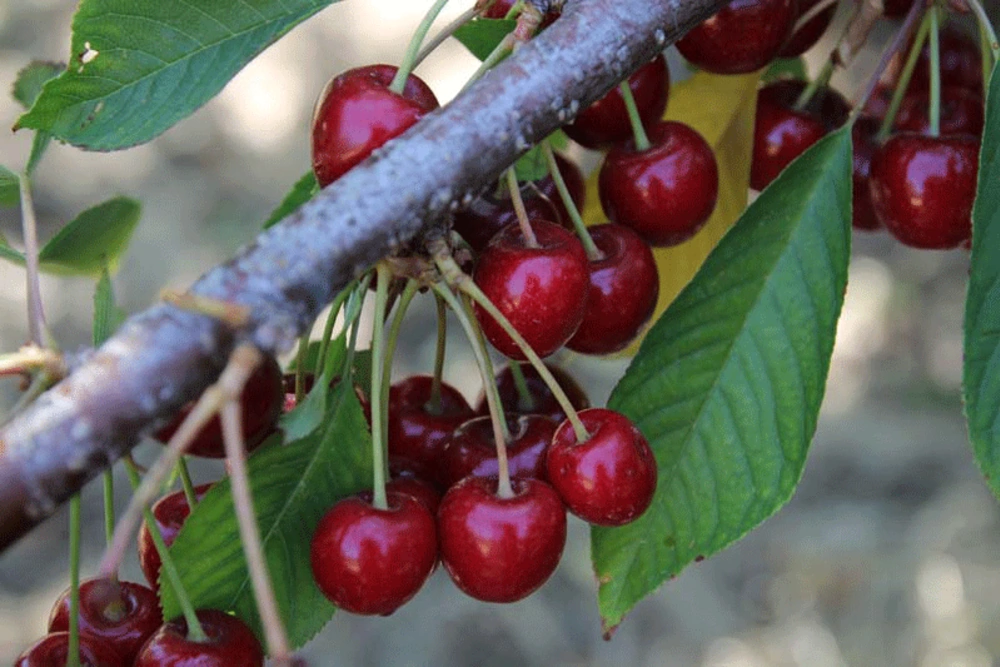
Recognisable by its distinctive heart shape, crisp flesh and high sugar content, Mastrantonio continues to be one of the most distinctive products of excellence from the Etna growing area.
Harvest and growing area
The harvest is carried out exclusively by hand across the territories included in the PDO production area, which extends from the Ionian side of Mount Etna to an altitude of 1,600 metres above sea level.
The most interesting aspect, however, concerns the evolution of cultivation, which is increasingly being influenced by climate change. While cherry trees thrived even at very low altitudes until a few decades ago, the situation today has changed radically.
The case of Macchia di Giarre, located less than 200 metres above sea level, is particularly significant. Once one of the areas best suited to cherry production, it is now almost completely devoid of trees.
Mastrantonio cultivation has gradually shifted towards the higher elevations of Mount Etna, a transformation that has also changed the harvest calendar. At higher altitudes, ripening occurs later, making it possible to offer fresh cherries until the end of July.
High-altitude production
While this phenomenon was viewed with concern in the past, today it represents an opportunity to extend the product’s commercial window. The climatic conditions of the 2026 season are also supporting optimal ripening, confirming the quality potential of high-altitude production.
An overview of the situation was provided by the mayor of Sant’Alfio, Alfio La Spina, an honorary member of the Etna PDO Mastrantonio Cherry Consortium.
“The season is positive and very promising. The climatic conditions are favourable, and we are on track for what can be described as a crop of outstanding quality.
Cultivation is moving increasingly higher up Mount Etna. In the past, cherry trees grew even at 200 metres above sea level, whereas today the best crops are found at elevations of between 800 and 1,200 metres.
Harvests and events
This allows us to achieve staggered harvests and offer fresh cherries until the end of July,” the mayor emphasised.
Meanwhile, Sant’Alfio is preparing to welcome thousands of visitors for its traditional Cherry Festival, scheduled for 3, 4 and 5 July, coinciding with the peak ripening period of the PDO variety.
Every year, the event celebrates one of Mount Etna’s iconic fruits with music, performances, food and wine specialities and an artistic flower display, while also providing an important showcase for local growers.
Alongside these opportunities, however, there are also several challenges. One of the most significant is the spread of Drosophila suzukii, the dangerous insect native to Asia that attacks the fruit, compromising its quality and marketability.
Challenges and protection
At higher altitudes, there is also a growing need for supplementary irrigation, a practice that is often difficult to provide in mountainous areas.
A central role is played by the Etna PDO Cherry Consortium, the protection body established to enhance and promote the product and headed by its president, Salvatore Fichera.
The Consortium works to safeguard the designation and establish shared rules throughout the supply chain, but it must contend with a membership that remains limited.
According to the most recent estimates, there are just over a dozen members, while many growers prefer to continue marketing their harvest independently. This fragmentation risks weakening the supply chain’s bargaining power.
Cooperation and markets
Greater cooperation would make it possible to plan production more effectively, guarantee consistent quality standards and enter markets with sufficient critical mass.
In recent years, there have been signs of interest from international buyers, including operators from Middle Eastern markets, attracted by the uniqueness of a cherry grown in Mount Etna’s volcanic soils and offering organoleptic characteristics that are difficult to replicate elsewhere.
“The real challenge is helping growers understand that the Consortium represents a major strength in both production and marketing,” La Spina observed. “Only by working together can we fully enhance a niche product with extraordinary quality and significant growth prospects.”
Clara Minissale
Cronache di gusto
Image source: QUALIGEO
Cherry Times - All rights reserved