Washington State cherry harvest is underway. Senior Farm Manager Mark Grassel, who oversees AgIS Capital’s Pacific Northwest properties and is currently leading this year’s cherry harvest, shares his firsthand perspective on the 2026 season.
Having managed agricultural assets and direct operations of permanent crops for over 30 years, this will be my 13th cherry harvest. Over that time, I’ve learned the crucial factors needed for a successful cherry harvest.
As this year’s harvest unfolds, I’d like to share some insights into the factors that drive harvest timing, some of the practices we’ve adopted to continue delivering high-quality cherries to market, the challenges growers face throughout the season, and how this year’s crop is shaping up so far.
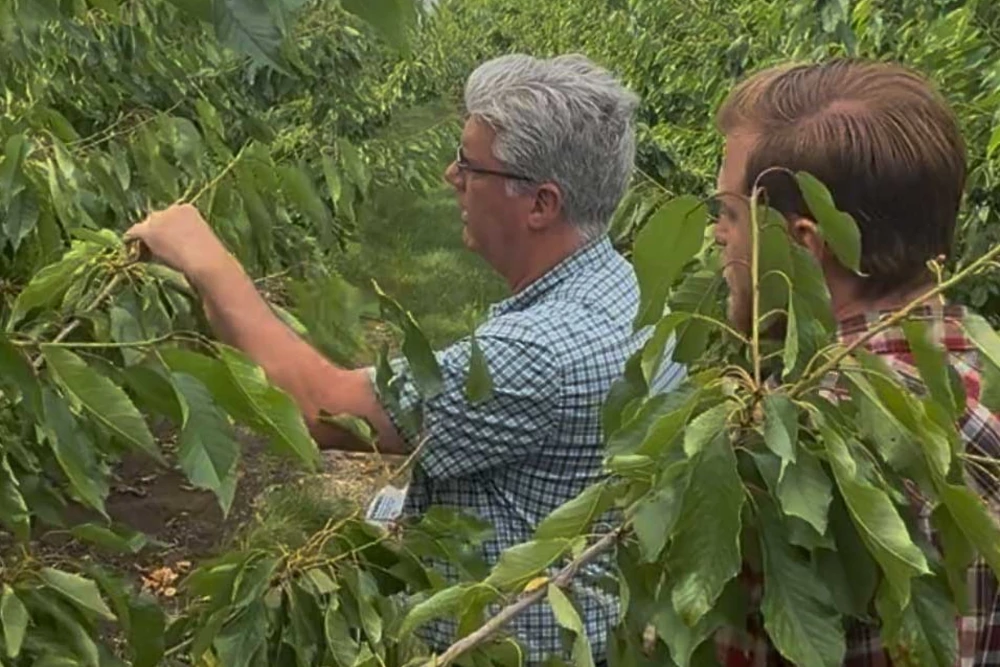
Cherry Harvest: A Seasonal Sprint
I often describe cherry harvest as a sprint. After a full year of planning, pruning, irrigation management, pest control, and monitoring crop development, everything comes to a relatively short harvest window when fruit must be picked, packed, and shipped quickly to maintain quality.
Cherry harvest in Washington State normally begins at the start of June and extends into August. The variables influencing harvest timing are the current year’s growing degree days (weather), the variety, and the orchard’s location in terms of latitude and elevation.
Once harvest begins, we need to move fast to harvest, pack, and sell this perishable crop. Harvest requires extensive hand labor and coordinated logistics to deliver the cherries to the packing warehouse, where they are then sold and shipped to retail markets.
Adapting Harvest Practices for Quality and Efficiency
AgIS Capital has a long history of experience managing cherry harvests. One notable change in recent years has been the time of day harvest begins. During the “heat dome” of 2021, many growers pivoted to starting harvest in the middle of the night using headlamps rather than the traditional first-light timing.
We have continued this practice because the pickers say they can see the cherries on the trees better, the temperatures are lower resulting in higher-quality cherries, and working conditions are better for the harvest crews.
Managing Risks Throughout the Growing Season
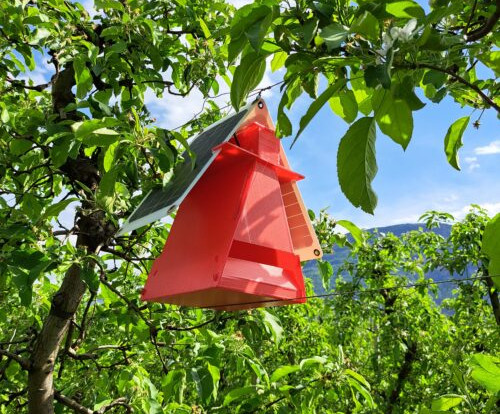
There are numerous cultural, pest, weather, and labor concerns for growers. These include frost during bloom and fruit development; drought, which for the past several years has affected growers in the Yakima River Basin who have had their irrigation water allocations reduced in half; favorable weather during bloom, when honeybees are needed for adequate pollination to produce a harvestable crop; mildew outbreaks; cherry fruit fly control; and having an adequate supply of hand labor to harvest the crop at the proper time.
Because of the risks involved in growing cherries, AgIS Capital purchases multi-peril crop insurance which acts to hedge against adverse weather and market forces that could affect the profitability of the year’s cherry crop.
A Smaller Crop, but a Strong Start
Based on industry estimates prior to harvest, this year’s crop was expected to be smaller than in prior years due to spring frosts that reduced production in some orchards. Since cherry harvest in Washington State follows the California harvest, California’s production volume has an impact on how we start the season here.
This year, California’s short crop contributed to favorable pricing during the early Washington harvest. Though it’s still too early to tell how the rest of this season will finish, the cherry harvest season started on a positive note, with good fruit quality and encouraging yields.
Source: agiscapital.com
Image source: Agis Capital
Mark Grassel
Senior Farm Manager of AgIS Capital
Cherry Times - All rights reserved