The cherry industry is like a giant running and stumbling: its momentum is very strong, and it will take time to regain its balance. This is not the first crisis to affect a fruit-growing sector in Chile; Jordi Casas and the industry have already experienced similar situations with table grapes, kiwifruit, apples and plums.
Drawing on his extensive experience, Casas outlines the possible ways forward, highlighting one essential point: “I always like to start with the positive aspects: for now, it is just us, Chile, and we do not depend on what our competitors do.”
Jordi Casas, a grower and consultant specialising in cherries, kiwifruit and stone fruit, is director and co-founder of CA-DUCOS, a research and development consultancy, a member of UVANOVA and part of the kiwifruit phytosanitary committee.
To put the current situation in the cherry industry into context, we asked him whether any growers are still achieving economic results similar to those of three or four years ago.
– We do not believe so. It could be said that today all cherries, from the earliest to the latest, are recording lower prices than last year. The decline will probably have more serious consequences from mid-season onwards.
Even with lower supply during Chinese New Year, which fell particularly late this year, the increase in prices was very limited. Although the final figures are not yet available, we already know that some grower returns will be below production costs.
We are facing a very serious crisis: the industry knew it would arrive sooner or later, but it did not know when. It has become clear that cherry consumption has a specific capacity, which is far lower than the volumes shipped.
The oversupply and quality problems have had a “terrible” impact, Casas says, on one decisive factor:
– The product appears to have lost its appeal. It is no longer an elite gift and has stopped surprising people. In Chinese shops, you can see how fruits such as kiwifruit, strawberries, grapes and apples, among others, strive to stand out and gain space by being presented in beautiful packaging.
One grower told me: “It has now become an ordinary product. Would you make a good impression by giving someone a bunch of bananas for New Year?” In my opinion, this is the worst-case scenario.
Is anyone still managing to do business at levels considered reasonable for the fruit industry?
– Growers of early cherries can receive between $2.50 and $4/kg (€2.19 and €3.50/kg). If they are well organised and keep their costs under control, at around $1.50-1.60/kg (€1.31-1.40/kg), they could remain profitable.
The problem is concentrated mainly in the period when most of the volumes reach the market: many growers will record negative results.
During the peak harvest period, will the situation be the same even for the most efficient growers?
– With a good yield and an appropriate distribution of fruit sizes, let us take the example of a Lapins orchard producing 15,000 kg/ha, with more than 90% of the fruit in the 2J size category.
Depending on the final grower return, assuming around $2/kg (€1.75/kg), the grower could achieve a result comparable to that of other export fruit crops, such as table grapes, apples, plums or walnuts. However, this is only an assumption, because we do not yet know the final figure.
Although there is discussion about removing orchards to reduce the planted area, recently established orchards will begin producing in the coming years. How will the situation evolve?
– Today, Chile’s cherry industry is like a giant running and stumbling: its momentum is very strong, and it will take time to regain its balance. Agriculture is cyclical, but adjusting those estimated 83,000 hectares, perhaps more or perhaps less, will take time.
However, if our orchard is at high risk of continuing to generate negative results, we cannot wait for neighbouring growers to remove their orchards: it is better to accept the loss immediately.
Naturally, there is a very wide range of circumstances. Some growers have already paid for everything, while others have gone into debt without their orchards having entered production; some have working capital, while others must obtain it from a bank or exporter.
We cannot bet on a miraculous year. We have a great deal of experience in the industry and know that the problem will not be resolved in a single season.
It is now clear: we must remove unprofitable varieties or orchards that failed to perform both this season and the previous one. It is easy to say and difficult to do, but the possibilities and conversion alternatives must be analysed, otherwise the crisis could worsen.
So far, the value of land and orchards has not been affected by the crisis. According to Jordi Casas, this is likely to change, probably beginning in the winter, and the process will be painful:
– Some people will have no access to financing or opportunities for conversion; for others, who have the necessary investment capacity, new opportunities will emerge.
During your career, you have witnessed similar cycles in several fruit-growing sectors. What lessons can you share?
– We have experienced them with apples, table grapes, kiwifruit and other crops. One example is Chile’s table grape industry, which is now able to remain competitive thanks to genetics.
Varieties such as Thompson or Flame are no longer widely discussed. Instead, the focus is on Autumn Crisp, Sweet Globe and Allison, which produce more kilograms more easily, at lower costs, with better quality and profitably.
Genetics has also saved us in the apple industry and in several stone fruit sectors. If you ask me whether genetics will also drive change in cherries, the answer is yes, although it will take time.
Is it not contradictory to say that orchards must be removed to reduce supply while simultaneously seeking more productive varieties?
– It must be understood as a process consisting of several stages: today, it is necessary to reduce the planted area and lower domestic supply. Subsequently, other markets must continue to be developed.
The United States has considerably increased its share while keeping prices unchanged, which is an extraordinary achievement.
We must continue to develop destinations such as Europe and the United Kingdom cautiously. We need to redirect gradually part of the 93% currently shipped to China: this will remain one of the paths to follow.
Frutas de Chile and the export companies are fully aware of this and are carrying out important work in India, looking towards the future. In this case, it will be necessary to solve the problem posed by the cherries’ long transit time.
At the same time, we must test new varieties, focusing not only on early ones but also on mid-season varieties with higher productivity and larger fruit sizes. Returning to the table grape example, those who successfully planted the new varieties became profitable again.
There is considerable scepticism due to the disappointing performance of some new varieties.
– When they arrive in the country, the varieties have been assessed according to productivity levels and characteristics that differ from those we need. Even in the best-case scenario, it takes at least five years to obtain the first results under our conditions and a decade to assess their stability in the market.
Sometimes we growers and consultants become enthusiastic about a variety and, driven by the desire to make progress, plant it too hastily. Many people are harmed along the way.
At the end of the 1990s, around 30 cherry varieties were introduced, including today’s leading varieties, Lapins and Santina. We only began to understand them fully towards the end of the 2010s.
No one remembers the other varieties any longer, nor how much was lost along the way.
We must not play Russian roulette and then blame external factors. The most rational solution would be to entrust independent, multidisciplinary groups, specialising in production and post-harvest management, with the comprehensive assessment of varietal characteristics under our conditions.
This would make it possible to provide reliable information within the necessary time frame. Naturally, the work would need to be financed in some way by the industry, through a structure similar to the boards or commissions found in other countries.
Currently, this work is carried out by large growers or export companies.
What should be done with the land from which orchards have been removed?
– Let us suppose, although it is a utopian scenario, that 30,000 hectares of cherry orchards are removed. What do we replace them with? Many people are asking this question. In a cold area with relatively good soil, it is easy to consider apple trees.
Where the soil is moderately problematic and clayey, plums can be considered with a suitable rootstock. If the climate is warm or temperate and the soil is suitable and well drained, kiwifruit may be an option.
In southern areas or on more rugged or extreme land, hazelnuts may be considered.
There are currently several alternatives capable of providing reasonable profitability, because they will no longer face the imbalance generated by cherries. However, growers must not make the mistake of choosing the wrong crop for their soil and climatic conditions, otherwise they risk making the situation even worse.
We must not forget that the cherry industry is a giant covering more than 80,000 hectares. What would happen if we increased the area planted with plums, apples or kiwifruit by 10,000 hectares? We would risk destroying those markets as well.
In the case of hazelnuts, there is also the problem of having a single buyer, a situation similar to the one involving China and cherries, but even more concentrated.
We must be extremely careful. The decision is not simple, and all the available information must be considered, not merely information concerning one’s own business or what happened last year.
The SAG holds data on all orchards in Chile, including their age, varieties and planted areas. It would not be a bad idea to entrust this information to a group of people with the necessary expertise, so that they can process and analyse it and make the results available.
This would contribute significantly to the maturation of the industry.
Cherries do not last forever
In addition to oversupply, one factor contributing to the loss of appeal is the poor condition in which some of the fruit reaches its destination. How can this be prevented?
– I would say that the major effort required to produce a large cherry is also accompanied by good quality. By regulating the crop load, growers not only promote fruit size but also improve the condition of the fruit.
Irrigation and crop-load management are the two practices I place in first position.
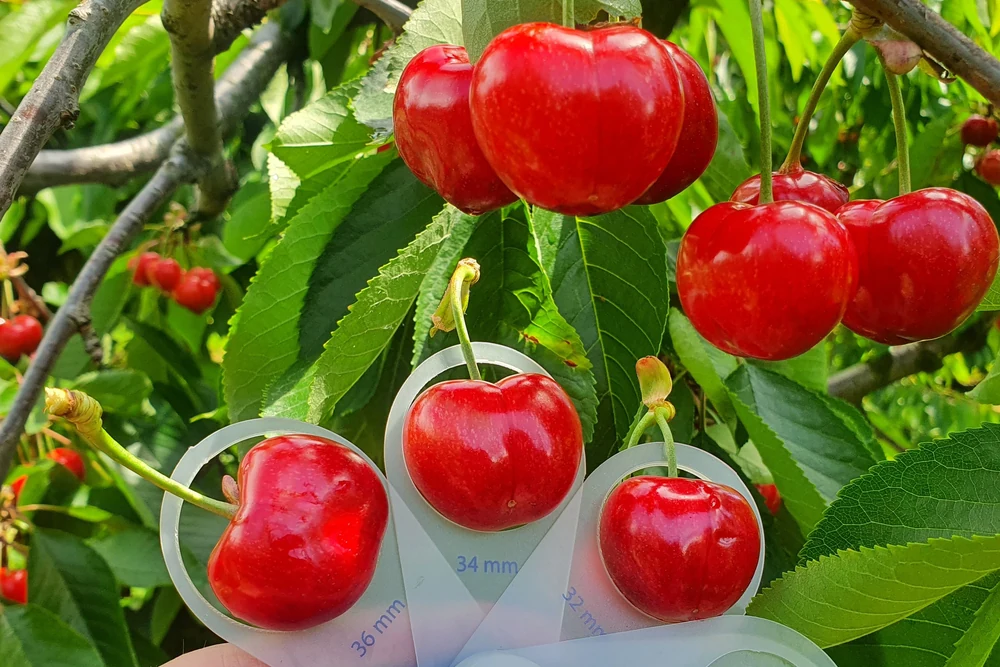
We had the opportunity to inspect some packages in China, and the large fruit, in the 3J and 4J categories, was generally in spectacular condition. This year, however, a phenomenon occurred that contributed to worsening the commercial situation at destination.
What are you referring to?
– In China, some packages of fruit were stored so they could be sold later, closer to Chinese New Year, in the hope of obtaining a better return.
The condition of the product deteriorated and the price was even lower. Excessive ambition ends up ruining everything: cherries do not last forever and remain a highly perishable product.
They are already at their limit with the 25-day journey on a Cherry Express and the 35 days required on a conventional vessel.
Let us examine irrigation in greater detail. Do you agree with those who claim that Chile’s main mistake is excessive irrigation?
– The most common mistake is applying too much irrigation at the beginning of the season and not enough during the post-harvest period. It is the leaves, not the fruit, that consume most of the water.
If the number of leaves, or the leaf area, in the first week of October is compared with that recorded in December, it can be seen that it is initially very limited. By December, however, the plant has already reached 100% of its water consumption.
Consequently, the Kc crop coefficient is 0.1 at the beginning of October, while in December and January it reaches 0.9, directly determining the plant’s water consumption.
By contrast, irrigation is often neglected after harvest, precisely when cherry trees reach their maximum water requirement. Irrigation must therefore remain consistent with evapotranspiration and the Kc coefficient, because this is when the following season’s crop is being formed.
Which growers are currently in the best position?
– Those located in very early areas with favourable climatic conditions; those with large planted areas, good yields, competitive quality and sufficient resources to weather the storm; those who have diversified their production across several fruit crops; and finally, forward-looking growers who understand that agriculture is biblical…
Biblical?
– Because of the story of the seven years of plenty, which allowed the Pharaoh to face the seven lean years in Egypt. The cherry industry provided this opportunity, and the most experienced growers saved three harvests: one under the mattress, one still hanging on the trees and the third in the bank.
Regarding crop-load management, some believe production should be reduced to increase fruit size, while others claim that high volumes and large fruit can be achieved simultaneously. What is your opinion?
– Both positions are valid. These people work with orchards and conditions that differ. With some varieties, it is possible to produce 20,000 kg with very good fruit size.
This can happen, for example, with Lapins grown under optimal soil and climatic conditions, precisely regulating the crop load, correctly carrying out every operation, irrigating appropriately and replenishing the nutrients absorbed by the plants.
By contrast, in the presence of problematic soil, in a less favourable area and with management difficulties, the solution will be to reduce the crop load and aim for lower production with the same variety, thereby achieving a profitable balance between volume and fruit size.
The recommendation is to carry out the calculations on a case-by-case basis, taking into account the potential of the variety and the specific orchard. This makes it possible to determine the profitability of the different situations and assess whether production potential can be increased through agronomic practices or whether the orchard must be removed.
On your scale of priorities, what comes after irrigation and crop-load management?
– I place fertilisation second. Thanks to the knowledge acquired in irrigation management, we now apply fertilisers much more precisely, based on the plants’ actual nutrient uptake.
This is followed by canopy management, with pruning to improve light penetration and allow the leaves to nourish the buds during the summer. Good light exposure does not mean continuous exposure to full sunlight, but rather a balance between light and shade.
A leaf exposed to the sun throughout the day stops performing photosynthesis because of saturation; a leaf that remains permanently in the shade, by contrast, does not produce because it does not receive enough light.
Let us move on to a management issue: if a grower does not have a high percentage of fruit in the 2J or larger size categories, there may be a temptation to complete packages with smaller fruit, sometimes because the survival of the business is at stake. Is it legitimate to try, in the hope that the product will be accepted?
– Regarding management, I did not mention this earlier, but the timing of operations is fundamental: every intervention must be carried out at the right time.
If crop-load pruning begins in July and ends in September, or if bud thinning is completed after flowering has already begun, the work is not being carried out correctly because it will not achieve the objective of maximising fruit size.
The timing of the harvest is also decisive. If excessively ripe fruit is harvested, it will not have adequate storage potential during the post-harvest period.
On the other hand, if fruit is harvested without an adequate sugar content in order to reach the market earlier, product quality will be unsatisfactory. This is particularly damaging during the early stages of the commercial season and sets a negative precedent for the quality of Chilean fruit.
In this area, export companies play a fundamental role: they must be able to reject poor-quality products, comply with the required parameters and classify the fruit according to its quality and condition, rather than solely by size.
Most already do so, and they will now all become much more rigorous, because final quality determines the price.
Speaking as a grower, however, I believe we should choose exporters capable of prioritising high-quality packing over volumes.
It must be remembered that if the final grower return is zero, the shipping company, importer, exporter, packaging-material producer and all the other operators have already been paid. Everyone along the supply chain has earned money except the grower.
In addition, we damage the market and, ultimately, everyone loses without exception. We must work together to protect the country’s image, regarding the final consumer as our true objective and safeguarding the common good.
Francisco Fabres
Redagricola
Image source: Stefano Lugli
Cherry Times - All rights reserved