Yesterday, the fifth edition of the International Early Fresh Cherry Seminar 2026 took place at the Nave Cultural center in Mendoza. With a high-level technical agenda and a strong focus on public-private collaboration, the first day of the event sent a clear message: the province aims to firmly position itself on the global cherry map, leveraging earliness as its main competitive advantage to consolidate its presence in the early window, as highlighted by Beatriz Parra, Smartcherry’s special correspondent at the event.
A technical agenda focused on production efficiency
The day brought together growers, specialists, companies, industry representatives and investors from Argentina, Chile, China, Italy and Peru, with presentations addressing cultivation from an integrated perspective: genetics, agronomic management, applied technologies, post-harvest and markets. The presentations clearly showed that the challenge is not only to produce, but to do so with quality, efficiency and a strong market orientation.
Among the technical topics, rootstock and in vitro propagation stood out, along with strategies to improve fruit size and uniformity and production models adapted to Mendoza’s conditions. The discussion also covered fruit firmness, the use of calcium and biostimulation, as well as the use of covers to anticipate physiological processes.
A key aspect was the professionalization of agronomic practices. “Argentina has a strong focus on early production, but the goal is to consolidate techniques. Compared to Chile, it may not yet be as advanced, but the aim is to achieve stable and consistent production results,” said Chilean consultant and grower Felipe Salaya, highlighting the importance of measuring and quantifying variables such as climate and irrigation to improve efficiency and scale production.
Market and collaboration as growth drivers
Another key point was the presentation of local production projects with agronomic and economic analyses, demonstrating how early cherries can represent a concrete diversification opportunity, especially for wine producers.
The market context also played a central role: it was highlighted that when early fruit reaches high quality standards, it can access the highest prices of the season, reinforcing the attractiveness of the sector.
During the day, a discussion took place among public and private sector representatives, emphasizing the need for strong collaboration to support growth. In this context, the role of plant health, market access and support policies was recognized as a key factor for competitiveness.
Phytosanitary status, international outlook and future challenges
Among the participants, Sergio Moralejo, Undersecretary of Agriculture and Livestock of Mendoza, stated: “The good news is that there are spaces to discuss these issues. Without ideas, there are no actions. Argentina is undergoing a structural macroeconomic transformation aimed at rebalancing public finances and the production system. I believe the potential of cherries, especially early ones, is enormous. Asset and land prices are much lower compared to other competing countries.”
At the same time, concrete topics such as export logistics and packaging design were addressed, along with the introduction of technologies to preserve quality during transport, as well as new solutions related to regenerative agriculture.
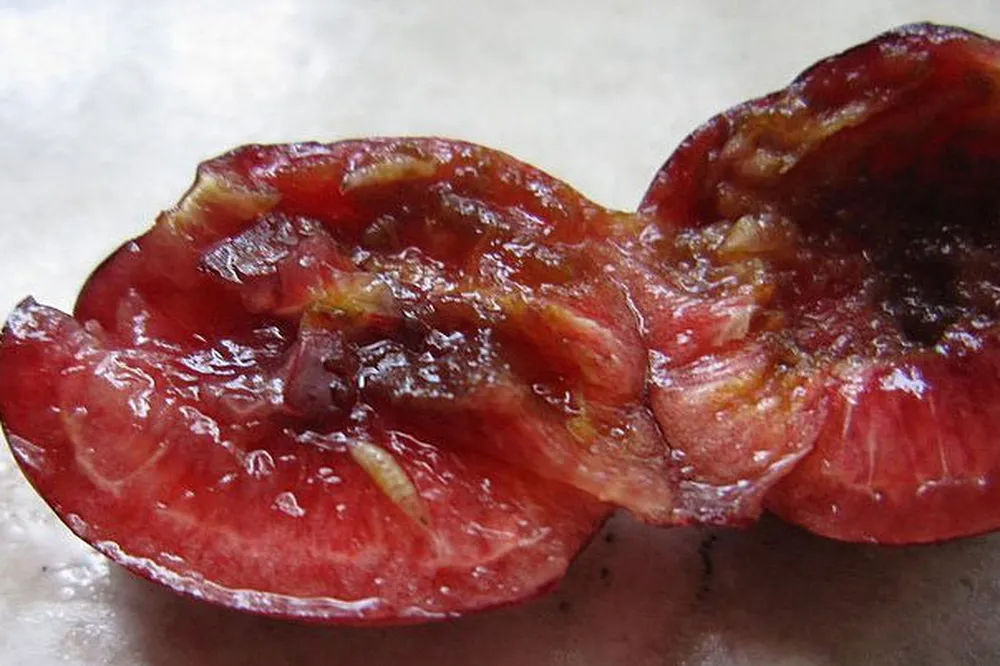
The first day of the seminar concluded with a presentation on progress in the recognition of “pest-free production sites” for fruit flies, opening new commercial opportunities by enabling access to markets with stricter phytosanitary requirements.
Conclusions and sector outlook
The presentation was led by Andrea Bartolucci, agronomist, entomologist and member of the Mendoza Institute of Agricultural Health and Quality (ISCAMEN), who explained: “We have pest-free areas and low-prevalence areas. However, the presence of low-prevalence areas limits direct access to pest-free zones without specific treatments.
Thanks to a new SENASA resolution, we have obtained recognition of so-called ‘free sites’, meaning specific production sites — in this case for cherries — which, due to the biology of the pest, can be recognized as pest-free and thus gain access to pest-free areas within Argentina for commercialization. This national recognition is essential to later obtain international recognition, ensuring equal opportunities, especially for Mendoza cherries, which cannot compete in volume with Chilean production but can do so in terms of earliness.”
The overall outcome of the day was very positive. Facundo Quirós, director of the Mendoza Cherry Chamber, stated: “The goal of the event is to provide tools for growers to improve efficiency through information, services and technical inputs, as well as an investment attraction project developed together with the provincial government to identify the most suitable cultivation areas, with different business models and market analyses.
Today we hosted a representative from the Buenos Aires Central Market, where most of Mendoza’s production is delivered. As repeatedly stated, 90% of production remains on the domestic market. This representative provided data on early fruit prices from week 44 to week 54: during this period, high-quality products achieve excellent returns. This is the best incentive to encourage growers to invest. The challenge is convincing them that this is the right path.”
With now well-established participation and a structured program, the event — organized by the Mendoza Cherry Chamber together with the Ministry of Production, through the Department of Agriculture, and the Municipality of Mendoza — confirms itself as the main reference point for knowledge transfer in the sector in Argentina. The challenge remains to grow, improve efficiency and maintain high quality standards, key elements for Mendoza to consolidate its role in the global early cherry market.
Beatriz Parra
Image source: Stefano Lugli
Cherry Times - All rights reserved