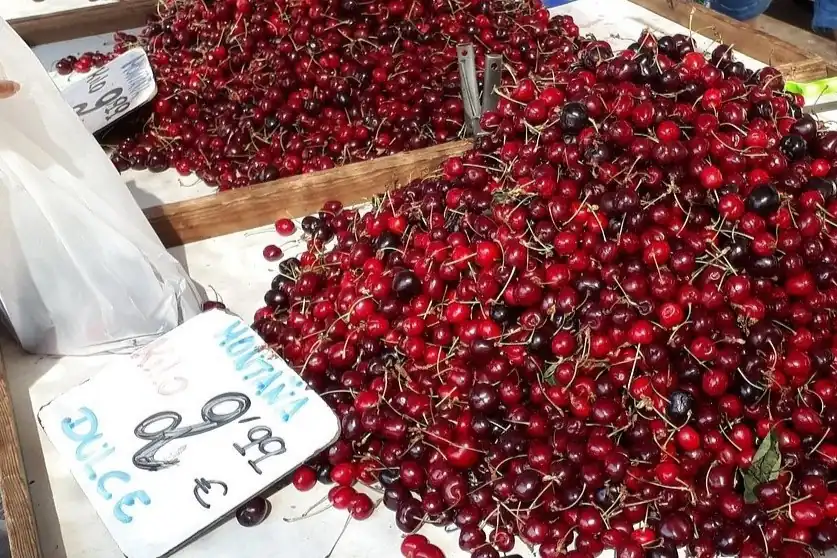
The Łutówka sour cherry harvest is gradually drawing to a close. Fruit growers have one final week of work left. The current high temperatures are creating considerable uncertainty, as sour cherries are delicate fruit.
Processing plants have slightly increased prices, but this is nowhere near enough to compensate growers for the way the season has unfolded and the costs they have incurred.
- The sour cherry harvest is nearing its end: fruit growers have only another week or week and a half left
- During the final stage of the harvest, processing plants have slightly increased prices. Sour cherries intended for freezing can fetch PLN 4.00/kg (€0.93/kg), while those intended for pressing can reach PLN 2.70/kg (€0.63/kg)
- Piotr Pasik of the National Association of Sour Cherry Growers stresses that the “dictate of processing plants” continues and wonders who will keep investing in orchards and equipment when prices remain below the profitability threshold
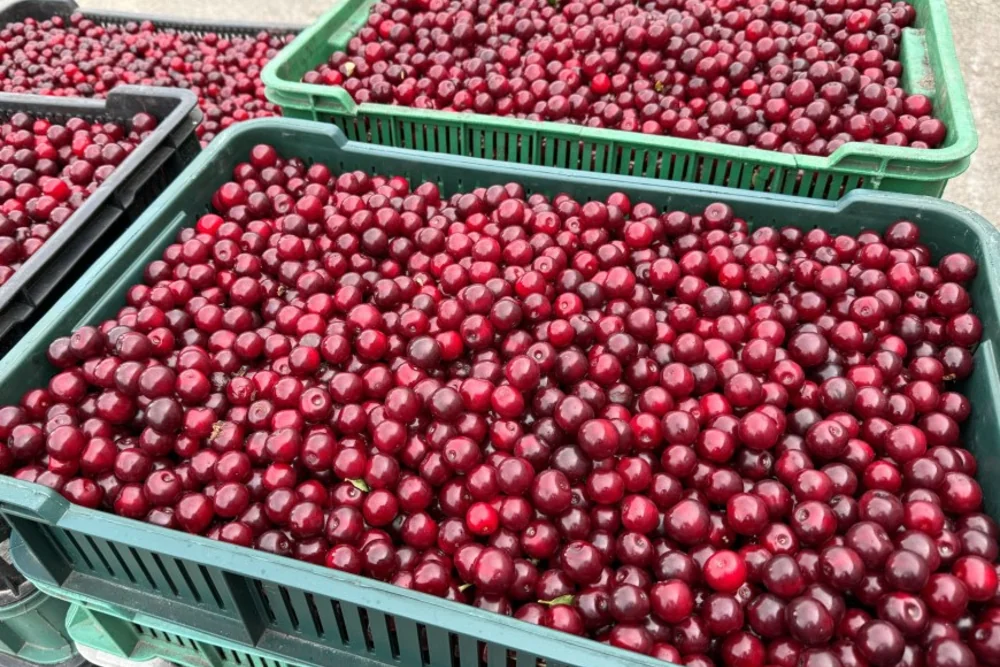
Slight price increase during the final stage of the harvest
“The situation is unsatisfactory because the price remains below production costs. The sour cherry harvest is now nearing its end. Prices fell by 50% and are now being increased by barely 2%.
Prices have fallen disproportionately and now, just as inadequately, they are giving us ‘something’ more. Processing plants need sour cherries. Once again this year, the dictate imposed by processing plants has continued.
We are involved in fruit production, not in marketing or processing. As growers, we have been reduced to the role of low-cost raw material suppliers. Fruit growers are apparently not supposed to earn anything.
But who will invest in machinery, buildings, crop protection products and fertilisers? What resources will be used to cover these expenses? Nothing changes: prices remain below production costs.
The price is PLN 3.50/kg (€0.81/kg). Workers must be paid PLN 2 (€0.46) for harvesting, leaving us with PLN 1.50 (€0.35). What are we supposed to use this amount for?
For crop treatments, fertilisers, fuel or machinery maintenance? It is a straightforward economic calculation.
Some might argue that we harvest using tree shakers and harvesting machines, but not everyone harvests mechanically, so they have to pay for labour.
Even with mechanised harvesting, however, the operators running the machines still have to be paid,” says Piotr Pasik, president of the National Association of Sour Cherry Growers.
“If processing plants believe that we can make money from sour cherries at prices like these, why do they not plant their own orchards? That way, they would have their own raw material available,” he comments.
Why is Łutówka in such high demand among processing plants?
“I am a second-generation fruit grower. We have been growing sour cherries for 45 years. We have tried several varieties, but our Łutówka remains the best and is in high demand among processing plants.
Why, then, should we receive a handout instead of fair compensation? Especially since sour cherries sell well. The market has become accustomed to these prices. There are no stocks left: everything was sold at the beginning of the season,” he adds.
After apples, sour cherries are the fruit crop that Poland produces in the largest quantities in Europe.
“Our sour cherries are sought after for their characteristics. Łutówka is a variety originating from France, although it is not grown there because fruit growers produce sour cherries for making liqueurs. France is best known for its grapes.
Here, however, Łutówka has adapted extremely well. We have a distinctive microclimate that allows the fruit to ripen properly and develop its characteristic qualities, including its typical acidity.
This is why the juice obtained from our sour cherries is so distinctive. Our sour cherries are in very high demand among processing plants,” he stresses.
Image source: SadyOgrody
Krystyna Zagórska
SadyOgrody
Italian Berry – All rights reserved