Proper postharvest storage of sweet cherries is essential for the cherry supply chain, particularly for cultivars characterized by a short shelf life and high susceptibility to fungal decay.
In this context, increasing attention is being paid to more sustainable strategies capable of reducing the use of synthetic fungicides without compromising the commercial quality of the fruit. A recent study evaluated the effectiveness of allyl isothiocyanate (AITC), a natural compound released from black mustard seeds (Brassica nigra), as an antimicrobial agent in an active modified-atmosphere packaging system for the postharvest storage of 'Burlat' sweet cherries.
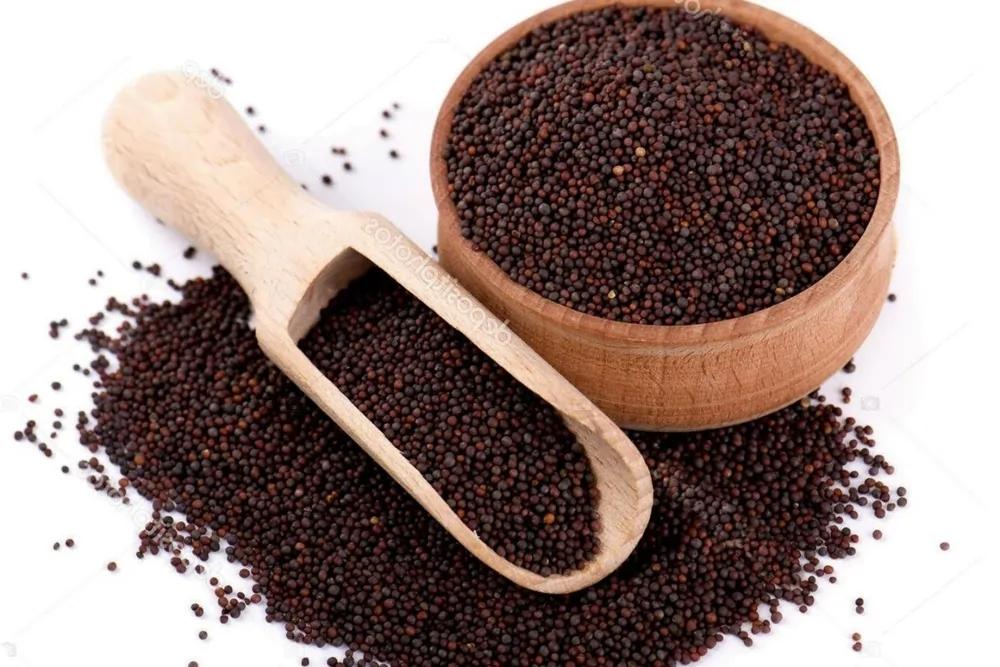
AITC is a volatile compound generated by the hydrolysis of glucosinolates naturally present in Brassica nigra seeds.
Its well-established antimicrobial activity prompted researchers to investigate its potential as a natural alternative to conventional fungicides approved for postharvest applications. The study compared the effectiveness of AITC, released from different quantities of mustard seeds placed inside the packages, with that of fludioxonil, the reference fungicide commonly used on stone fruits.
Antifungal activity
Laboratory assays demonstrated strong antifungal activity against the main pathogens responsible for postharvest decay in sweet cherries.
The growth of Cladosporium cladosporioides, Monilinia laxa and Penicillium expansum was completely inhibited even at the lowest mustard seed doses, while the development of Alternaria alternata, Botrytis cinerea and Geotrichum candidum was significantly reduced, with efficacy increasing as the dose increased.
In vivo trials further confirmed the ability of AITC to limit infection in artificially inoculated fruit, demonstrating that the activity observed in vitro was also effective under practical storage conditions.
Regarding the performance obtained during the refrigerated storage of cherries packaged under modified atmosphere, the use of 100 mg of black mustard seeds per package provided decay control comparable to that achieved with fludioxonil treatment, while maintaining a lower percentage of decayed fruit than the untreated control.
Commercial quality
At the same time, treated cherries retained greater flesh firmness and exhibited slower skin darkening, two important attributes for preserving the quality and commercial value of the 'Burlat' cultivar, which is particularly prone to rapid senescence during storage.
The application of AITC did not alter the gas composition inside the packages nor did it affect fruit weight loss during storage, indicating that its protective effect mainly resulted from the antimicrobial activity of the compound rather than from changes in fruit respiratory metabolism.
Likewise, the main physicochemical parameters, including soluble solids content, titratable acidity and pH, followed the normal physiological changes associated with cold storage, with no adverse effects attributable to the treatment.
Overall, the findings demonstrate that incorporating black mustard seed derivatives into active packaging systems represents a promising strategy for the postharvest preservation of sweet cherries.
Future prospects
The use of a natural compound capable of providing efficacy comparable to that of a synthetic fungicide, while maintaining fruit firmness and visual quality, offers valuable opportunities for the development of innovative, environmentally sustainable packaging technologies.
Nevertheless, further research is required to determine the optimal application rate under different commercial conditions and to assess the potential effects on sensory attributes and consumer acceptance.
Source: Calvo, P., Rodríguez, M. J., Serradilla, M. J., & Bernalte, M. J. (2026). Postharvest Application of Black Mustard (Brassica nigra) Seed Derivatives in Sweet Cherry Packaging for Rot Control. Foods, 15(1), 161. https://doi.org/10.3390/foods15010161
Image source: Exotic Seeds
Andrea Giovannini
PhD in Agricultural, Environmental and Food Science and Technology - Arboriculture and Fruitculture, University of Bologna, IT
Cherry Times - All rights reserved