Already in July, interest in the mechanical harvesting service was high. Operators’ schedules filled up immediately, but demand is currently even higher. This is mainly due to the labor situation, but also to concerns about the upcoming decisions of processing plants.
Mechanical harvesting of sour cherries is attracting strong interest this season
- Service rates have remained at last year’s levels and the schedules of harvesting machine owners are fully booked
- The sector fears not only storms and high temperatures, but also the possibility that processing plants may stop purchasing earlier than expected
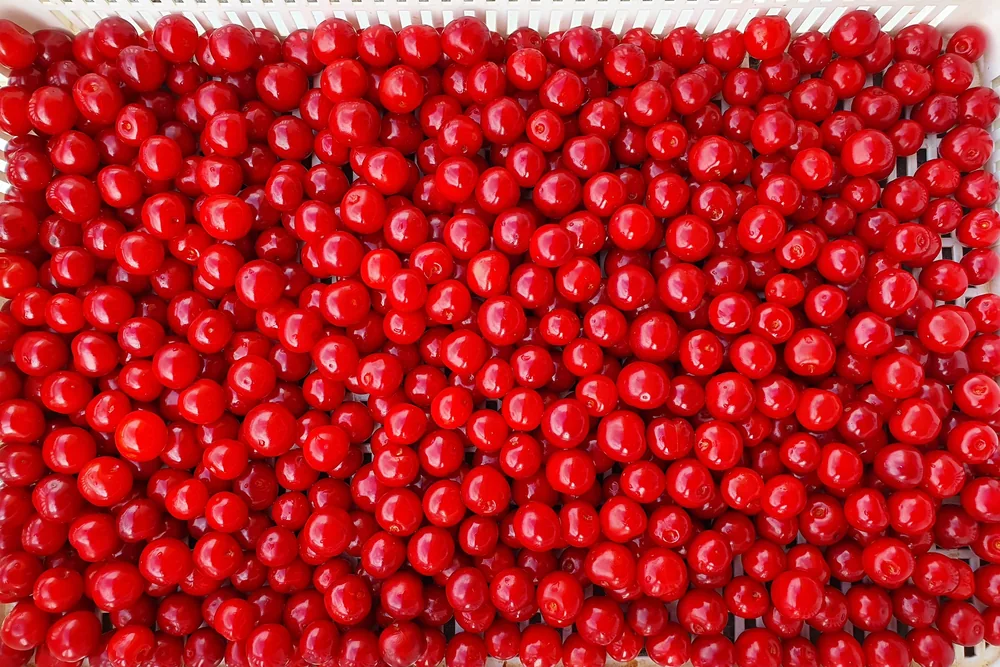
Rates similar to last year, but demand remains high
In the current sour cherry season, there is strong interest in mechanical harvesting. This year’s rates are not significantly different from last year’s. As the machine owners explain, prices range between 0.70 and 0.90 zlotys (approximately 0.16 and 0.21 Euro) per kilogram. Owners of shakers charge slightly more. The rate for a self-propelled harvester is 750 zlotys (approximately 174.12 Euro) net per hour, plus travel expenses of 8.50 zlotys (approximately 1.97 Euro) per kilometer.
“The interest is very high, even though very few orchards are set up for this type of harvesting,” says the owner of a self-propelled harvester.
The problem concerns labor, both because of its shortage and because of the attitude of workers toward harvesting. In particular, they may decide to stop working halfway through or toward the end of the season. The reason? Harvesting rates are so high that workers are able to earn the desired amount much more quickly than in previous years.
The level of requested wages is becoming worryingly high.
Fully booked schedules, but the sector is concerned about weather and purchases
Although it is said that the sour cherry harvest is now nearing its end, the schedules of machine owners are completely full at least until August 12. The main concerns for the continuation of the season involve two factors: weather conditions and the decisions of processing plants.
“There is great concern about forecasts of storms and high temperatures, which could have a concrete impact on fruit quality and abruptly bring harvesting to an end. More than the weather, however, we fear reports that fruit purchases may end soon.
According to this information, the processing plants will purchase sour cherries only until next Sunday,” reports an industry operator.
Last season ended very quickly, while two years ago harvesting continued until August 20.
Interest in the service was already high in July
Already in July, interest in the mechanical harvesting service was high. Operators’ schedules filled up immediately, but demand is currently even higher. This is mainly due to the labor situation, but also to concerns about the upcoming decisions of processing plants.
Mechanical harvesting of sour cherries is attracting strong interest this season
- Service rates have remained at last year’s levels and the schedules of harvesting machine owners are fully booked
- The sector fears not only storms and high temperatures, but also the possibility that processing plants may stop purchasing earlier than expected
Rates similar to last year, but demand remains high
In the current sour cherry season, there is strong interest in mechanical harvesting. This year’s rates are not significantly different from last year’s. As the machine owners explain, prices range between 0.70 and 0.90 zlotys (approximately 0.16 and 0.21 Euro) per kilogram. Owners of shakers charge slightly more. The rate for a self-propelled harvester is 750 zlotys (approximately 174.12 Euro) net per hour, plus travel expenses of 8.50 zlotys (approximately 1.97 Euro) per kilometer.
“The interest is very high, even though very few orchards are set up for this type of harvesting,” says the owner of a self-propelled harvester.
The problem concerns labor, both because of its shortage and because of the attitude of workers toward harvesting. In particular, they may decide to stop working halfway through or toward the end of the season. The reason? Harvesting rates are so high that workers are able to earn the desired amount much more quickly than in previous years.
The level of requested wages is becoming worryingly high.
Fully booked schedules, but the sector is concerned about weather and purchases
Although it is said that the sour cherry harvest is now nearing its end, the schedules of machine owners are completely full at least until August 12. The main concerns for the continuation of the season involve two factors: weather conditions and the decisions of processing plants.
“There is great concern about forecasts of storms and high temperatures, which could have a concrete impact on fruit quality and abruptly bring harvesting to an end. More than the weather, however, we fear reports that fruit purchases may end soon.
According to this information, the processing plants will purchase sour cherries only until next Sunday,” reports an industry operator.
Last season ended very quickly, while two years ago harvesting continued until August 20.
Image source: Stefano Lugli
Sylwia Sałyga
SadyOgrody.pl
Cherry Times - All rights reserved