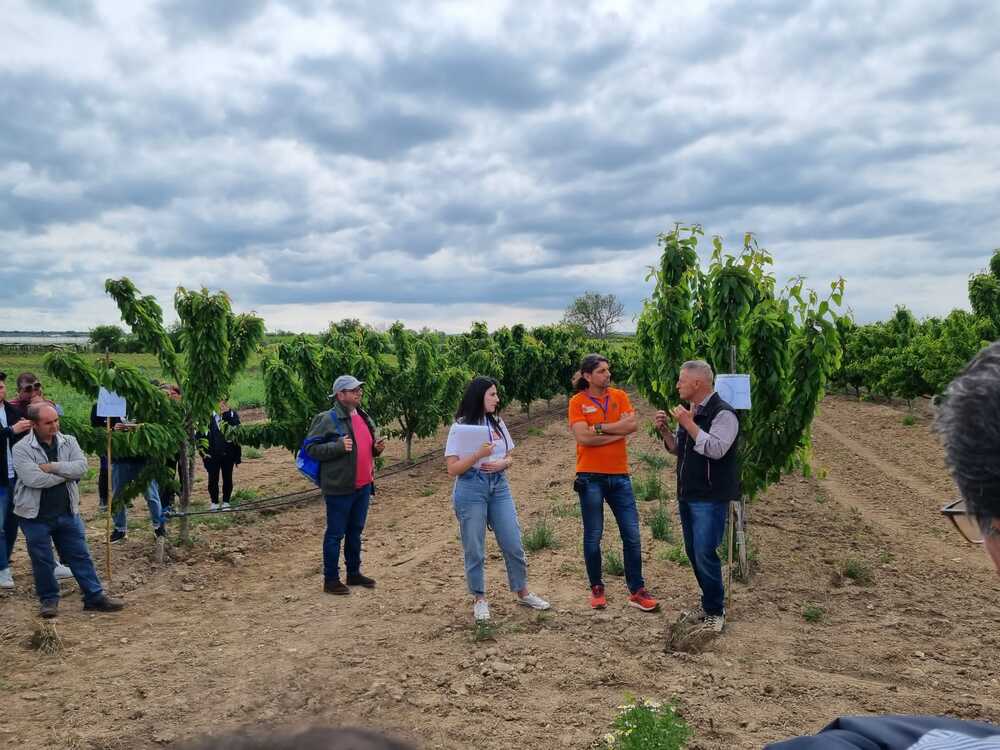
Report from a visit to a new Royal Tioga cherry orchard on Gisela 6 rootstock in Loutrochori, in the Greek region of Edessa. Specifically, the trees were planted in December 2024 and, after about 16 months, already showed an incredibly dense fruit set. What we observed in the field confirms the extreme productivity of this variety from the very first years.
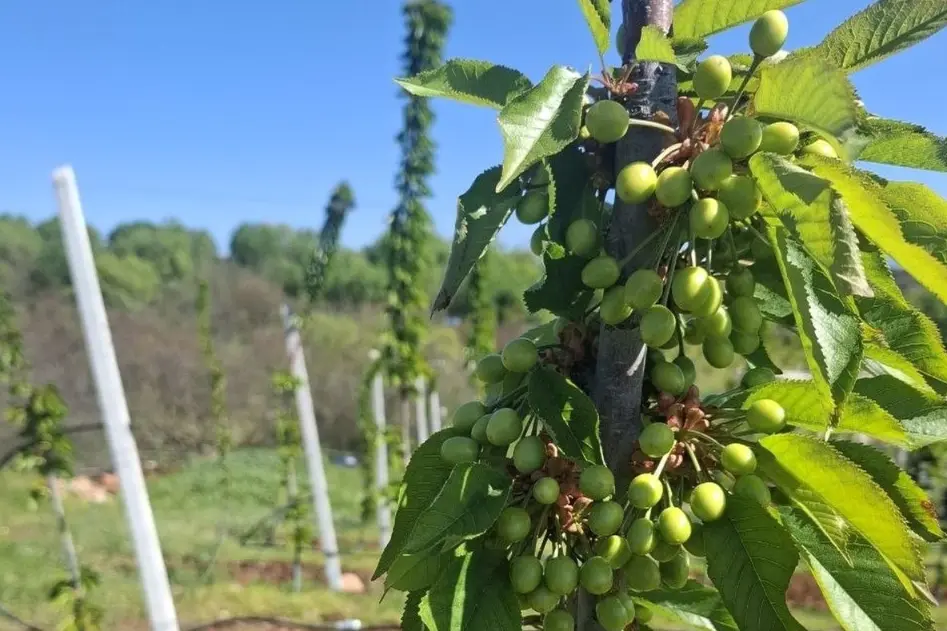
The Royal Tioga cherry variety
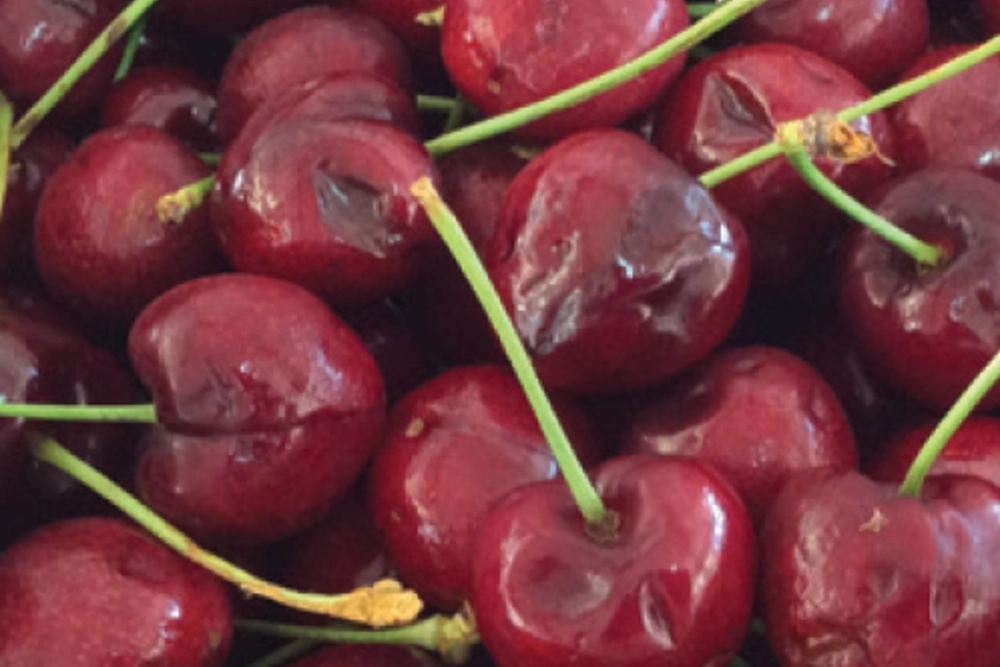
Royal Tioga is an early cherry variety developed by Zaiger Genetics (USA) and distributed in Europe by International Plant Selection (IPS). It is also considered a replacement for the well-known early variety Burlat, as it offers superior fruit quality and particularly firm, crunchy flesh. Its fruits reach 28 mm, have a bright red color, an excellent taste with 16° Brix, and are considered resistant to rain-induced cracking.
At the same time, as a tree it shows a semi-upright growth habit with moderate vigor, blooms early, and has low chilling requirements. In this specific orchard, full bloom occurred between February 15 and 20, 2026, an extremely early period for the Edessa region.
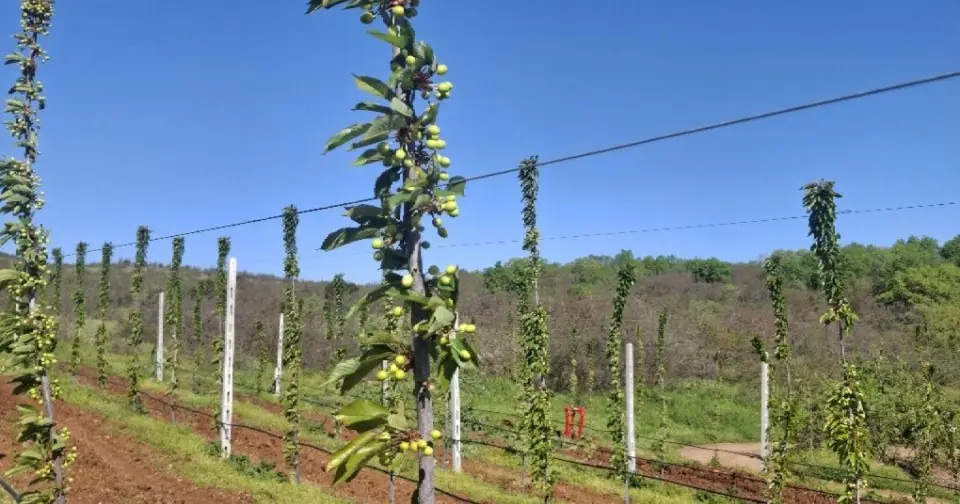
The Gisela 6 rootstock
The choice of Gisela 6 rootstock for this Royal Tioga cherry orchard is no coincidence. Gisela 6 combines moderate vigor with early bearing, features that perfectly match the productive nature of the Royal Tioga variety. It also allows higher planting density with a wall-trained system using posts and wires, exactly as implemented in Loutrochori. However, combining a very early-ripening variety with a moderately vigorous rootstock requires careful management. For this reason, proper cultural practices in the early years are essential.
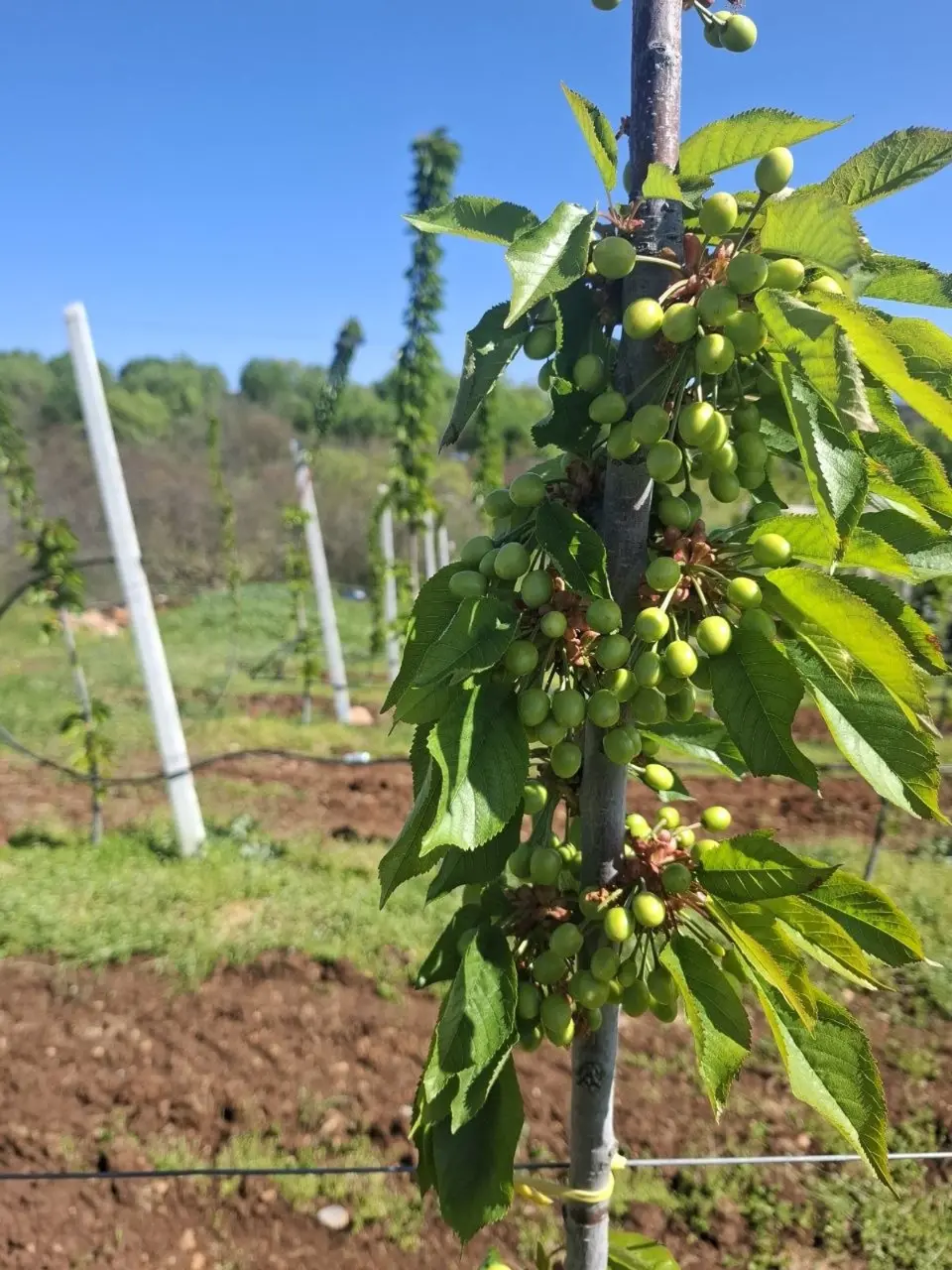
The importance of fruit load management in young trees
The most striking aspect of this visit was the fruit density on trees just 16 months after planting. In particular, Royal Tioga tends to produce an excessive number of fruits very early in the tree’s life. While this reflects its excellent production potential, it can become a problem if not properly managed.
Specifically, excessive fruiting in the early years competes with vegetative growth. As a result, trees fail to adequately develop the structural framework—trunk, branches, and shoots—needed to support future production. In addition, the fruit load can weaken the tree overall and negatively affect long-term productivity.
For this reason, fruit thinning is a necessary practice from the very first years of a Royal Tioga orchard. Growers must find the right balance between early yield and proper structural development. Therefore, systematic thinning, combined with adequate fertilization and irrigation, ensures that trees reach full productive maturity without premature exhaustion.
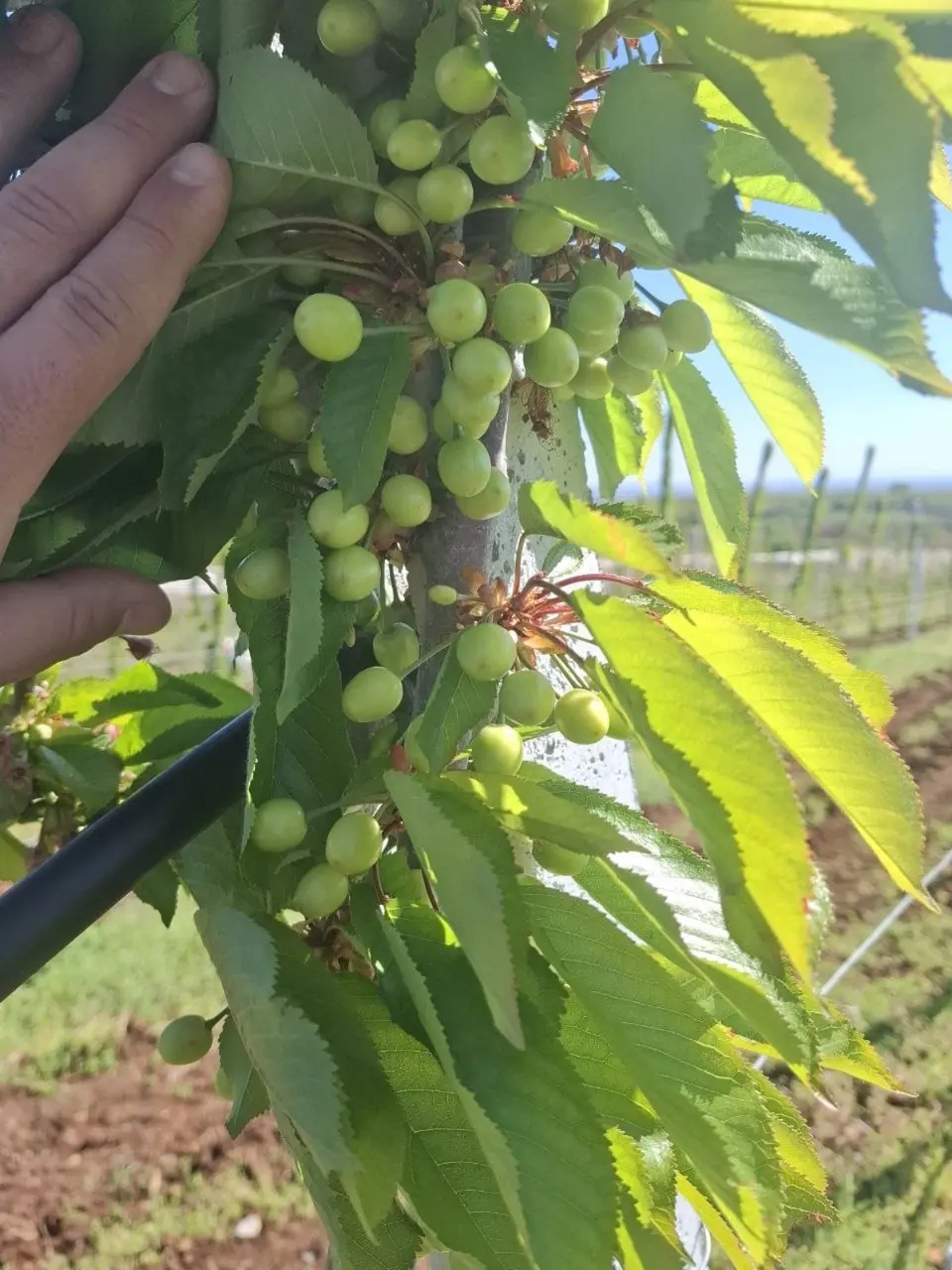
Observations from the Loutrochori orchard
Cherry production in Loutrochori, Edessa, follows modern intensive cultivation standards. The linear system with concrete supports and wires allows for better light exposure, ventilation, and canopy management. At the same time, drip irrigation ensures uniform moisture in the root system.
Overall, the picture we observed was encouraging. The trees are healthy, vigorous, and already showing their productive potential. With proper management, and especially with fruit thinning in the early years, this Royal Tioga orchard in Loutrochori is expected to deliver outstanding results in the years to come.
Source of text and images: Tsesmelis Nursery, Greece
Cherry Times - All rights reserved