One hectare of Santina cherries, production close to 8,000 kilograms, and 95% of the crop destined for export.
These are the figures achieved in the latest season by the farm of Cristian Osorio, a grower from Coltauco who has been involved since 2024 in a pilot project promoted by INDAP and AFIPA to strengthen technology transfer and good practices in cherry orchard management.
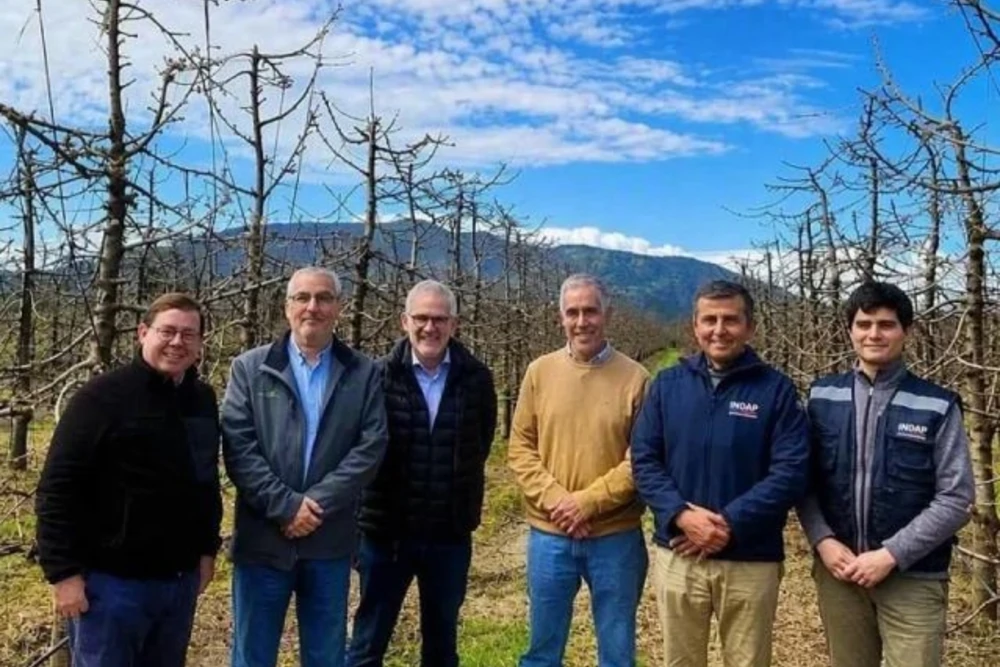
The results of the initiative were the focus of a visit to the orchard by representatives of CropLife and the Asociación Nacional de Fabricantes e Importadores de Productos Fitosanitarios Agrícolas (AFIPA).
The meeting was also attended by interim director of INDAP O'Higgins, Humphrey Crawford, and the head of the Doñihue Area Agency, Óscar Santibáñez.
A pilot project focused on cherry orchard management
The initiative stems from an agreement between AFIPA and INDAP aimed at promoting integrated pest management, good agricultural practices, and the safe use of crop protection products among farmers and technicians linked to the institution.
As explained by AFIPA coordinator Sergio Maureira, the project began with the implementation of a pilot cherry orchard in the Idahue area, at Cristian Osorio’s farm.
The program was subsequently expanded through workshops and training seminars aimed at both growers and advisers from the Technical Advisory Service (SAT) and the Local Development Program (Prodesal).
The aim is to transfer knowledge and practical tools capable of making agronomic management more effective, with particular attention to crop protection and the correct use of available technologies.
Santina: nearly 8,000 kilograms from one hectare
Cristian Osorio has been participating in the project since 2024 and manages one hectare of Santina cherries planted in 2019.
According to the grower, the technical assistance he received helped strengthen his skills in crop protection management, irrigation, and the efficient use of agricultural machinery. In the latest season, the orchard achieved production close to 8,000 kilograms.
This result was accompanied by a strong commercial focus on international markets: 95% of the cherries produced were destined for export.
INDAP aims to continue the agreement
Humphrey Crawford, interim director of INDAP O'Higgins, gave a positive assessment of the collaboration with AFIPA and announced the institution’s intention to work toward the renewal of the agreement in light of the results achieved.
According to Crawford, the program provides farmers with information and tools related to agronomic management and the rational use of crop protection products, with the aim of improving production and increasing the economic returns of the farms involved.
CropLife: technology and innovation for quality and profitability
José Perdomo, president of CropLife Latin America, also took part in the visit and described the experience in Coltauco as an example of the opportunities offered by the proper application of technology and innovation in the field.
According to Perdomo, the appropriate use of available solutions can help improve productivity, quality, and profitability. The hope is that similar experiences can be replicated, together with INDAP, in other regions.
The goal identified by CropLife is to encourage the correct use of technologies, support the economic success of farmers, and provide consumers with safe products that are high-quality and reliable from a food safety perspective.
A model to be extended beyond the pilot orchard
The experience gained in Coltauco shows how training, technical assistance, and the proper management of agronomic tools can also help smaller farms achieve significant production and commercial results.
The possible continuation of the agreement between INDAP and AFIPA now opens the prospect of extending the model to other growers and regions, turning the Idahue pilot cherry orchard into a reference point for new technology transfer initiatives dedicated to fruit growing.
Text and image source: www.diariofruticola.cl
Cherry Times - All rights reserved