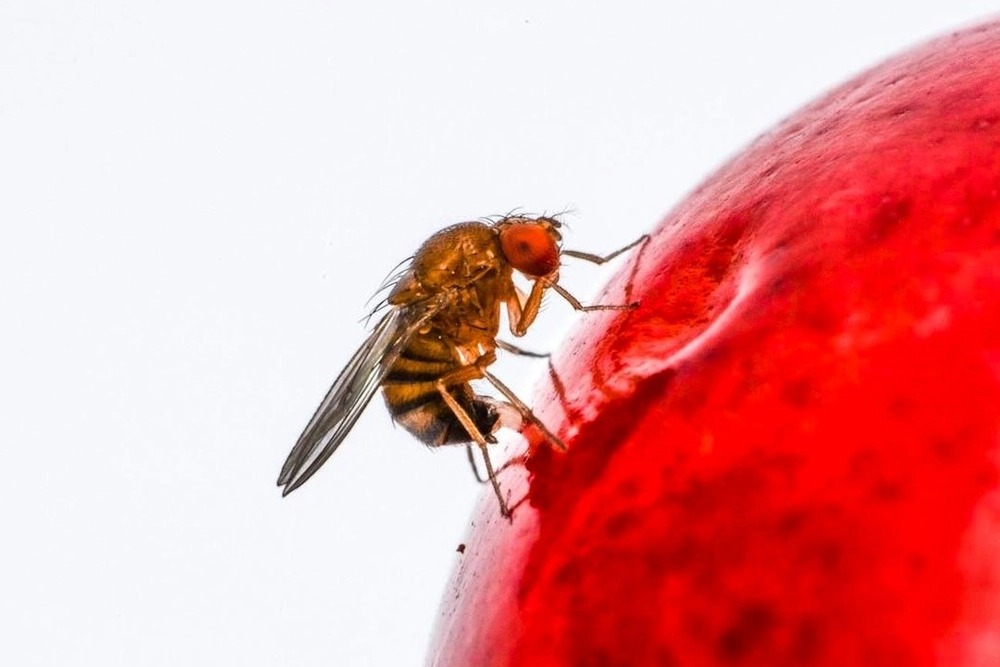
Spotted wing drosophila, Drosophila suzukii, is NOT an ordinary fruit fly. Most vinegar flies arrive when fruit is already damaged or overripe. SWD arrives earlier. The female can cut into healthy, ripening fruit and lay eggs before the damage is visible. For berry growers, this makes the pest feel almost like a small agricultural “terminator”: fast, hidden, opportunistic, and difficult to stop once populations build up.
For strawberries, raspberries, blueberries, cherries and other soft fruit, the main challenge is timing. By the time fruit looks soft, leaking or collapsed, the infestation may already be inside. That is why modern SWD management starts not with panic spraying, but with monitoring, prevention and fast decisions.
Current best practice: manage before the fruit shows damage
The first rule is simple: monitor early and monitor locally. SWD emergence varies strongly by year, site and weather. Regional reports are useful, but they cannot fully replace on-farm monitoring. Traps help growers know when SWD is present in their own crop, especially around ripening fruit.
Cornell guidance highlights two practical monitoring options: (1) red jar drowning traps and (2) red sticky cards baited with a lure. Jar traps are sensitive and well established, but they require more labour, filtering and microscope identification.
How to service a jar trap. Source: Anna Elizabeth Wallis, Spotted Wing Drosophila, Cornell University Blog, 2024
Red sticky cards can be easier to service in the field and, in Cornell’s recent comparison, performed broadly comparably to jar traps when used correctly.
How to hang a sticky red card with lure. Credit: J. Carroll / Anna Elizabeth Wallis. Spotted Wing Drosophila. Cornell University Blog, 2024
Source: Anna Elizabeth Wallis. Spotted Wing Drosophila. Cornell University Blog, 2024
Yellow sticky card in round cage. Photo: Erica Pate and Hannah Fraser, OMAFRA / Anna Elizabeth Wallis. Spotted Wing Drosophila. Cornell University Blog, 2024
Fruit sampling is also important. Salt flotation can reveal larvae inside berries before damage is obvious. It is simple and low-cost: berries are submerged in salt water and larvae float out. The difficult part is that larvae are tiny, so the process still needs trained eyes and careful handling.
Management must then combine several tactics:
Sanitation is essential. Fruit should be harvested frequently, and overripe or infested berries should not be left in the field. Dropped fruit can become a breeding site, so it should be removed, frozen, solarised in bags, or disposed of away from the crop.
Canopy management matters. SWD prefers shaded, humid places. Pruning, weed control and improving airflow make the crop environment less favourable. The goal is not only a cleaner canopy, but a drier and brighter one.
Insecticide use should be targeted, not automatic. Cornell recommends beginning sprays when fruit is ripening and SWD has been trapped in the orchard or region. Active ingredients should be rotated by IRAC group to slow resistance development. Spray intervals should not be stretched too far; a 7-day interval is treated as the maximum in current Cornell guidance. Good coverage is especially important inside the canopy, where humidity is higher and SWD habitat is more favourable.
After rain, reapplication may be needed according to label instructions.
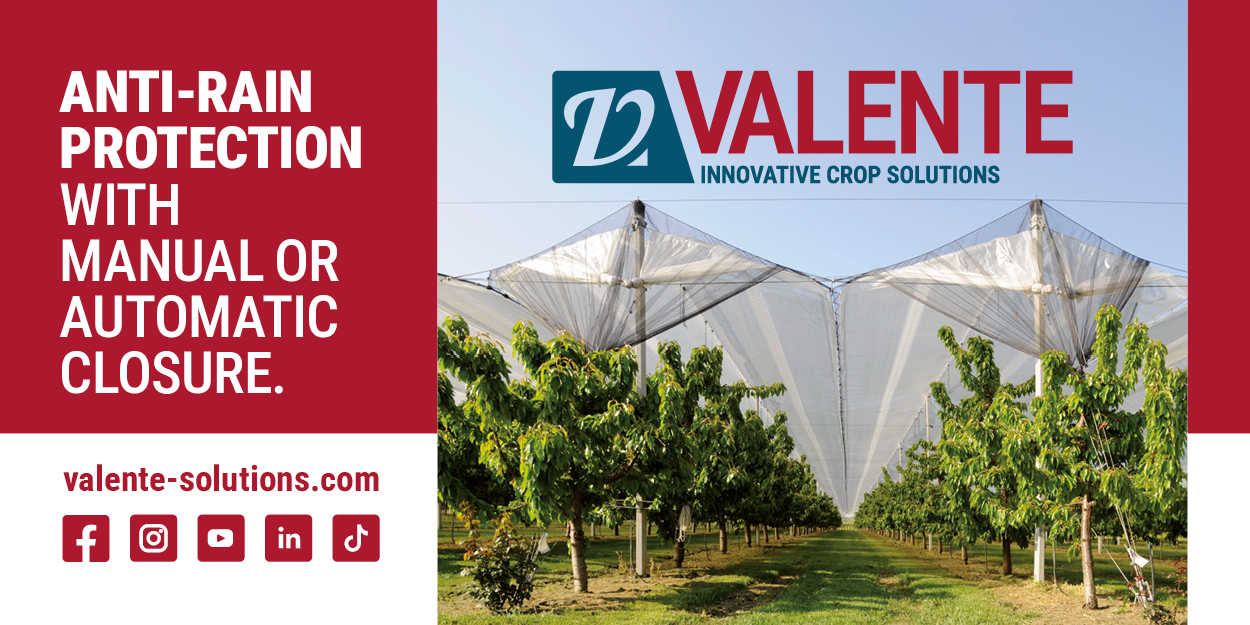
Exclusion netting can be highly effective when installed before SWD arrives and maintained properly. But it requires upfront cost, correct installation and careful management to avoid gaps where flies can enter.
Finally, post-harvest cooling is not optional. Rapid cooling to around 32–33°F (around 0–0.6°C) slows or stops larval development and helps protect fruit quality after harvest.
Where AI can help
AI will not replace integrated pest management. But it can make SWD management faster, more precise and less dependent on guesswork.
The first opportunity is automated trap monitoring. A grower or adviser could take a smartphone photo of a sticky card, and computer vision could count suspected SWD, separate males from non-target insects, and create a time-stamped pest record for each field. This would reduce the labour burden of weekly trap checks and make monitoring more scalable.
The second opportunity is risk forecasting. AI models can combine trap counts, temperature, humidity, rainfall, canopy conditions, crop stage and harvest timing to estimate SWD pressure. Instead of asking, “Should we spray this week?”, the grower could ask, “Which block is becoming risky first?”
The third opportunity is hidden infestation detection. Hyperspectral imaging and machine learning are already being studied for detecting SWD infestation inside blueberries before symptoms are visible. This is especially promising for post-harvest quality control, packhouse screening and high-value berry supply chains where hidden larvae can cause serious rejection risk.
The fourth opportunity is decision support. AI can connect monitoring data with spray records, pre-harvest intervals, resistance-management rules and harvest schedules. The output would not be a black-box instruction, but a practical recommendation: monitor again, harvest immediately, cool faster, apply a labelled product, rotate chemistry, or focus sanitation in a specific block.
Practical value for growers
SWD is difficult because it attacks at the worst possible moment: just before harvest. AI is useful because it works exactly where human scouting becomes overloaded — small insects, many traps, many fields, fast-changing weather and invisible early infestation.
- The future of SWD control is not “AI instead of IPM.”
- It is AI-powered IPM: better monitoring, earlier warnings, smarter spraying, faster cooling and fewer surprises inside the fruit.
- The real goal is not to kill every fly after the crisis begins. The real goal is to see the risk early enough to act.
Maria Kuzmenko
Founder of Petiole
Image source: Le Matin
Cherry Times - All rights reserved