In sweet cherry, immunity activated by the recognition of microbial signals does not represent a uniform response, but can assume different configurations depending on the receptor involved and the nature of the elicitor.
This is what emerges from a recent study conducted on the cultivar ‘Lapins’, which compared the responses induced by flg22, a conserved peptide derived from bacterial flagellin, and xyn11/EIX, an elicitor of fungal origin.
The study focused on pattern-triggered immunity (PTI), the first line of defense activated by pattern-recognition receptors (PRRs) located at the cell surface.
The researchers identified and functionally characterized PaFLS2, a receptor kinase predominantly localized to the plasma membrane and responsive to flg22.
Immune recognition
Activation of PaFLS2 triggered a rapid burst of reactive oxygen species (ROS), confirming its ability to initiate PTI signaling.
Structural comparison with the PaEIX2 receptor, previously characterized for the recognition of xyn11/EIX, also revealed differences in the organization of the extracellular LRR domains: PaFLS2 exhibits an architecture that is highly conserved across species, whereas EIX2-like receptors show greater plasticity and reorganization of residue interactions.
This difference at the perception level appears to be reflected in subsequent defense responses. Indeed, following pretreatment with the two elicitors, the leaves showed different abilities to counteract the pathogens.
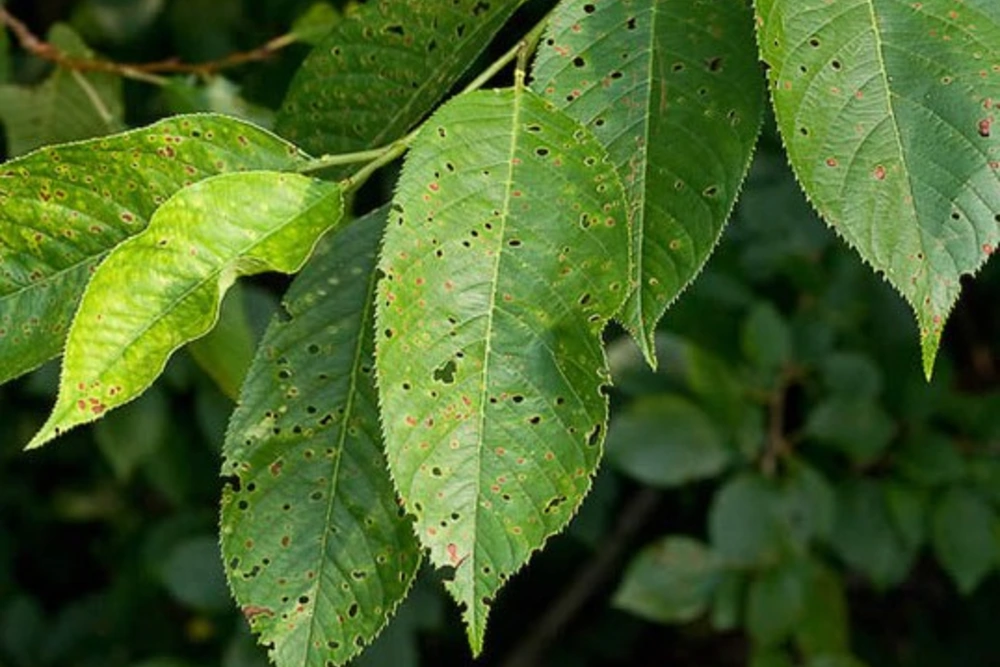
Flg22 significantly reduced the lesion area caused by Pseudomonas syringae pv. syringae, with a stronger effect than xyn11/EIX, but did not significantly alter susceptibility to Botrytis cinerea.
Response to pathogens
In contrast, xyn11/EIX markedly reduced lesions caused by B. cinerea and moderately decreased bacterial symptoms.
The results therefore indicate that the two elicitors do not simply differ in the intensity of the response they induce, but activate functionally distinct immune states.
Gene expression analysis confirmed this specificity, highlighting a strong temporal component: differences between the elicitors were evident at 6 hours, whereas at 24 hours the transcriptional responses tended to converge to a greater extent, while still retaining some specific markers.
Molecular regulation
Integration with a predictive regulatory network also identified potential nodes involved in coordinating perception, secondary metabolism and hormonal signaling, including genes associated with the phenylpropanoid pathway and ABA biosynthesis.
Regarding the hormonal profile, at 24 hours xyn11/EIX induced a broad reconfiguration characterized by increased salicylic acid, jasmonic acid and JA-Ile, ethylene and several related metabolites, accompanied by a reduction in the bioactive form GA1.
Flg22, in contrast, produced a more restricted hormonal response, dominated by modulation of gibberellin homeostasis, with reduced GA1 and accumulation of GA8 and GA20; a transient increase in ABA was observed during the early stages.
Multivariate analyses further separated the treatments, confirming the existence of partially overlapping but distinct PTI configurations.
Immune configurations
Overall, the study proposes a model in which the identity of the pattern-recognition receptor (PRR) and its corresponding microbe-associated molecular pattern (MAMP) does not simply initiate a generic immune response, but directs the plant toward specific transcriptional and hormonal states, resulting in preferential resistance to particular pathogens.
Although these results were obtained under experimental conditions (and originate from an article that has not yet undergone peer review), they expand our understanding of defense mechanisms in sweet cherry and highlight interesting prospects for immune-priming strategies based on the targeted use of elicitors.
Source: Alvarez Andree et al. (2026) Beyond a uniform defense: Pattern-recognition receptor identity shapes immune outputs in sweet cherry. PRE-PRINT https://dx.doi.org/10.2139/ssrn.7152789
Image source: Mastrosimini, Foglie TV
Andrea Giovannini
PhD in Agricultural, Environmental and Food Science and Technology - Arboriculture and Fruitculture, University of Bologna, IT
Cherry Times - All rights reserved