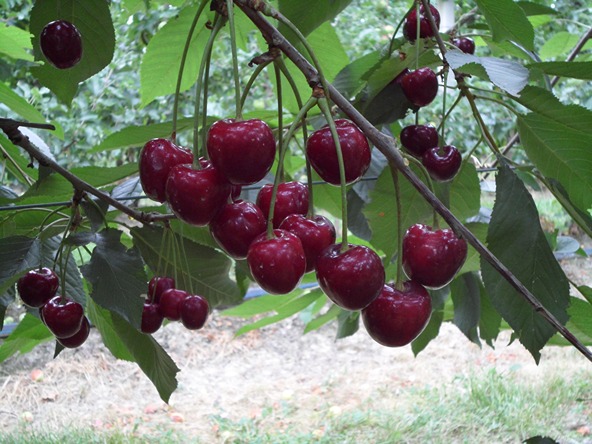
In Uzbekistan, sweet cherry production is increasingly relying on the implementation of new intensive cultivation techniques. To achieve this, one of the first steps is certainly the transition toward the use of dwarfing rootstocks, which therefore need to be produced in large quantities (and in a short time). Seed propagation introduces genetic variability, whereas vegetative propagation carries a higher risk of disease transmission.
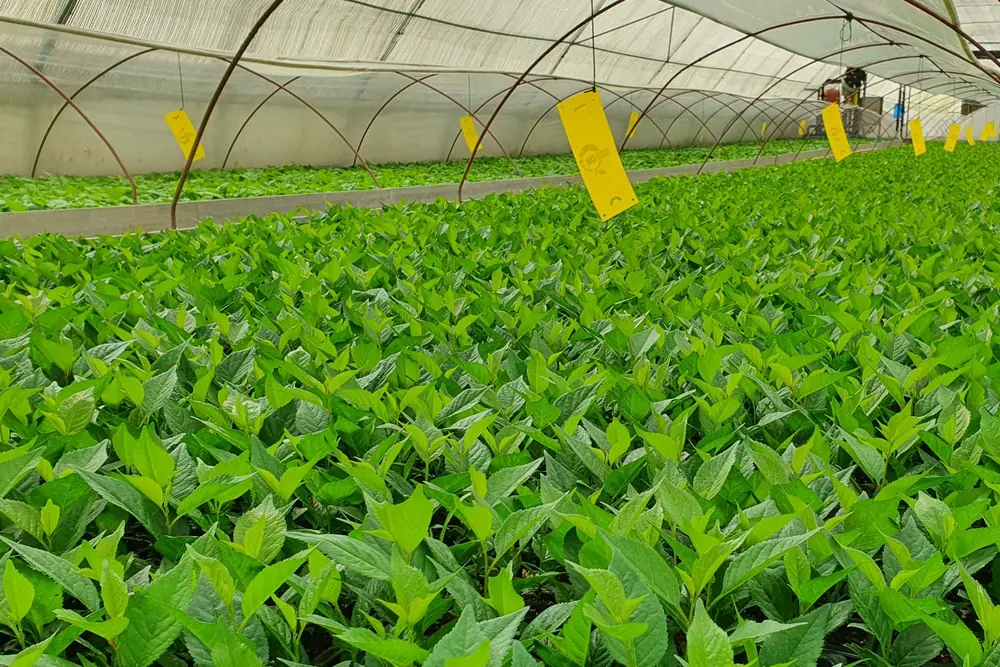
Three research institutes in Tashkent (Uzbekistan) conducted a study investigating the response of different sweet cherry cultivars and rootstocks to clonal micropropagation, with the aim of identifying, for each genotype, the most effective culture conditions for shoot proliferation.
In particular, different culture media were compared, including Driver and Kuniyuki Walnut (DKW), Murashige and Skoog (MS), and Woody Plant Medium (WPM), in combination with different concentrations of plant growth regulators.
Results
The results revealed marked genotypic variability in the in vitro response, confirming that micropropagation efficiency depends both on the composition of the culture medium and on the type and concentration of the plant growth regulators used.
Among the rootstocks examined, Krimskiy-5 showed one of the most favorable responses, reaching an average of 2.95 shoots per explant and an average shoot length of 1.84 cm on DKW medium supplemented with benzylaminopurine (BAP). Gisela-5 and Gisela-6 also showed good proliferative capacity, producing 2.77 and 2.99 shoots, respectively, under similar culture conditions.
The Colt rootstock showed a positive response to different BAP concentrations, reaching approximately 2.92 shoots per explant, with an average length of 1.78 cm. These results highlight the central role of cytokinins, particularly BAP, in stimulating cell division and the formation of new shoots during the multiplication phase.
Cultivars
The cultivars also displayed differentiated responses. Bahor, Volove Serdse, and Revershon produced particularly interesting results when DKW medium was combined with formulations containing meta-topolin (mT). Under these conditions, the number of shoots exceeded 2.9 per explant, while shoot length was greater than 2.1 cm.
The Kara Geles cultivar, on the other hand, responded more strongly to the combination of naphthaleneacetic acid (NAA) and thidiazuron (TDZ), reaching 3.22 shoots. The highest proliferation rate was recorded in the Pink Napoleon cultivar, with 3.42 shoots and an average length of 3.52 cm, indicating a particular genetic aptitude for in vitro multiplication.
Overall, the DKW medium proved more effective than MS and WPM media for the proliferation of most of the genotypes analyzed. The study therefore highlights the need to develop genotype-specific micropropagation protocols, carefully adjusting mineral composition, plant growth regulator concentrations, and culture conditions.
These findings could contribute to the more efficient production of genetically uniform, high-quality nursery material, facilitating the large-scale propagation of sweet cherry cultivars and rootstocks of agronomic interest.
Source: http://sabraojournal.org/wp-content/uploads/2026/02/SABRAO-J-Breed-Genet-58-1-368-377-MS25-86.pdf
Image source: Stefano Lugli
Melissa Venturi
PhD in Agricultural, Environmental and Food Science and Technology - General Arboriculture and Tree Crops - Bologna, IT
Cherry Times - All rights reserved