Poland is one of the leading fruit producers, with a per capita production of 146 kg of fruit. Among the cultivated species, the production of sour cherries stands out, reaching 183 thousand tonnes in 2022, making it one of the largest producers in the world.
In fact, the sour cherry is widely cultivated in Poland due to the plant's excellent resistance to low winter temperatures and the suitability of the soil for this crop. Another interesting feature is the fruit's phenolic component, such as phenolic acids and flavonoids, which could counteract the harmful effects of free radicals, implicated in the development of diseases such as the cardiovascular ones.
However, the combination of labour shortage and high labour costs has necessitated a change in orchard structure and management techniques.
 Elzbieta Rozpara
For example, orchards with historical cultivars are characterised by a low planting density (4 m between trees in the row), which is well suited to harvesting with trunk shakers. Modern plantations (1.2 m – 1.5 m between trees in the row), on the other hand, are better suited to harvesting with cherry harvester. Of the total product, most is processed, either into concentrated juice or frozen products, while only 9% is destined for fresh consumption.
The new research directions are towards the breeding of new varieties suitable for fresh consumption such, with sweeter and large fruits but not only: there is the need to conduct research on organic sour cherry production as well as on the study and elaboration of new processed products.
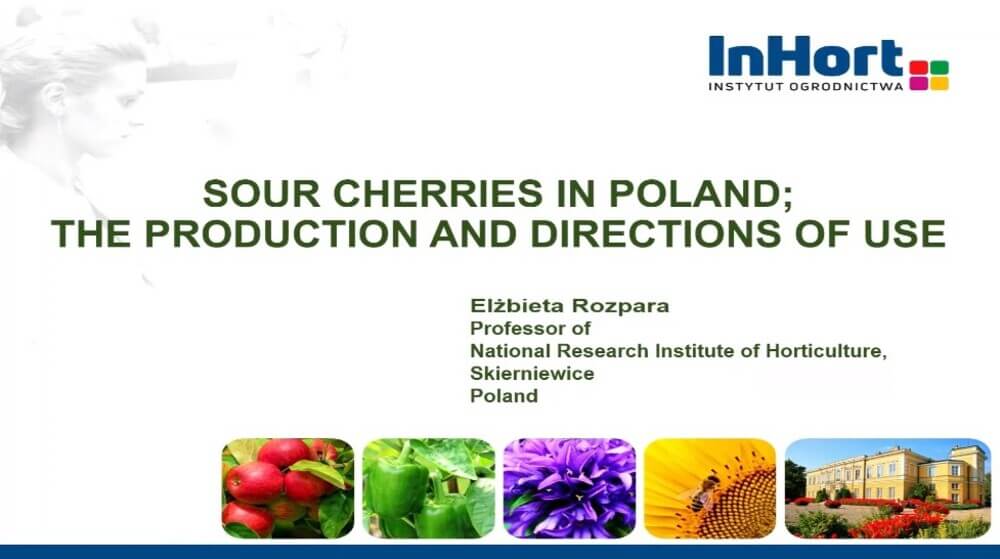
Source: http://2021.cherries.org.cn/replayEn.html
Melissa Venturi
University of Bologna (IT)
Cherry Times - All rights reserved