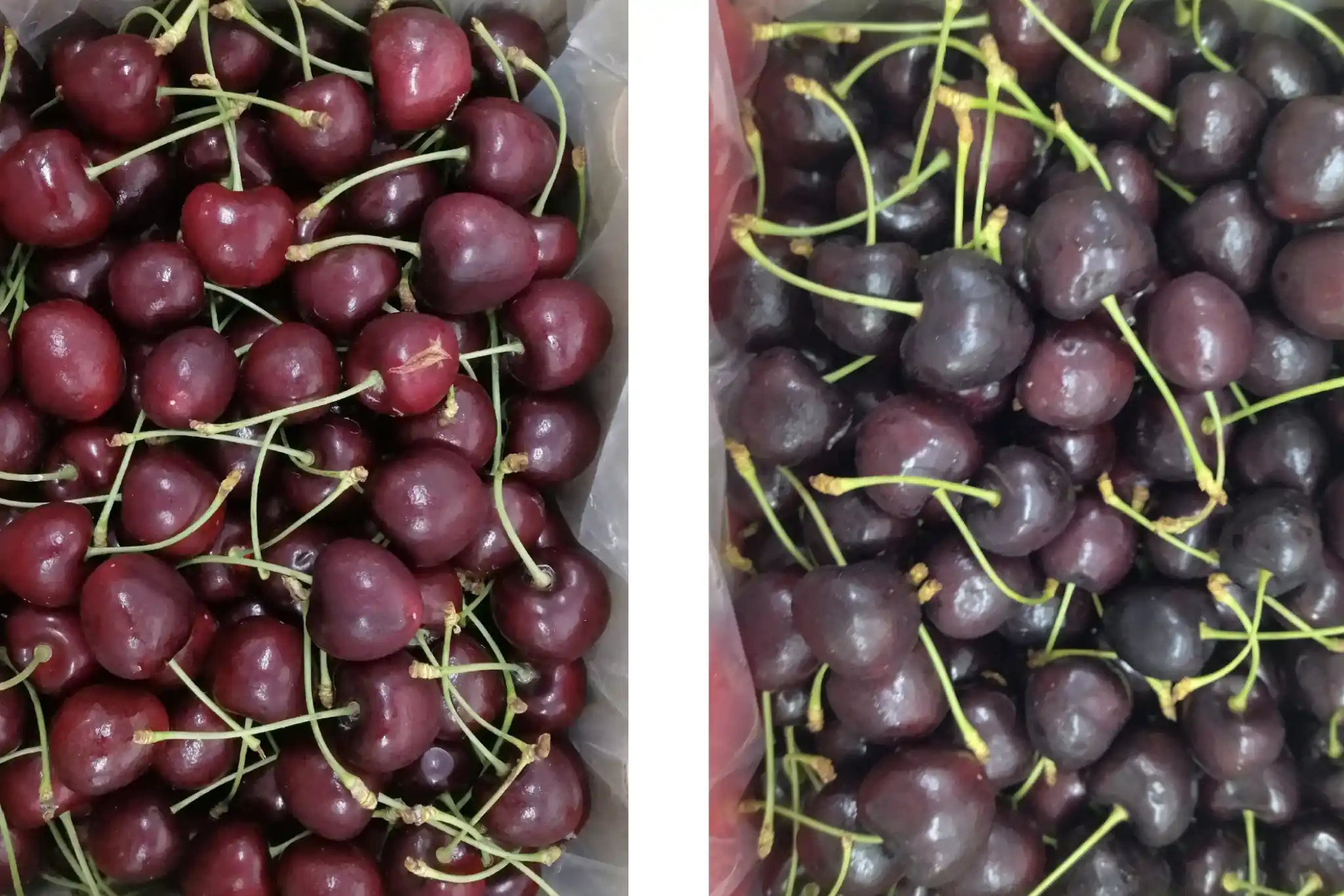
The Regulatory Council of the Protected Designation of Origin Cherry of Jerte has begun certifying D.O.P. cherries for the 2024 campaign. They belong to the Navalinda variety, marking the beginning of the season for this indigenous product from northern Extremadura.
The president of the Regulatory Body, José Antonio Tierno, explains that the 2024 season is approached "with enthusiasm, hope, and much excitement, especially after the disaster of last year, when most of the harvest was lost due to a episode of continuous storms and rains".
In light of these results, estimates for this year appear more positive. The D.O.P. predicts that "the season will be better than the previous one", he explained. It is also expected to be good both in terms of volume and quantity. "Although we depend on the absence of meteorological problems", Tierno added.
Currently, the certification of D.O.P. cherries for the 2024 season is progressing about eight or ten days ahead. According to the president of the Regulatory Body, "there have been no meteorological problems other than those usual for this time of year in spring". "Despite the Easter rains, in full bloom, a harvest of 400 tons of Navalinda and about 2,000 or 3,000 tons of picota is estimated".
The only certified cherry variety by the D.O.P. Cherry of Jerte
The Navalinda is the only certified variety from the Jerte Valley that is harvested with the stem. Its early ripening makes it the first to reach the market. After its certification, the D.O.P. proceeds with the Jerte picotas, which are characterized by their sweet flavor and because they naturally detach from the stem. Thus, at the time of harvest, the stem remains attached to the tree, and the fruit is marketed without it.
The certification of D.O.P. cherries for the 2024 campaign belonging to the picot group will begin in June. The certified varieties of Jerte picota cherries are four: Pico Limón Negro, Pico Negro, Pico Colorado, and Ambrunés. The latter stands out for representing the highest percentage of the total production "about 80% or 90% of the harvest", Tierno explained.
A traditional and sustainable crop
In the Jerte Valley, more than a hundred cherry and picota varieties are cultivated. However, only five have the D.O.P. quality mark. They grow in the mountains and are cultivated naturally. Moreover, harvesting is done traditionally to respect the delicacy of the product. All this work, carried out in a familiar way, becomes a guarantee of a unique flavor.
The certification of D.O.P. cherries for the 2024 campaign recognizes this effort and quality. It also guarantees the origin of the product through the D.O.P. seal.
Their sweetness, heart-shaped form, and crispy texture distinguish them as the star product of the summer months, which also has a high content of vitamins A and C, trace elements such as iron and calcium, flavonoids like potassium, and many other nutrients. This makes them a healthy and tasty option.
After rigorous selection and comprehensive quality control, and following the certification process of the 2024 campaign, only the best cherries are identified with the Denomination of Origin "Cereza del Jerte". In this way, the highest quality guaranteed by the Protected Designation of Origin Cherry of Jerte is assured and easily distinguishable thanks to the back label placed on the boxes of cherries and picotas that arrive on the markets from the Jerte Valley.
The certification of D.O.P. cherries for the 2024 campaign will continue throughout the month of May.
Source: Cereza del Jerte
Image: Cereza del Jerte
Cherry Times - All rights reserved