The cherry harvest wrapped up months ago. But in northern Michigan, some growers are already looking forward to the spring return of a small raptor that could benefit next season’s crop.
The American kestrel is the smallest falcon in the United States. As birds of prey, kestrels keep away smaller birds that love snacking on farmers’ fruit. But new research suggests these winged security guards may offer an additional advantage: food safety.
 Opening image. A female kestrel in a cherry orchard in northern Michigan. Source: M. Shave
Benefits of kestrel presence
This is the conclusion of a Michigan State University study, to be published on November 27 in the Journal of Applied Ecology.
“They’re beautiful to watch in flight,” says lead author Olivia Smith. They hover in mid-air as they scan the ground for insects, mice and small birds.
By scaring away birds that peck at cherries, kestrels also prevent them from contaminating the fruit with their droppings, according to the new findings.
The research could help growers produce safer, healthier food and increase profits, the researchers said.
Bird control methods
“It’s hard to keep birds out of crops,” says Smith, assistant professor of horticulture and member of MSU’s Ecology, Evolution, and Behavior Program.
Growers have tried various methods such as nets, noisemakers, scarecrows and sprays, but these solutions can be costly and not always effective.
Even with active control systems, sweet cherry growers in states like Michigan, Washington, California and Oregon still lose between 5% and 30% of their crop each year to birds.
Hungry birds also pose another problem: they poop. Some people worry their droppings may contain pathogens capable of making consumers sick.
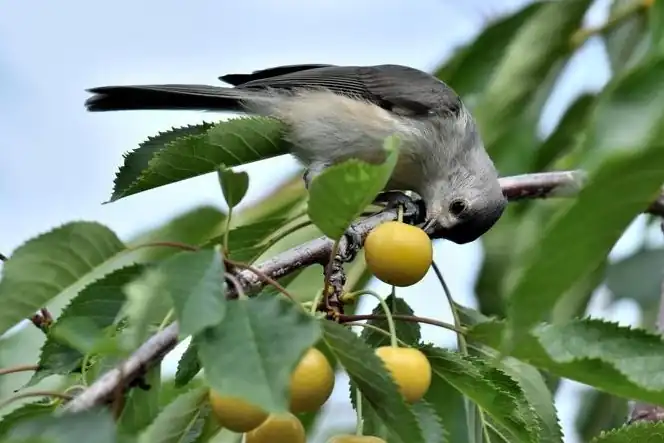 Image 1. A hungry bird eating a grower’s fruit in a cherry orchard in northern Michigan. Source: Olivia Smith
Field study and findings
Researchers decided to test whether attracting predators to orchards could help reduce these risks.
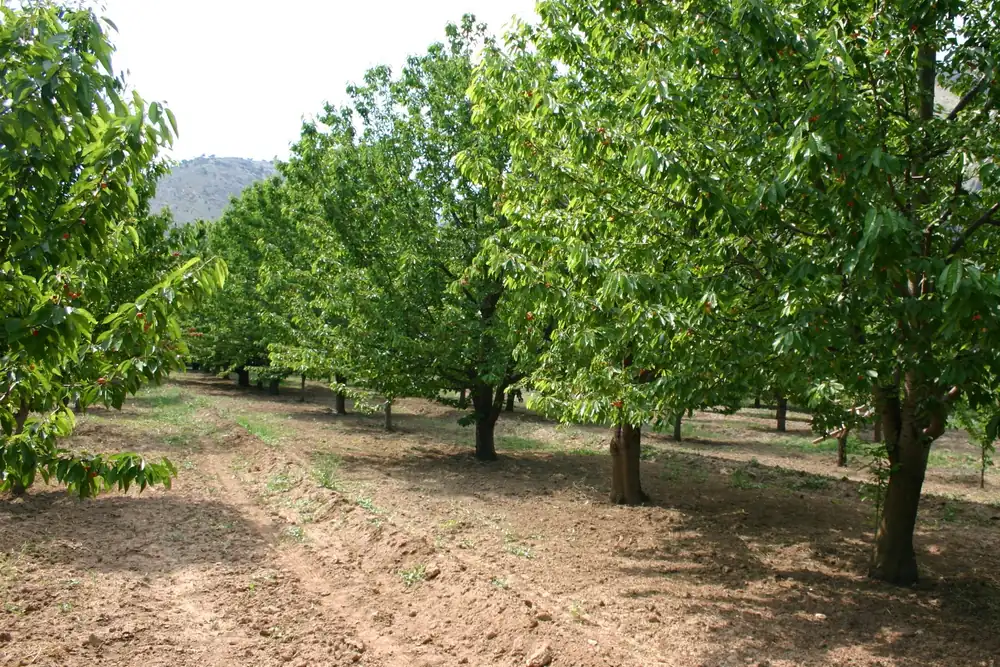
They focused on nest boxes installed in eight cherry orchards in northern Michigan, and found that kestrels, which typically rely on natural tree cavities or pre-existing spaces to raise their young, quickly settled in.
They then recorded all birds seen or heard as harvest time approached.
The team found that blackbirds, grackles and starlings were far less likely to visit orchards and eat fruit when kestrels were nesting nearby. By intimidating hungry visitors, kestrels reduced the likelihood of cherry damage more than tenfold.
Reduction of contamination
But their presence brought another benefit. Researchers detected fewer signs of droppings on the trees. Kestrels were associated with a threefold reduction in feces observed on branches.
“Obviously kestrels also poop,” says senior author Catherine Lindell, associate professor emerita of Integrative Biology and member of MSU’s Center for Global Change and Earth Observations.
But the number of frugivorous birds they keep out of orchards more than makes up for the issue, she adds. In fact, trees closest to kestrel nest boxes were less likely to be “dusted” with droppings.
DNA analyses revealed that 10% of droppings contained Campylobacter, a bacterium that commonly causes foodborne illness. Symptoms include diarrhea, fever and abdominal cramps.
Implications and future perspectives
This does not mean your next bowl of cherries will make you sick, the researchers clarify. No Campylobacter foodborne outbreak has ever been linked to cherries.
Likewise, Smith adds, it may be too early to blame birds for crop contamination. Only one outbreak has been attributed to birds: a 2008 Campylobacter outbreak caused by migrating cranes in Alaskan pea fields.
But the research suggests that kestrels could help improve food safety in other crops associated with outbreaks, such as leafy greens.
“They’re really good at reducing the amount of feces,” Smith says. “That means fewer opportunities for transmission.”
“This won’t solve every bird-related problem growers face,” she adds. One limitation, for example, is that kestrels are more inclined to settle in some regions than others.
“But it’s a low-cost, low-maintenance tool that producers can add to their toolbox for managing birds,” Lindell concludes.
Source: eurekalert.org
Cherry Times - All rights reserved