The 2025 harvest of early cherries grown in greenhouses has officially begun today, April 16th, in Apulia, albeit with a slight delay compared to the initial schedule. The climatic conditions of the past few weeks—marked by below-average temperatures, frequent rainfall, and limited sunlight—have slowed the growth and ripening processes of the fruit.
A delayed start, but no setbacks
Industry professionals had originally planned to start harvesting in the very first days of April, hoping for a quicker seasonal transition. However, the combination of high humidity and low sunlight levels pushed operations back by over a week compared to 2024.
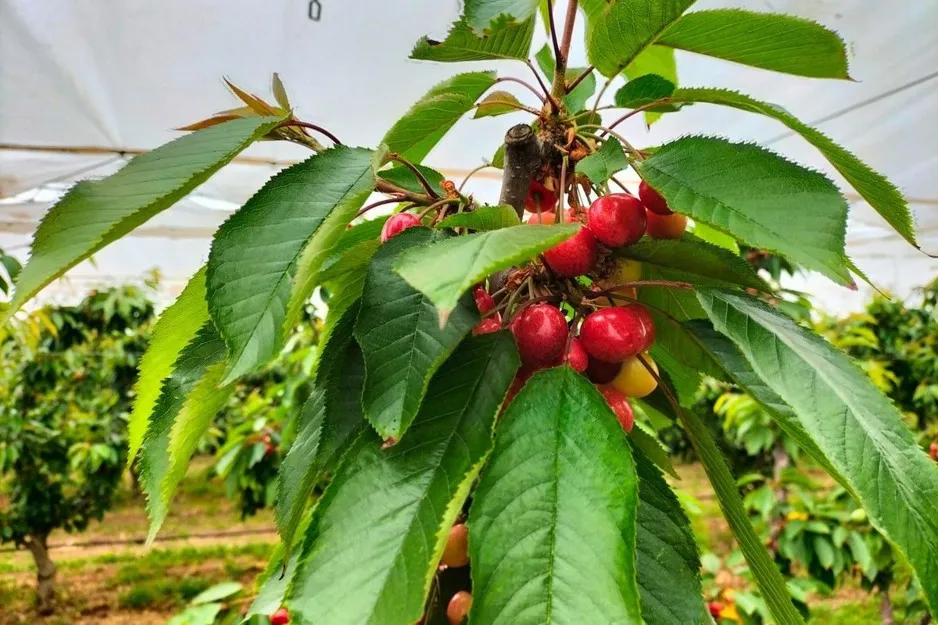
Despite the delay, the harvested product shows excellent quality, with average sizes around 28 mm, good sugar content, and a uniform coloration.
Perfect timing for Easter demand
Launching on the market just before Easter offers a strategic advantage: the first cherries immediately evoke the arrival of spring and always generate strong consumer interest.
The availability of an exclusive product during this time of year—coinciding with holidays and traditional Italian celebrations—helps maintain high prices and solid profit margins for producers.
Focused production, gradually increasing
Currently, harvesting covers about 3 hectares of greenhouses located in the Bisceglie area, in the province of Barletta-Andria-Trani. Initial volumes are limited, but an increase is expected starting from next week.
Fruit selection takes place on alternate days to ensure optimal ripeness and high quality standards.
A short and efficient supply chain
The harvest will be delivered to the Agritalia Producers' Organization and marketed exclusively by Giuliano Puglia Fruit, reinforcing an efficient supply chain focused on promoting high-quality products, both in domestic and export markets.
Looking ahead: greenhouse strategy
This slow start demonstrates the adaptability of Apulian agriculture in facing climatic variability while leveraging advanced cultivation technologies, such as greenhouses, to ensure consistency and quality.
In an increasingly competitive European context, Italy continues to stand out in the production of early cherries, thanks to efficient organizational models and growing attention to the needs of the premium market.
Text and image source: freshplaza.it
Cherry Times - All rights reserved