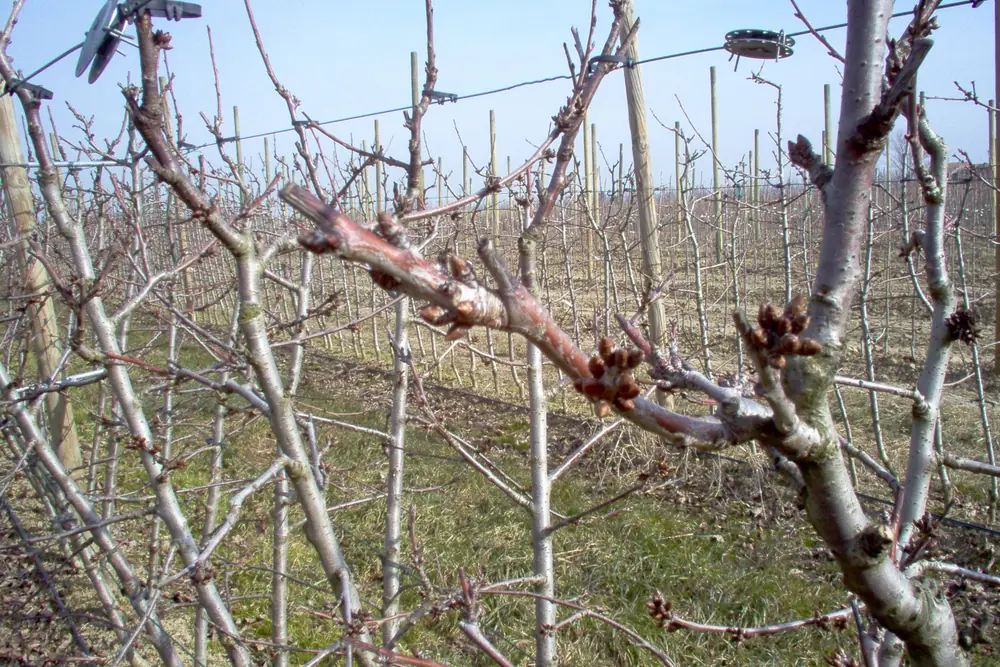
Bud dormancy in temperate fruit tree species represents a fundamental adaptation that allows plants to survive unfavorable environmental conditions during autumn and winter by temporarily suspending growth.
During endodormancy, buds are unable to resume development even when external conditions become favorable, as this inhibition is regulated by internal mechanisms within the plant.
To exit this state, buds must accumulate a sufficient amount of cold, generally expressed as hours of exposure to low temperatures, a requirement that varies among species and cultivars.
In recent years
In recent years, climate change has made this process increasingly critical by reducing the availability of winter chilling in many agricultural regions. When chilling requirements are not fulfilled, the consequences are significant: flowering becomes irregular and poorly synchronized, flower quality declines, and, as a result, both yield and fruit quality are negatively affected.
This scenario has driven agronomic research to develop strategies aimed at artificially compensating for the lack of winter cold. Among these strategies, an important role is played by chemical compounds capable of anticipating or inducing dormancy release.
The most studied and effective compound is hydrogen cyanamide, which is used in several crops such as grapevine, peach, and kiwi to promote uniform budbreak and improve productivity. However, its use is limited due to its toxicity to both humans and the environment, leading to the development of safer alternative products.
Some commercial formulations have shown promising results in improving flowering synchronization, although their mechanisms of action are not yet fully understood.
From a physiological and
From a physiological and molecular perspective, the article published in Frontiers in Plant Science highlights that the release from endodormancy is a complex process involving numerous internal factors.
In particular, it emphasizes the role of reactive oxygen species, which are involved in stress responses and cellular signaling, as well as plant hormones. Abscisic acid is associated with the maintenance of dormancy, whereas gibberellins promote the resumption of growth.
Agrochemicals appear to act on this balance by reducing abscisic acid levels and increasing gibberellin levels, while also influencing the oxidative state of the cells. These changes are accompanied by modifications in gene expression, demonstrating that dormancy is regulated by a complex genetic and biochemical network rather than being a passive response to environmental conditions.
Although agrochemicals represent an effective short-term solution, they raise important concerns regarding environmental sustainability and the safety of agricultural workers. For this reason, the article emphasizes the need to develop more sustainable alternative approaches.
Future perspectives highlight the
Future perspectives highlight the importance of deepening our understanding of the molecular mechanisms regulating dormancy in order to identify new targets for more precise and less impactful interventions.
At the same time, the potential of genetic improvement is emphasized, particularly in selecting varieties with lower chilling requirements that are better adapted to changing climatic conditions.
The integration of physiological research, biotechnological tools, and agronomic practices thus represents the most promising direction for addressing the challenges posed by climate change.
Source: Guillamón JG, Dicenta F and Sánchez-Pérez R (2022) Advancing Endodormancy Release in Temperate Fruit Trees Using Agrochemical Treatments. Front. Plant Sci. 12:812621. doi: 10.3389/fpls.2021.812621
Image source: Stefano Lugli
Melissa Venturi
Ph.D. in Agricultural, Environmental, and Food Sciences and Technologies – Fruit Tree Physiology and Cultivation - Bologna, Italy
Cherry Times - All rights reserved