International Fruit Tree Association conference highlights technology implementation with orchard tours and panel discussions.
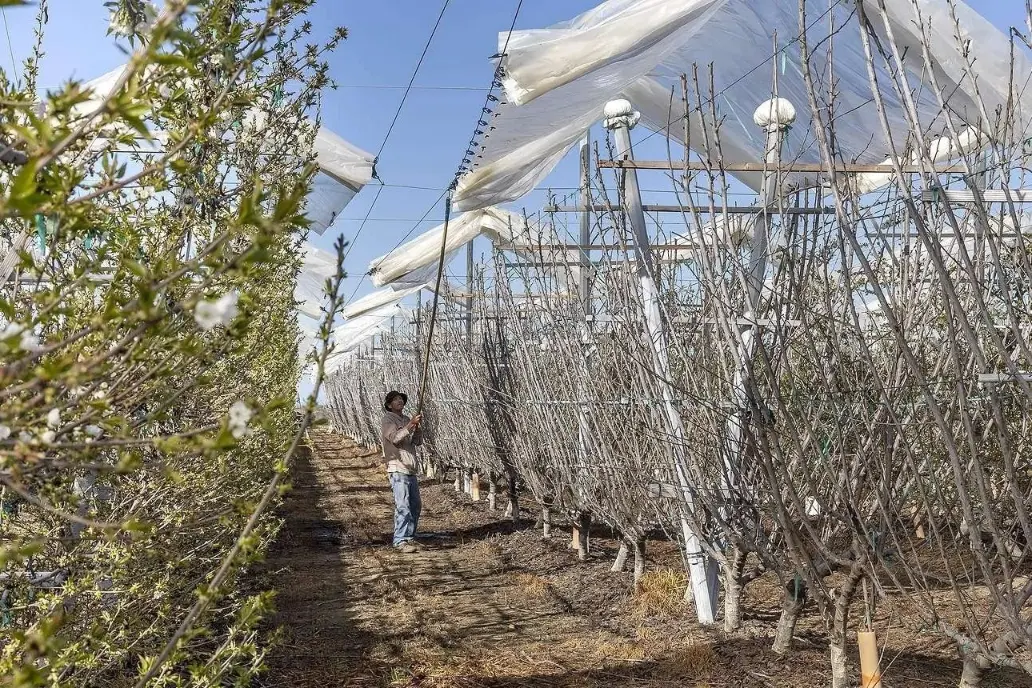
Pushing stone fruit into planar production systems opened the door for myriad labor-saving technologies at HMC Farms, from mechanized bloom thinners to rapid-deploy nets. “The idea is to have one person on one side drop the whole net,” said grower Drew Ketelsen.
Or one person to wind it up, using a power drill and a PVC pipe extension. But at $10,000 an acre (≈€9,200/acre; ≈€22,700/ha), if you include bullhorns for the trellis posts, he remains unsure if the system he imported from the Netherlands will pay off, even in high-value blocks of proprietary varieties.
“We wanted to see how it functions, and we will see if it will be worth it at this cost,” Ketelsen said about the system.
Technology value for growers
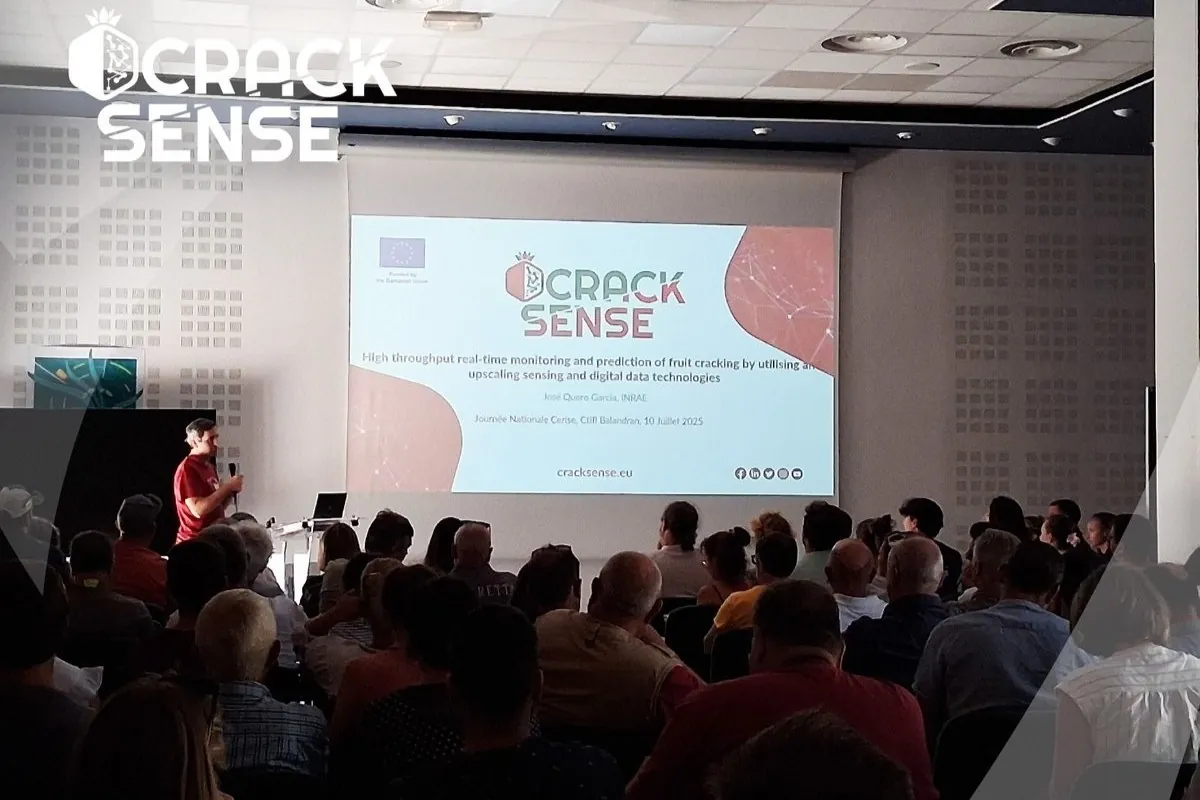
That question — what value do new technologies offer growers — centered the International Fruit Tree Association’s annual convention, held in February in California’s Central Valley.
The event included two days of conference presentations, a day at the World Ag Expo, and a day touring cherry and stone fruit orchards. The meeting — “Integrating Orchard Traditions and Technologies” — enlisted a broad definition of technology: sensor-driven precision and labor-saving automation, as well as emerging varieties, chemistries and systems.
Such integration can be easier said than done, said Ines Hanrahan, director of the Washington Tree Fruit Research Commission, highlighting team effort for adoption success.
“Ag tech in tree fruit needs engineers and data scientists, but we also need horticulture and economics and psychology and entomology and physiology,” she said. “And you have a farmer in the front taking the hits, but you have to paddle together. And sometimes you capsize,” she said describing collaboration challenges.
Stone fruit tour insights
IFTA tours frequently spur conversation between the grower hosts and visitors, encouraging exchange of practical orchard insights. Yi Zhang, technical director for Grapery, was eager for suggestions when the tour visited a fifth-leaf cherry block.
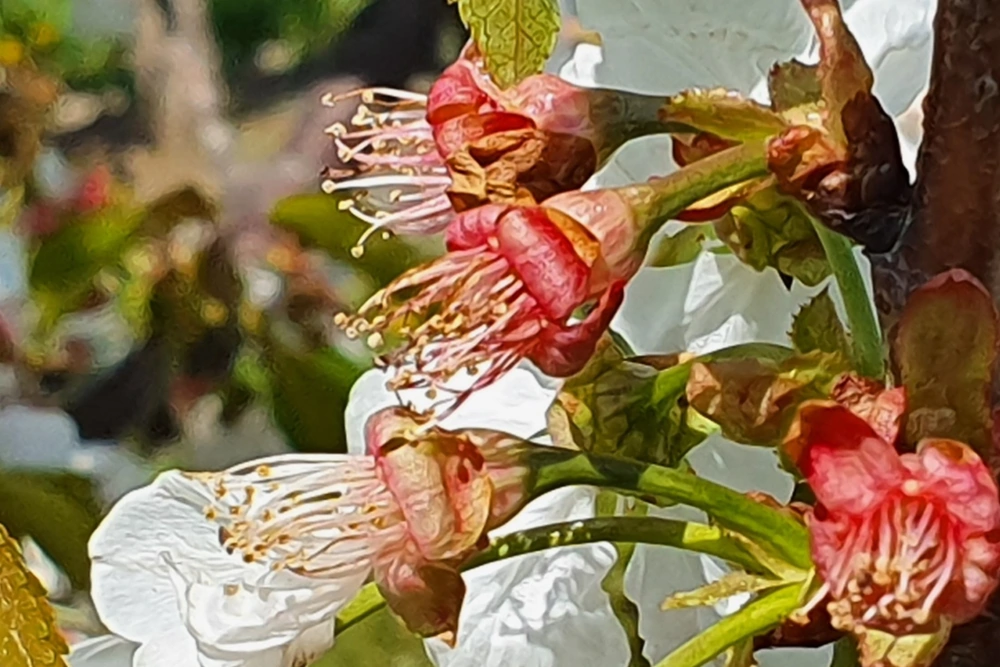
One, IFG CHER-TEN was in full bloom, while IFG CHER-TWO lagged a week behind, impairing cross-pollination in the 40-acre block (≈16.2 ha). “It’s been challenging,” Zhang said. “The trees are very vigorous and need fruit to settle down, but we can’t get fruit,” highlighting vigor and fruiting imbalance issues.
Earnscy Weaver, a consultant from New Zealand, shared insights for managing the V-trellis UFO system, including removing largest uprights and renewal shoots. He also suggested root pruning and noted the trunk angle was too horizontal, affecting optimal structure and productivity.
Spacing and yield comparisons
Weaver discussed planting density, comparing 2-meter row spacing with 2.5-meter trees to 3-meter rows with 3.5-meter trees, analyzing yield and structural efficiency differences. While tighter spacing gives more uprights per hectare, both systems produced similar yields across orchard blocks.
“Three-meter rows lower investment and management costs for the same meaningful amount of fruit,” he said, emphasizing cost-efficiency in orchard design. At another stop, grower John Warmerdam shared a strategy of freestanding trees kept short for faster picking.
“A lot of things look cool, but it doesn’t mean you are making money,” he said, stressing profitability over innovation appeal. Workers use “stop cuts” in summer and “go cuts” in dormant pruning, applying targeted pruning strategies for branching.
Planar systems and pruning
At HMC Farms, Ketelsen showed planar peach and plum blocks using platforms and string thinners, enabled by modern orchard design changes. “We used to think trees had to get shorter, but now we can get taller again,” he said, noting reduced ladder dependency in work.
Row width is kept at 80 percent of tree height, with less formal training for peaches and nectarines, due to fruiting on young wood. He compared new systems to older vase trees, noting better light distribution and fruit quality.
“The best fruit was at the top where labor is more expensive,” he said, explaining efficiency gains in new systems. Plums, which fruit on older wood, are managed with more formal training systems.
Chill challenges and solutions
Across California, insufficient chill complicates cherry crop load management, affecting yield consistency and fruit quality. Greg Lang noted California has similar acreage to Washington but much lighter crop loads due to climate-related chill limitations.
Growers may face extremes from low yields to overset crops, impacting marketable fruit outcomes. Mitch Sangha discussed plant growth regulator trials, aiming to reduce hand thinning costs of $1,500 per acre (≈€1,380/acre; ≈€3,410/ha), focusing on automation of crop management processes.
One trial showed a product advancing bloom timing by a week compared to Dormex, offering valuable market timing advantage. He also used ProTone (ABA) to defoliate trees earlier, helping accelerate chill accumulation processes.
John Avansino discussed ABA trials to promote dormancy, replacing zinc sulfate with a more natural defoliation approach. ABA defoliates cherries in two weeks and apples in a month, enabling gradual nutrient redistribution to buds. This improves chill accumulation and supports strong bud and fruit development.
Grower panels and technology adoption
Panels featured growers discussing ag tech adoption across regions, sharing real-world implementation experiences. Smart Apply sprayers saved about $180,000 (≈€165,600) in chemicals, demonstrating clear return on investment. Justin Finkler highlighted rain covers, variable-rate sprayers and FieldClock, emphasizing incremental efficiency gains in labor.
Weaver shared trials using ultraviolet light for disease control, deployed via autonomous carts in orchards. The system worked well against pseudomonas but less effectively on botrytis, showing mixed results across diseases. Autonomous tools are also used for mowing, spraying and transport, improving overall operational efficiency.
Panelists noted current vision systems are not yet robust, but future improvements could transform crop load management decisions. “From 11.5-row to 11-row is $20 a box (≈€18.4). Eleven to 10.5 is another $10 (≈€9.2),” Stonebarger said, illustrating economic sensitivity to yield changes.
Better early data enables growers to balance leaf-to-fruit ratios and nutrients, improving pricing and market returns.
Kate Prengaman
Editor of Good Fruit Grower
Image source: Kate Prengaman / Good Fruit Grower
Cherry Times - All rights reserved