Carolina Yañez: “The management of Drosophila suzukii must stop being reactive and become a data-driven preventive strategy”
The Chilean specialist analyses the lessons from the DrosEU Meeting 2026 and warns that the competitiveness of her country’s fruit sector will depend on the ability to anticipate phytosanitary pressure through monitoring, innovation and international collaboration.
From artificial intelligence to the Sterile Insect Technique, the agronomist explains how Chile is strengthening the management of one of the most complex pests affecting cherries and berries for export.
Phytosanitary scenario
In a scenario in which the phytosanitary requirements of international markets are becoming increasingly strict and emerging pests are testing the competitiveness of Chilean fruit, the management of species such as Drosophila suzukii has become a strategic priority for producers and exporters.
In this context, agronomist Carolina Yáñez Briceño is one of the most active technical voices in innovation applied to export fruit growing. From the Fundación para el Desarrollo Frutícola (FDF), she leads initiatives focused on advanced monitoring, risk analysis, integrated control and new technologies to address pests of quarantine importance that threaten the international positioning of Chilean fruit.
Her work combines applied science, international collaboration and emerging tools such as artificial intelligence, territorial analysis and predictive monitoring, always with the aim of providing concrete solutions to producers and exporters.
After taking part in the DrosEU Meeting 2026, an international event held in Montpellier, France, and dedicated to management strategies for Drosophila suzukii, Carolina shares in this interview her view on the lessons Chile should take on board, the regulatory and technical challenges the industry must address, and the new tools that could shape the future of phytosanitary control in export cherries and berries.
European consortium
DrosEU is the European Drosophila Population Genomics Consortium, a collaborative consortium of scientists and laboratories interested in the evolutionary genetics and genomics of Drosophila species. Its main objective is to work closely together in the collection, generation and analysis of genomic and environmental data from different Drosophila populations worldwide.
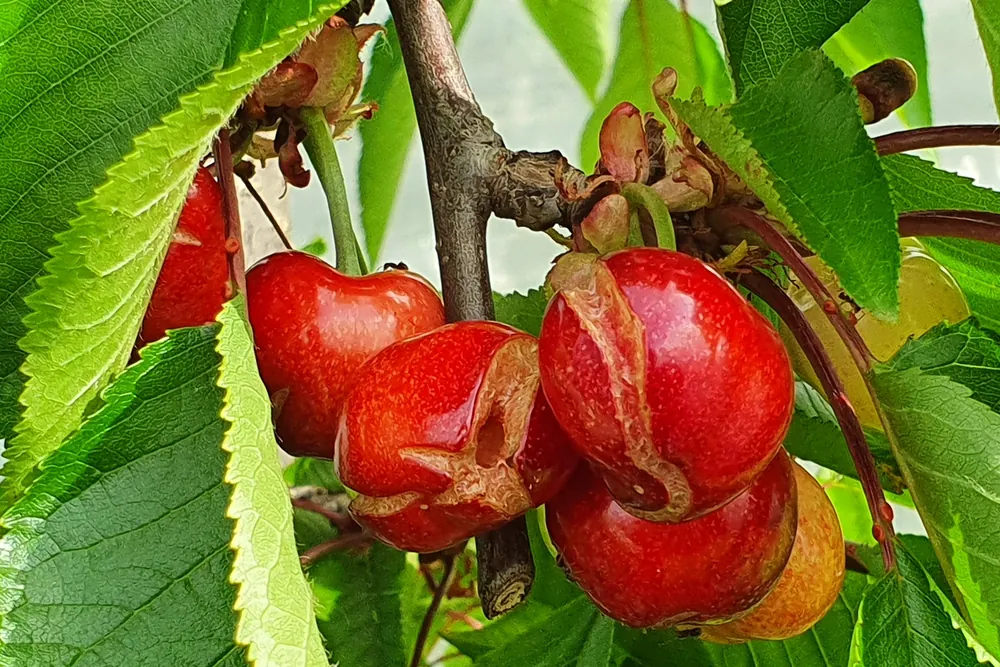
Spotted wing drosophila is considered an emerging and invasive pest in Chile. It is a small fly first detected in the country in 2017. It is a polyphagous species, as it attacks a wide range of fruit crops, as well as an increasing number of wild fruits.
Carolina, after your participation in the DrosEU Meeting 2026, what were the main lessons that Chile can now draw on to strengthen the management of Drosophila suzukii in export fruit production?
The main lesson is that Drosophila suzukii must be addressed with an integrated, technical and collaborative vision. At the DrosEU Meeting 2026, it became clear that the countries making progress in its management do not rely on a single tool, but on the integration of monitoring, population genetics, risk analysis, biological control, agronomic management, information technologies and new strategies such as the Sterile Insect Technique.
Preventive vision
For Chile, this is particularly relevant because we are an exporting country, with a highly demanding fruit industry that depends on compliance with phytosanitary requirements. International experience shows us that anticipation is essential: it is not enough to react when the pest is already present at high levels; we need to generate early information, strengthen surveillance and make data-driven decisions.
You have stated that the future of managing this pest does not lie in isolated solutions, but in integrated approaches. In practice, what does this mean today for the Chilean industry and what concrete lines of action are being promoted?
It means understanding that the control of Drosophila suzukii cannot be solved solely through chemical applications or one-off interventions. An integrated approach involves combining permanent monitoring, analysis of pest pressure, orchard management, removal of residual fruit, timely use of control tools, technical training and evaluation of new technologies.
In Chile, lines of action are being promoted around preventive monitoring in cherry orchards, the analysis of indicators such as captures per trap per day, the generation of early warnings, the strengthening of field protocols and the evaluation of innovative tools. Progress is also being made in international collaboration to study complementary alternatives, such as the Sterile Insect Technique and the use of genetic information to better understand the behaviour and spread of the pest.
Early monitoring
In terms of monitoring and early detection, what new tools or improvements are currently being assessed to anticipate the pressure of Drosophila suzukii in the field?
Today, the focus is on improving the quality and timeliness of information. Monitoring must provide useful data for decision-making, not just records of presence or absence. For this reason, we are working to strengthen indicators such as CTD, which makes it possible to analyse pest pressure over time and compare areas, orchards and seasons.
Improvements are also being assessed in data visualisation platforms, risk alert systems, integration with crop phenological information and territorial analysis. The objective is to enable producers and exporters to anticipate, identify critical moments and intervene before the pest creates a production or commercial problem.
One of the topics that emerged during the meeting was the Sterile Insect Technique. Where does Chile stand in relation to this type of innovative strategy and how feasible do you consider its implementation in the short or medium term?
Sterile technique
Chile is at an initial, but highly relevant, stage of evaluation and technical preparation. Work is currently underway on coordination with international institutions and on validating the logistical, regulatory and operational aspects required to move towards controlled trials.
The Sterile Insect Technique is a promising tool, but it requires a high level of technical rigour. It is not simply a matter of releasing sterile insects: first, it is necessary to ensure biological quality, vitality, field behaviour, dispersal capacity, compatibility with local populations and compliance with regulatory requirements.
In the short term, the challenge is to move forward with trials and validations. In the medium term, if the results are positive, it could become a complementary tool within an integrated management programme.
Looking ahead to 2026, what are the most concrete objectives set around Drosophila suzukii: reducing incidence, improving monitoring, strengthening protocols or moving forward with new control tools?
Concrete objectives
The objectives for 2026 are structured around several areas. First, strengthening preventive monitoring and improving the quality of the data available to the industry. Second, moving forward with more robust protocols that make it possible to standardise surveillance, sampling, risk analysis and timely response in the field. On the other hand, analysing pesticide applications, application frequencies, resistance and the rotation of active ingredients.
We also aim to continue evaluating new control tools, particularly those capable of integrating current management and reducing dependence on isolated solutions. Finally, an important objective is to improve the transfer of information to producers and exporters, because prevention only works if information arrives on time and is translated into concrete decisions.
From a regulatory and quarantine perspective, what are the main challenges Chile currently faces with this pest in order to safeguard the competitiveness of export fruit?
The main challenge is to safeguard the phytosanitary condition of Chilean fruit in increasingly demanding markets. Although Drosophila suzukii is not a quarantine pest, its production and commercial impact can be highly significant, especially in sensitive species such as cherries and berries.
Regulatory challenges
From a regulatory perspective, it is essential to have reliable information, traceability, clear protocols and rapid response capacity. The industry must demonstrate that surveillance, preventive management and coordinated actions are in place. In exports, trust is built through data, technical compliance and the ability to anticipate.
If you had to offer a reflection to producers and exporters, what would you say is the number one priority today in dealing with Drosophila suzukii in order not to compromise the sustainability of the business in the coming seasons?
Today, the number one priority is not to underestimate Drosophila suzukii. We are facing a pest that has shown a greater capacity for adaptation, higher population pressure and more prolonged activity during the season, elements that represent an increasingly complex challenge for the industry.
If we want to safeguard the sustainability of the export business, the approach must be preventive and information-based. Early and continuous monitoring is no longer optional: it is a strategic tool for anticipating risk and making timely decisions. The absence of captures does not always mean the absence of the pest, especially considering that today we are seeing strong pressure from areas outside the plots and from orchard borders, which act as permanent reservoirs.
Integrated management
In addition, this season has also shown us that chemical control, while remaining an important tool, has its limits. This requires working with much more precise phytosanitary programmes, rotation of modes of action and strategies designed to prevent the development of resistance.
For this reason, the challenge today is not only to control a pest, but to move towards genuine integrated management: intensive monitoring, management of alternative hosts, border control, post-harvest measures and evaluation of new technologies such as nets or the Sterile Insect Technique (SIT).
Ultimately, protecting Chilean cherries, for example, means protecting Chile’s competitiveness, phytosanitary reputation and ability to continue positioning itself as a reliable supplier of quality fruit in international markets.
Andrea Bustos
Diario Fruticola
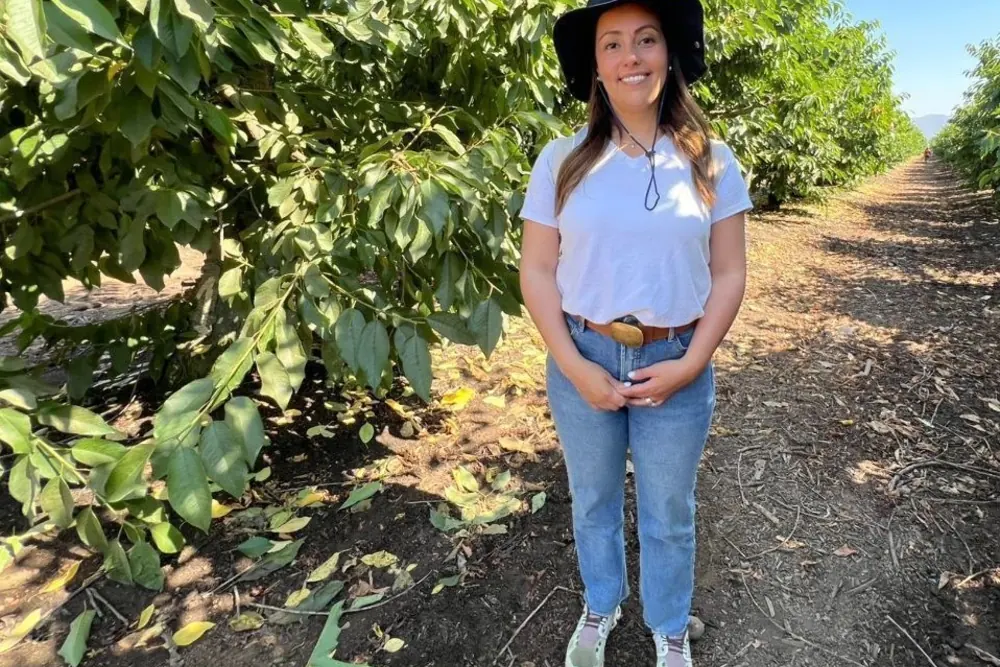
Opening image: Carolina Yáñez Briceño, Source: Diario Fruticola
Cherry Times - All rights reserved