Rain can compromise the commercial value of cherries, but their resistance is built during fruit development.
Variety, growth rate and cuticle characteristics all contribute to the risk of cracking.
Cristian Balbontín, a fruit-growing specialist at INIA Quilamapu, explains the factors involved and the measures that can help reduce damage.
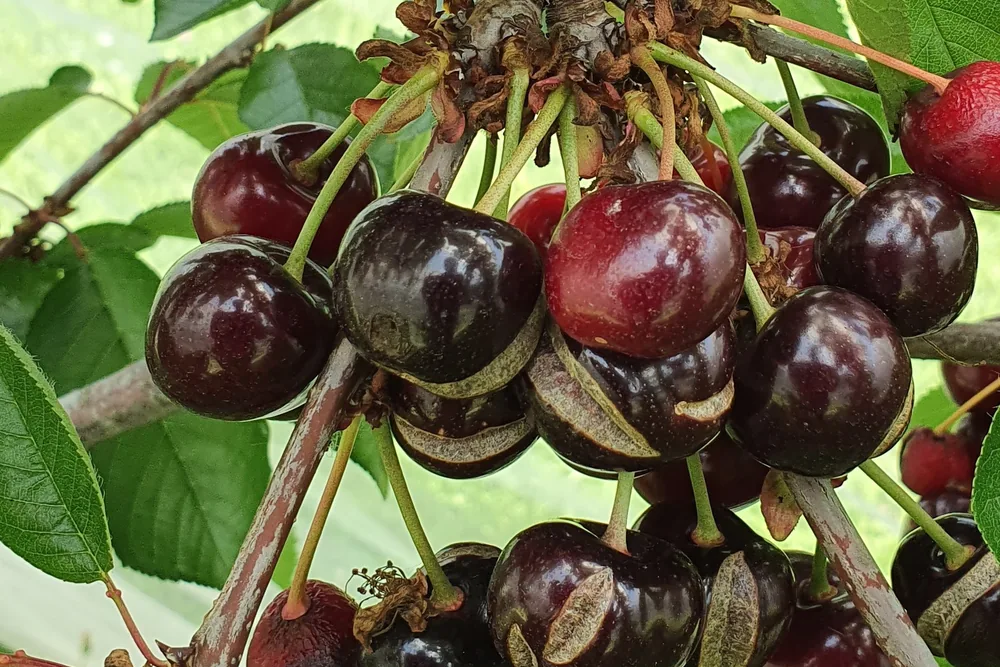
Cracking risk takes shape during fruit development
Cracking is not caused by rainfall alone. The cuticle, composed mainly of cutin and waxes, regulates water exchange between the fruit and its surroundings.
As the fruit grows, microcracks can form and later facilitate water uptake.
“The risk is determined before rainfall occurs,” says Balbontín.
For this reason, he explains, prevention needs to begin during fruit development and take into account the variety and its growth rate.
Nutrition and calcium: applications throughout fruit development
During development, it is important to maintain adequate mineral nutrition and ensure sufficient calcium, which helps strengthen plant tissues.
Calcium helps hold cells together. Applications during cherry development can increase the fruit’s calcium content, improve its firmness and reduce its susceptibility to cracking.
Treatments applied before or during rain can help reduce the osmotic gradient and, in turn, water uptake by the fruit.
Balbontín notes that a single calcium application is not enough: applications should be spread throughout plant development.
After the rain, it is also important to remove water promptly from the fruit surface.
Research focuses on the cuticle
Together with his collaborators, the researcher is studying how to stimulate plants’ natural responses to stress in advance.
He points to encouraging results with derivatives of jasmonic acid, a plant hormone involved in defense signaling. Applied during fruit set, they have affected the process of cuticle formation.
Under certain experimental conditions, applications of jasmonate and abscisic acid reduced susceptibility to cracking and improved fruit quality.
These findings point to a possible early window for intervention. As Balbontín concludes, during fruit development it may be possible to “strengthen the fruit surface against water.”
Source: www.portalagrochile.cl
Image source: Stefano Lugli
Cherry Times - All rights reserved