In the world of pome and stone fruits, the race for new varieties is no longer just a matter of taste.
Today, to remain competitive, apples, cherries and pears must deliver high performance throughout the entire supply chain: from the orchard to the packing facility, all the way to the retail shelf.
Rob Blakey, Research & Development Director at Stemilt Growers, knows this well. He has made the balance between organoleptic quality and operational efficiency the guiding principle behind the company’s varietal choices.
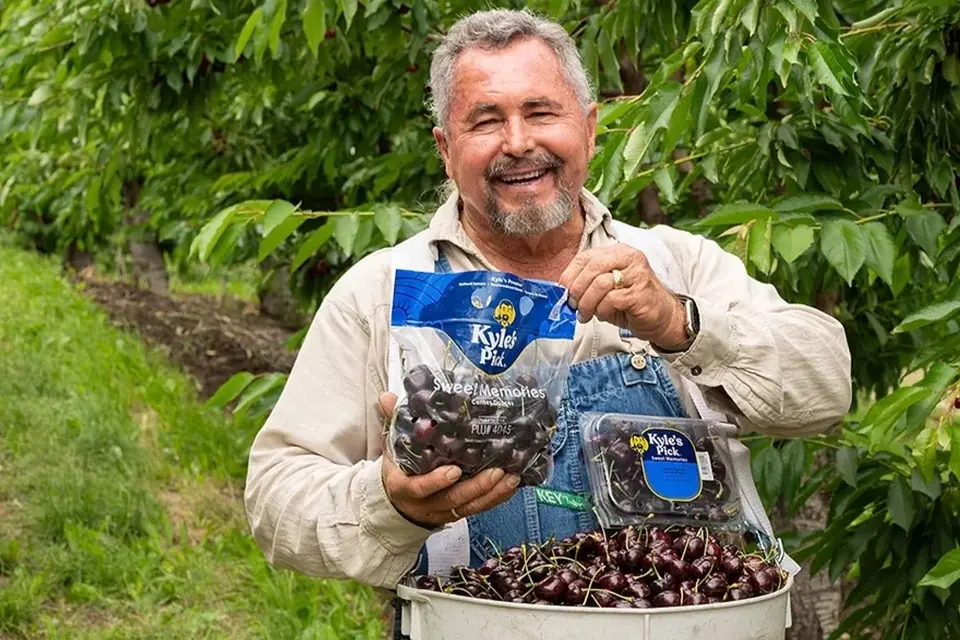 Kyle Mathison, owner of Stemilt and fourth-generation cherry grower
The Honeycrisp case
The case of the Honeycrisp apple is emblematic. Born almost as a project destined to be discarded, it has become over time one of the most recognizable modern varieties in the world.
Yet behind its commercial success lie significant production challenges: it is complex to grow, difficult to store and delicate during packing.
“It’s fantastic for consumers and retailers,” Blakey notes, “but if we don’t match that eating experience with efficiencies in the orchard and in the packhouse, the numbers don’t add up.”
With the gradual price decline caused by market saturation, the economic sustainability of Honeycrisp for growers is no longer what it once was.
Varietal planning
At Stemilt, planning starts with a long-term vision. Twice a year, the team analyzes the varietal mix in the orchards, distinguishing between conventional and organic production, and compares it with market performance.
The goal is simple yet strategic: grow what can realistically be sold.
Managing the orchard cycle – averaging twenty years – is central. When a variety enters its “decline” phase, replacement is planned: which cultivar to introduce, which rootstock to graft it onto, in which block, and on what timeline.
Benchmarks and investments
Blakey works backward: if a new planting will come into production in 2032, rootstocks must be ordered today. Bud availability, commercial scalability over the following five to six years, and agronomic response are all assessed well in advance.
The reference model is the Cosmic Crisp apple: easy to grow, simple to store, efficient to pack and appreciated by consumers. That is the benchmark.
If a new variety does not ensure comparable efficiency or introduce a truly distinctive element – such as a unique color or a specific marketing window – it is unlikely to pass selection.
For apples, Stemilt is evaluating around 50 varieties from different countries, analyzing their commercial potential across the entire value chain. Some cultivars, while excellent in flavor and storage performance, proved too delicate during packout.
Better to find that out before investing $20 million (€18.4 million) in a project that could fail.
Innovation and speed
An example of speed is the Aura apple, a premium yellow-skinned variety launched in just 11 years from the first cross to commercialization: roughly half the time required in the past.
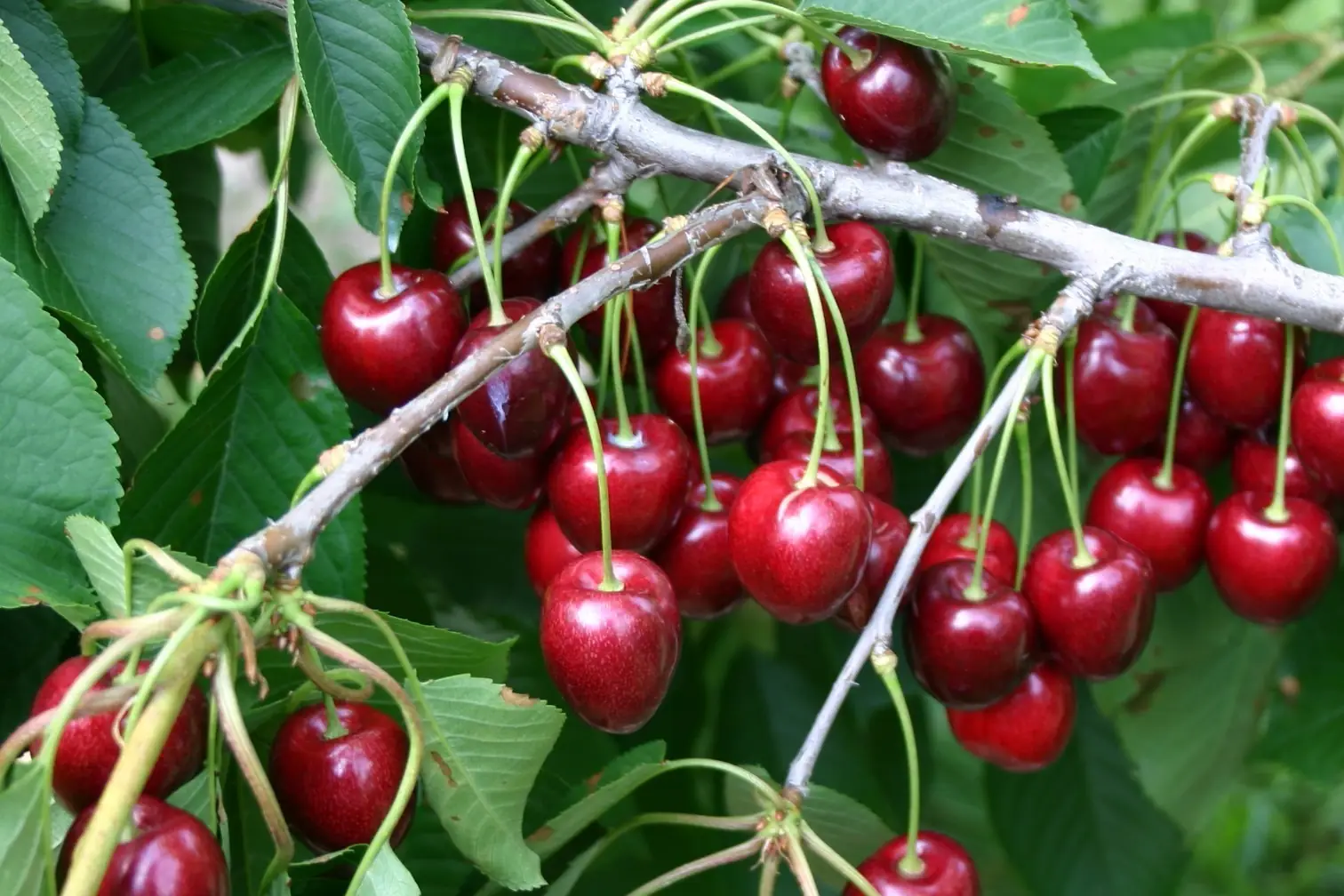
In the cherry segment, the strategy is different. Here, consumers are less focused on the variety name and more on a sweet, dark or Rainier-type cherry with large size, firmness and flavor.
Strategy in the cherry segment
Blakey is testing around 55 varieties globally, but timelines are long: a tree planted in 2018 may only enter production several years later. The main challenge is seasonality: “flattening the peak” and spreading supply over a longer time frame.
This means identifying the best varieties for each harvest window and production district, ensuring yield, size and economic return. Many cherries have an excellent flavor profile but insufficient yields to guarantee profitability.
Evaluations include harvest timing, rootstock, pollination, storability, transport, susceptibility to cracking and pitting. The goal is to reach commercial launch with full awareness of performance.
Another critical issue is the introduction of genetic material from abroad: propagation wood must undergo quarantine and phytosanitary controls that can last up to ten years in more complex cases if the material is not immediately “clean.”
According to Blakey, the greatest potential to extend the cherry season lies in genetics: new selections can add valuable weeks to the commercial calendar.
In the pear sector, innovation is even more challenging. The juvenile phase can last six years before first production, and traditional models envisioned orchards remaining in the field for 60 years or more.
New models for pears
Today, the approach is changing. The Happi variety, originally selected in 1988, enters production as early as the third year and reaches peak output between the fifth and sixth.
Its precocity, along with tolerance to fire blight and psylla, enables high-density plantings similar to apples.
More trees per hectare, earlier production, faster return on capital. A paradigm shift compared to traditional vertically growing trees with long field permanence.
However, sensitive rootstocks and climate risks remain key concerns. Shortening orchard lifespan to 20 years may reduce exposure to extreme events, but it requires highly targeted genetic and agronomic choices.
Ripening and sustainability
Pears also present an additional complexity: ripening. A variety must evolve properly after harvest, avoiding both excessive crunchiness and excessive softness.
This aspect also weighs heavily in the final evaluation of the variety.
Looking ahead, Blakey believes that genetic research and storage technologies will play a decisive role. The goal is to extend the consumption window of high-quality fruit, avoiding “tired” apples at the end of the season and ensuring high standards for a longer period.
With increasingly tight margins, every step must become more efficient: growing, harvesting, storage, packing. Without sacrificing taste.
Ultimately, sustainability is no longer only environmental. For new apple, cherry and pear orchards, it is primarily economic: a variety must stand on its own throughout the entire supply chain, or it will have no place in the future of global fresh produce.
Source www.thepacker.com
Image source: Stemlit
Christina Herrick
The Packer
Cherry Times - All rights reserved