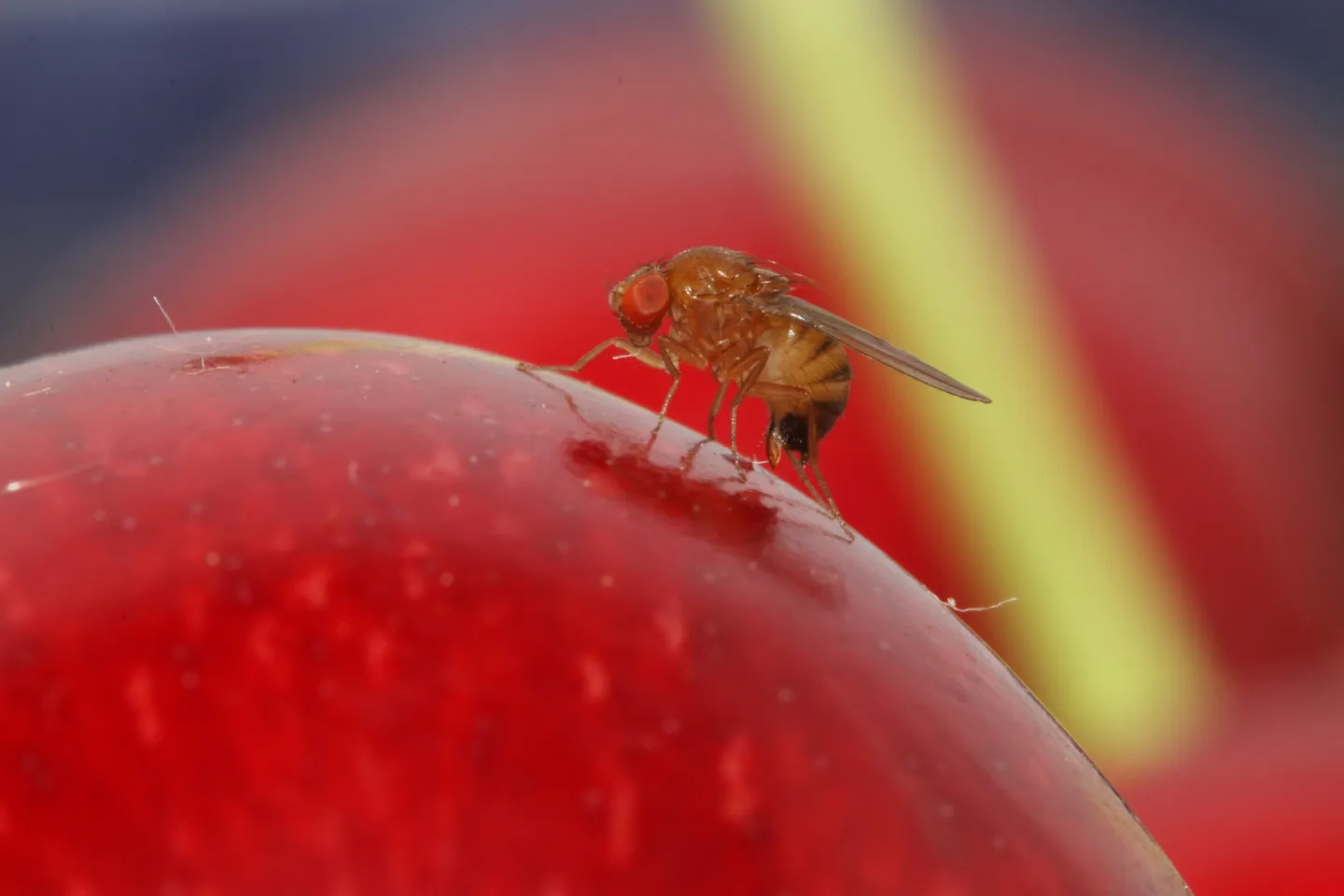
Drier conditions can make the flesh of some cherry varieties firmer, increasing their protection against attacks by one of their main pests, the spotted-wing drosophila (Drosophila suzukii). A study by ENEA, released on World Biodiversity Day (May 22), developed a laboratory screening system to assess the resistance or susceptibility of different varieties to the insect. Since its arrival in Italy from China, the fruit fly has caused significant damage to cherry production, particularly in the Sabina area of Lazio, with losses exceeding 50% in some cases.
How the varieties were assessed
Researchers at the ENEA Agricoltura 4.0 laboratory assessed how different cherry varieties responded to the insect’s attacks, using an artificial fruit fly breeding system [1] under controlled conditions. They established a susceptibility scale based on damage, measured as the percentage of affected fruit, the number of punctures, and the development of larvae and pupae.
“By analyzing all these parameters, we were able to identify which combination of biochemical, olfactory, visual and tactile factors most strongly influences the fruit fly, thereby determining a given variety’s level of susceptibility or resistance,” explained Sergio Musmeci, an entomologist at the ENEA Agricoltura 4.0 Laboratory. “The variety screening revealed lower susceptibility in varieties with firmer flesh. These varieties generally showed fewer bites than others, as well as lower larval survival, resulting in limited damage.”
Climate, sugar content and fruit firmness
Tests conducted by ENEA researchers across different growing seasons also revealed a significant influence of seasonal conditions. A drier climate with less rainfall, as in 2024, allows fruit to develop higher sugar content and greater firmness—characteristics that together provide more resistance. In some varieties, high sugar content can increase the number of punctures, but it also strongly inhibits the subsequent development of larvae, especially in fruit with very firm flesh.
Fruit traits and spotted-wing drosophila response
Fruit trait
Firmer flesh
↓ Fewer bites
↓ Larval survival
Fruit trait
Higher sugar content
May increase punctures
↓ Larval development
The increase in punctures was observed in some varieties.
Reported outcome
Limited damage
The study found the strongest protection in fruit with very firm flesh.
Qualitative summary of relationships reported in the study; no numerical scale is implied.
“Climate trends cause insect populations to increase or decrease, both directly—through death by dehydration in drier climates—and indirectly, by changing the degree of resistance of cherry varieties. This helps explain the very different outcomes of the 2024 and 2025 seasons: the first was drier, with very low levels of field damage, while the second was humid and rainy, with extremely high infestation levels and fruit that was more vulnerable to fruit fly attacks, as we also confirmed in our laboratories,” Musmeci continued.
Seasonal conditions and reported field outcomes
2024
Drier season
Very low levels of damage in the field
2025
Humid and rainy season
Extremely high infestation levels and fruit more vulnerable to attack
Qualitative comparison based on ENEA’s account; the source does not provide numerical values for these seasonal outcomes.
A tool for monitoring and variety selection
The susceptibility scale for the different cultivars will provide further information for developing an integrated monitoring system in the Sabina area and other cherry-growing regions. The system will link climate trends, fruit fly population dynamics in different areas, and the characteristics of cultivated varieties. This will help industry operators manage orchards more effectively and make more informed decisions when selecting varieties during orchard renewal.
Managing Drosophila suzukii in the Sabina area
Unlike the common fruit fly (Drosophila melanogaster), Drosophila suzukii—which arrived in Europe and Italy from China in 2015—can attack healthy fruit with no signs of rot. In response to requests from producers in the Sabina area, a working group was established in 2016 to develop a new approach to managing the problem. It was coordinated by ARSIAL, the Regional Agency for Innovation and Development of Agriculture in Lazio.
The working group led to the SIMODROFILA project [2], funded by the Lazio Region with scientific contributions from ENEA and CREA. The project provided farmers with low-impact solutions to contain the spread of the fruit fly, reduce pesticide use and economic losses, and improve the health and added value of the product.
Source: www.media.enea.it
Image source: Herman Helsen
Cherry Times - All rights reserved