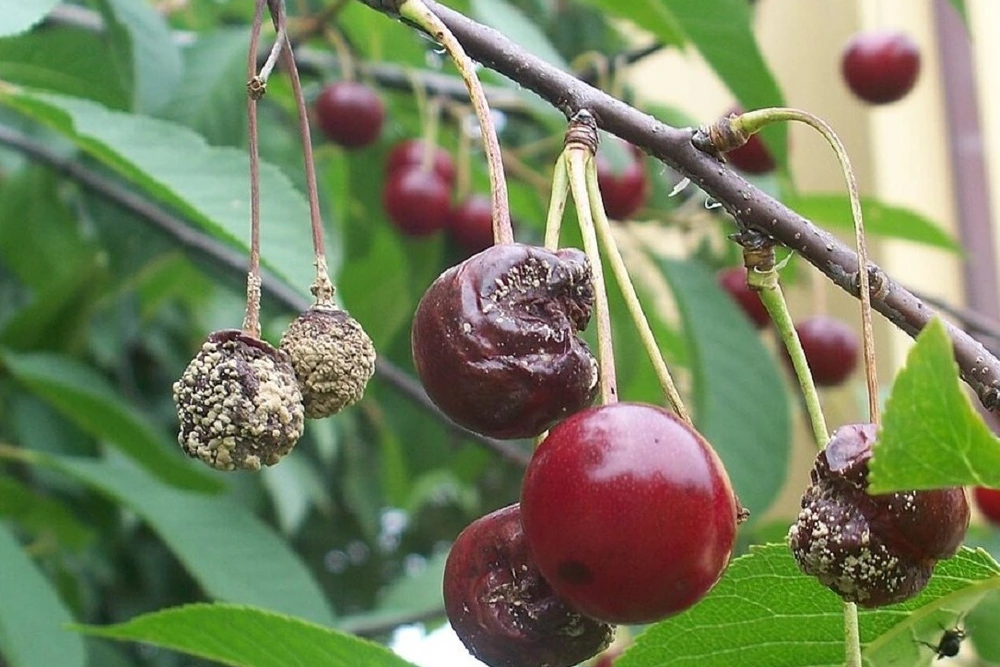
A rapid detection system has established that Botrytis can be far more aggressive than Alternaria on cherry flowers and fruits.
In the final presentation of the project, which developed a rapid detection system in 48 hours (and will be made available to the industry), project leader Marcela Esterio highlighted that at least three Alternaria species never previously reported in cherries in Chile were identified, along with a new species never recorded worldwide in stone fruits.
As a legacy from the table grape sector, rapid disease detection analysis is now becoming a reality in cherry production as well.
The diagnostic technique enables
The diagnostic technique makes it possible to determine in real time – within just 48 hours and simultaneously – the potential level of infection by Botrytis spp. and Alternaria spp. in cherries. The results were presented following a couple of seasons and trials conducted in the country.
The project, named Check Fast Cherry, was supported by the Fundación para la Innovación Agraria (FIA) and the Faculty of Agronomic Sciences of the University of Chile. The symbolic closing ceremony took place on Wednesday, April 15, during which academic and project leader Marcela Esterio presented part of the results achieved and future prospects.
A system designed for the industry
The project, titled “Rapid system for the simultaneous detection of Alternaria spp. and Botrytis spp. in cherry using qPCR-HRM / TaqMan,” also received support from the industry and its associations, including Fedefruta F.G., as well as major companies in the national agricultural sector.
According to Esterio, the goal of the tool – for which a patent is being pursued – is to enable Check Fast Cherry to optimize rot management in cherries, produce healthy, high-quality fruit and, consequently, restore profitability to this key crop for Chile.
This system also makes it possible to promptly and in real time determine the level of fungal pathogen infection, helping the cherry industry make critical decisions, such as the selection of the most effective products to control the predominant fungal population, while also promoting a more sustainable crop management.
More threats than expected
To develop, implement, and validate the Check Fast Cherry technique, the research team began by studying the fungal microbiota of cherry, both during flowering and pre-harvest. This work generated valuable insights into these two fungal genera.
For example, three groups (clades) of Botrytis cinerea were identified. As for Alternaria, surprisingly, more than seven species were detected, including three never previously reported in cherries in Chile and one completely new worldwide for this fruit.
The research also demonstrated that, on cherry flowers and fruits, Botrytis is far more aggressive than Alternaria. However, susceptibility to both pathogens varies depending on the variety, geographical location, and climatic conditions during flowering and pre-harvest.
The preliminary study also revealed another unexpected result: Alternaria does not require wounds to penetrate the fruit.
During the event, Esterio also presented an evaluation of the effectiveness of different fungicide solutions available on the market, with the aim of identifying the most effective combinations for controlling these diseases.
Source: redagricola.com
Image source: Stefano Lugli
Cherry Times - All rights reserved