Curicó, June 22, 2020 – After three years of research aimed at optimizing strategies to tackle climate change and improve the quality and production efficiency of cherry trees in Chile, it has been demonstrated that the use of low-density plastic covers increases fruit size.
The sustainable initiative was supported by the Ministry of Agriculture’s Foundation for Agricultural Innovation (FIA), as it was considered a model capable of providing growers with a technology package that would enable them to stand out and improve their position in terms of production levels and costs. This would have positive effects on the orchard’s overall income and increase its competitiveness in the international market, particularly in Asia.
Results
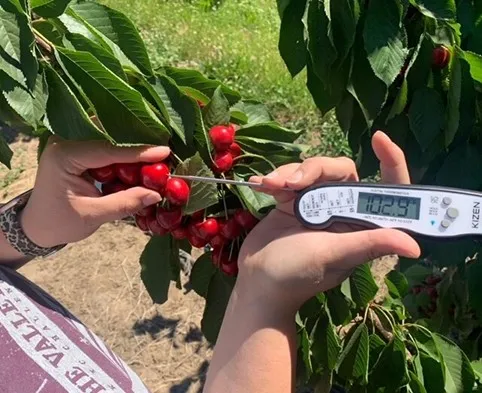
“By using low-density plastic covers in cherry orchards, we observed an increase in fruit weight of between 1 and 1.5 grams, shifting the production curve by at least one size category.
This innovation is very important because, while maintaining the same yields and increasing fruit size, it will allow growers to increase their revenue,” explained Luis Ahumada, project coordinator and director of Research, Development and Innovation at C. Abud & Cía., the company that conducted the research.
The second result, Ahumada added, “was the actual level of protection provided by the plastic covers against adverse weather events such as frost and hailstorms.
The covers act as a form of insurance against these events, which are becoming increasingly frequent as a result of climate change. For example, during the second season of the study, the Graneros area experienced a particularly intense hailstorm.
Crop protection
The production of uncovered trees was severely damaged, with almost all the fruit being lost. By contrast, trees protected by the covers suffered no significant losses, and the harvest was carried out as usual.”
Methodology
To reach this conclusion, three one-hectare experimental plots located in the municipalities of Graneros, Sagrada Familia, and Teno were monitored for three years.
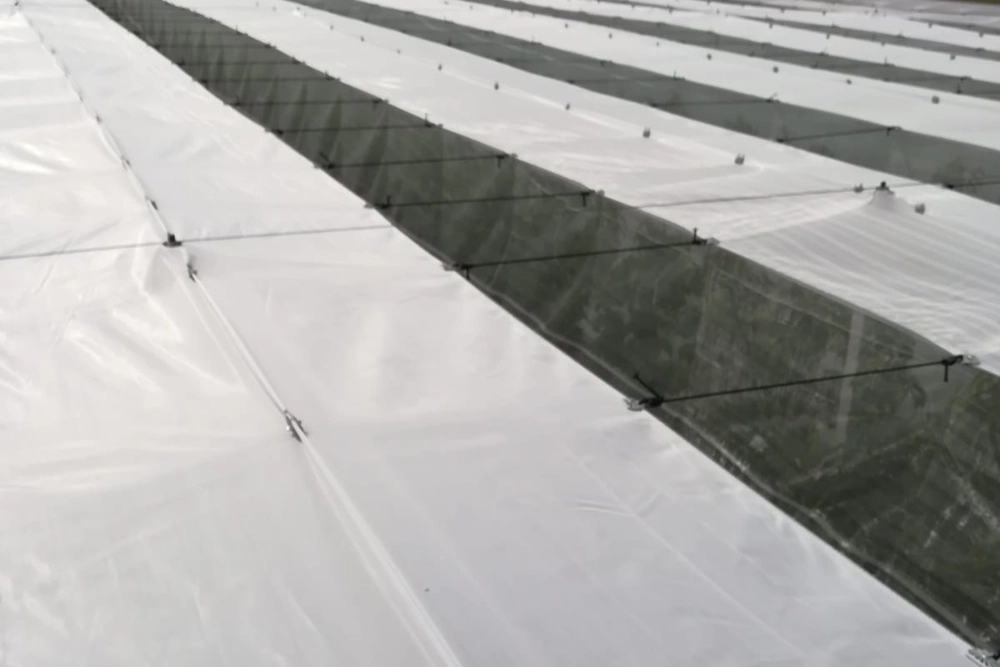
Four treatments were established in each plot: no cover, used as the control; a high-density plastic or raffia cover from August until harvest; a low-density plastic cover from August until harvest; and, finally, the same low-density plastic cover kept in place from August until March.
Each treatment included five replicates, each consisting of 48 trees.
The results were presented during an online seminar attended by more than 200 people. Participants also included FIA Executive Director Álvaro Eyzaguirre; Maule Regional Ministerial Secretary for Agriculture Carolina Torres; and FIA representative for the Maule and O’Higgins regions, Robert Giovanetti.
Chilean exports
FIA Executive Director Álvaro Eyzaguirre shared his views on the use of the technology whose effectiveness had been demonstrated: “As a Foundation, we aim to promote all initiatives that are essential to our industry and the world.
In this regard, there is no doubt that cherry production in our country is extremely important to the agricultural sector. Although the value of Chilean fruit exports fell by 17% during the first quarter of this year—according to data provided by Odepa—cherries were the leading product exported during the period, reaching 145,000 tonnes.”
Likewise, Maule Regional Ministerial Secretary for Agriculture Carolina Torres emphasized the importance of the work conducted by the company with the support of FIA, noting that the results would be extremely useful to all growers in the region and the industry as a whole.
“During the three years in which FIA supported the study conducted by Abud & Cía., we witnessed the strong interest shown by growers at every seminar and demonstration day, as reflected by the high attendance and the many questions received.
Regional growth
According to CIREN’s latest fruit-growing census, cherry trees have overtaken apple trees in Maule, becoming the region’s most important fruit species. This is reflected in the active participation of growers.
Land planted with cherry trees covers more than 17,600 hectares, with the planted area increasing by 57% between 2016 and 2019. This is an industry undergoing significant consolidation and growth, and we believe it is very important for FIA to support entrepreneurs in addressing the issues that could prevent them from achieving the highest possible level of competitiveness.
Furthermore, together with FIA Maule regional coordinator Robert Giovanetti, we always emphasize that these initiatives must be replicable so that many growers can benefit from the results achieved. The project will therefore have a significant impact on the region and the entire industry,” Torres said.
The FIA regional representative, meanwhile, highlighted the importance of innovation in solving the industry’s problems. “This project has achieved very positive results, not only in terms of protecting crops from damaging events caused by climate change.
Economic sustainability
The improvement in fruit quality also generates higher revenue for growers, making cherry cultivation even more economically sustainable. Initiatives such as the one developed by Abud & Cía. allow us to demonstrate that, through innovation, we can address every challenge facing the agricultural sector,” said Robert Giovanetti.
Addressing the issue
The innovation supported by FIA sought to address a long-standing problem in Chilean agriculture: the use of raffia covers to prevent production losses caused by highly variable weather events can reduce fruit quality, decreasing firmness and consequently causing the fruit to soften.
This negative effect was also observed in fruit protected by low-density plastic covers. However, proper orchard management under these conditions can mitigate this decline.
Outlook
As Ahumada explained, the research also confirmed that the investment required to install plastic covers in cherry orchards is more than offset by the increase in the size of the harvested fruit.
“Under the real-world conditions of our country, this innovation demonstrates that the use of this technology in cherry orchards is sustainable. We had already tested low-density plastic to control a kiwifruit disease, PSA, but we did not yet have a clear answer regarding cherry trees.
We now have that answer, and it is positive,” Ahumada concluded.
Source: minagri.gob.cl
Image source: Stefano Lugli
Cherry Times - All rights reserved