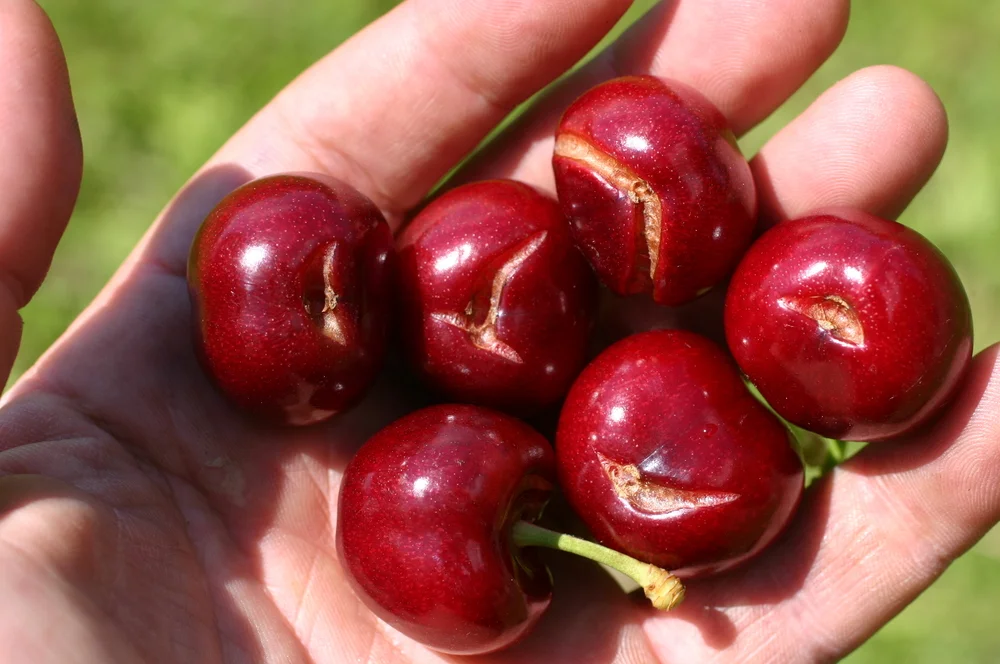
The Sterile Insect Technique (SIT) is a project currently under development in Chile, led by the Fruit Development Foundation, with an initial focus on cherries.
The goal is to launch pilot releases next season.
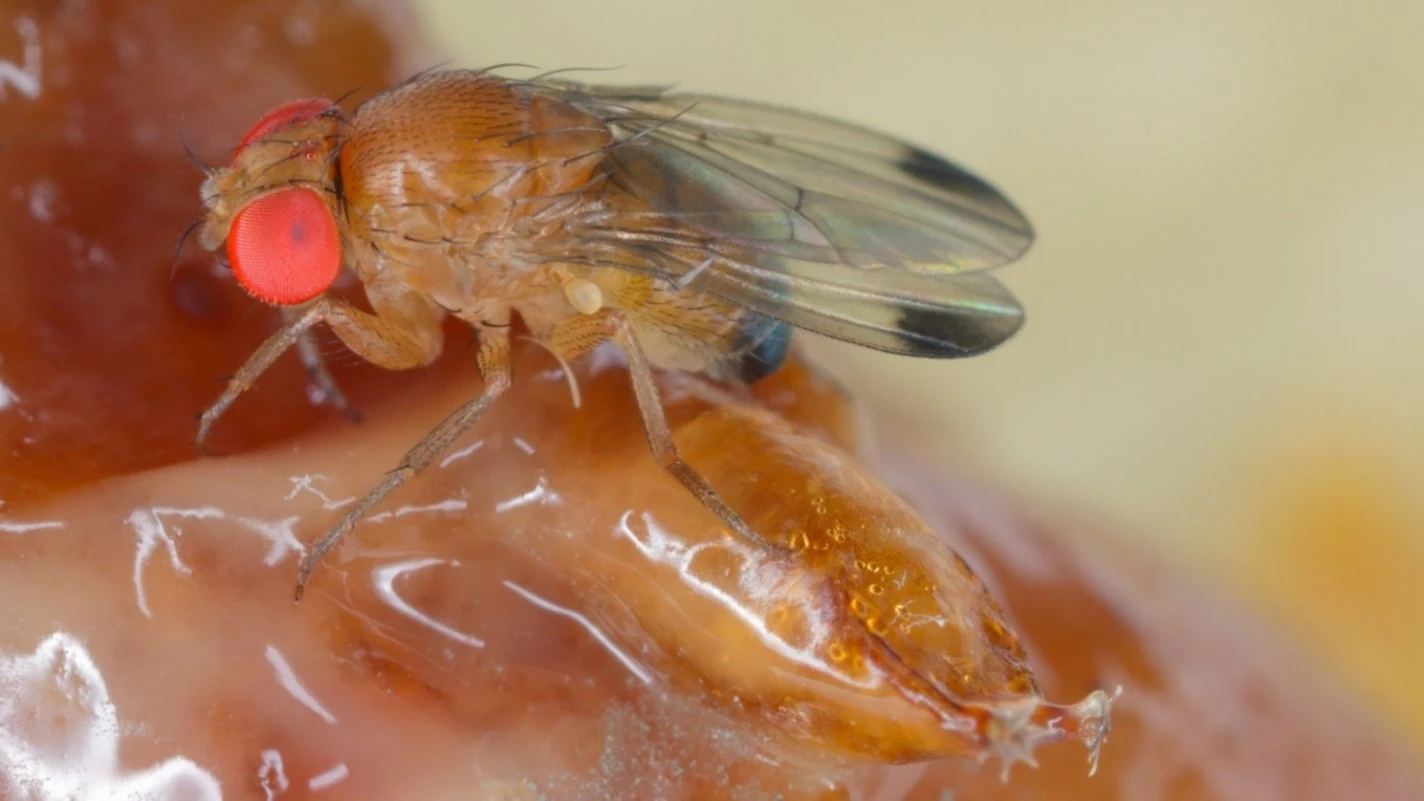 Image 1. Drosophila suzukii
Chilean fruit growing
Chilean fruit growing is constantly exposed to various phytosanitary issues that affect both quality and growing conditions across different crops.
This is the case of Drosophila suzukii, a pest that specifically targets cherries and berries, attacking healthy fruit before harvest and reproducing very rapidly under favorable temperature (15–25 °C) and humidity (60–75%) conditions.
This situation has prompted growers to adopt integrated monitoring and management proactively, avoiding intervention only when damage is already present.
Therefore, in response to increasing pest pressure, reduced availability of chemical tools, and the risk of resistance development, the Fruit Development Foundation (FDF) is studying the Sterile Insect Technique (SIT) with the aim of implementing it based on the results obtained.
This tool enables a preventive and long-term approach to pest control.
 Image 2. Carolina Yáñez Briceño
According to Carolina Yáñez, researcher at the FDF Quarantine Entomology Area, SIT “consists of mass-rearing the pest in the laboratory to sterilize the males and then releasing them in large numbers in the field.
In this way, when these sterile males mate with wild females, they produce no offspring and, over time, the population declines.”
Currently, the project is under development and initially focused on cherries due to their high susceptibility to this pest, whose damage has direct consequences on exports.
Regarding future plans, the expert notes that the objective is to launch pilot campaigns next season.
This will provide growers with an additional tool complementing current management practices: chemical control, cultural control, monitoring, and predictive models.
What have been so far the main technical advances achieved in implementing SIT?
Progress
We have made progress on several key fronts, such as adapting the mass-rearing system in collaboration with ISCAMEN; developing quality control protocols to ensure insects are competitive and behave like wild flies; and coordinating and training key stakeholders in preparation for the operational phase.
It is important to emphasize that this is an eco-friendly technique that reduces waste generated by pest control products. In other words, it is harmless to people and the environment.
Specific advantages
What specific advantages can it bring to farmers?
There are very direct benefits, including, first of all, reduced pest pressure and decreased product use, which translates into less waste.
A key point is that it strengthens Chile’s image as an exporter that uses modern and sustainable tools.
How does Chile position itself compared to other countries in the region in applying SIT?
Chile is in an advanced position because it has chosen not to improvise, but to build the program on scientific foundations, international partnerships, and a long-term vision.
This allows us to reduce risks and accelerate learning. Furthermore, the goal is to promote sustainable fruit growing, and these techniques contribute to that objective.
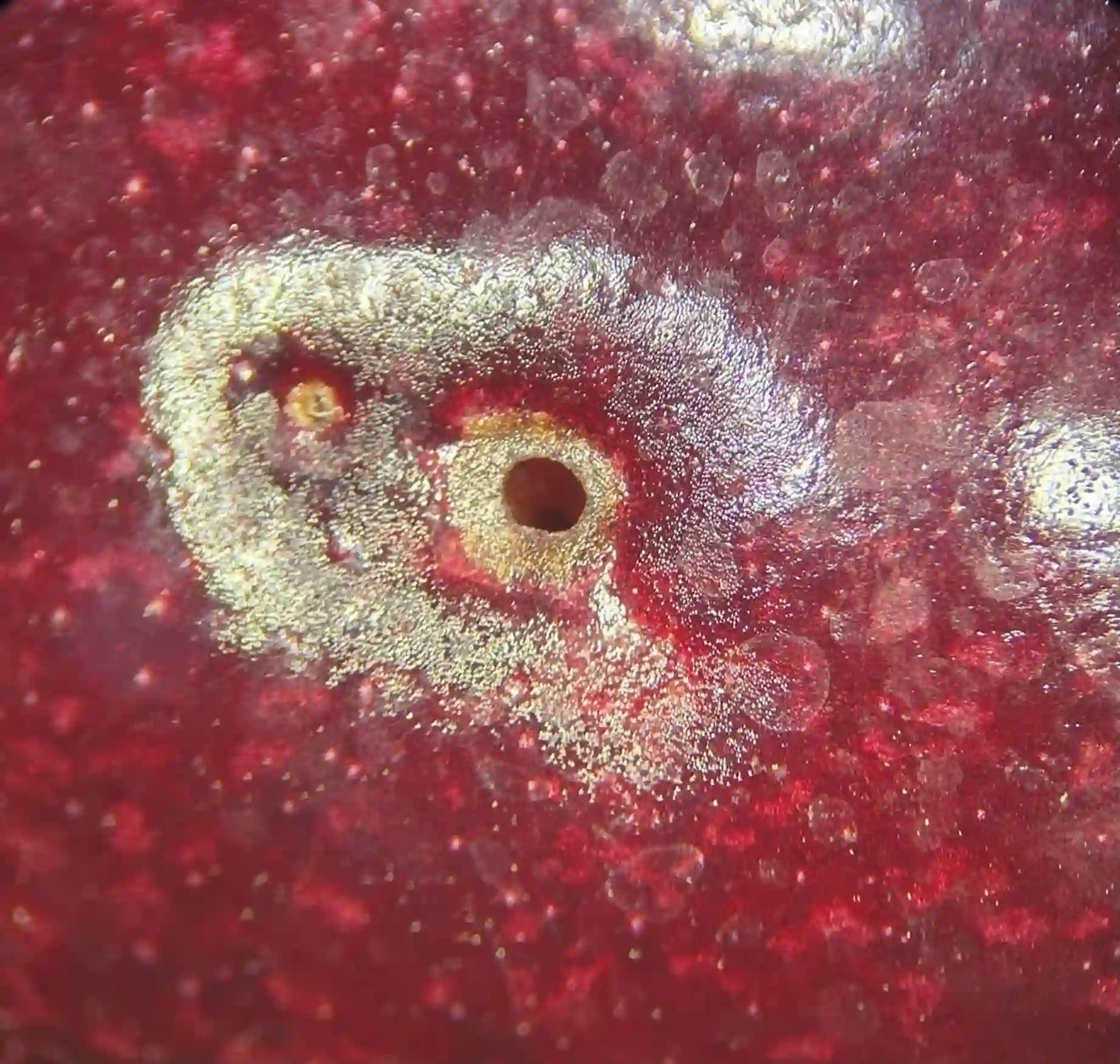
The cherry is one of the crops most sensitive to this pest, with direct consequences on exports. Collaborative work is fundamental throughout the entire process.
We are developing it in a coordinated manner, working closely with Frutas de Chile, the Agricultural and Livestock Service (SAG), the Cherry Committee, and growers themselves to ensure it is a technically sound tool, validated at the regulatory level, and truly useful for the sector.
Regarding international collaboration, FAO/IAEA bring decades of global experience in SIT, while ISCAMEN operates a biological facility and has experience in concrete programs.
All this allows us to access validated knowledge rather than starting from scratch.
How does Chile ensure that sterile insects are of good quality and safe before release?
Quality controls
Through quality controls before, during, and after the process, it is verified that sterilization is effective and that the insects can fly, remain active, and be competitive.
Strict biosecurity and traceability protocols are applied.
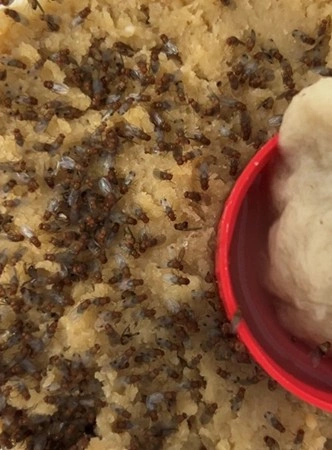 Image 4. Adults mating on diet
How does SIT integrate with other Integrated Pest Management (IPM) strategies?
SIT does not replace integrated pest management; rather, it strengthens it.
It represents a powerful additional IPM tool to reduce populations over time.
It works best when combined with proper monitoring, adequate crop management, traps, and targeted applications when necessary.
What challenges remain and what is the next step?
The goal is for SIT to move beyond promise and become an operational, measurable, and useful tool for growers.
To achieve this, it must be extended to as many producers as possible, ensure sustainable funding, and receive greater support from the public, private, and scientific sectors.
Finally, it is necessary to further refine the technique’s specific processes.
Source: Mundoagro, Special phytosanitary issues, 2026
Image source: Mundoagro
Opening image source: Le Matin
Cherry Times - All rights reserved