In the debate on biodynamic farming, often divided between agronomic convictions and more cultural interpretations, direct field experience can offer a different perspective. This is the case of Massimo Biondi, a fruit grower from Cesena and Apofruit member, who on the first hills of Cesena has built a production model based on soil fertility, biodiversity and attention to the microbiota.
His farm was visited as part of InsideSAF 2026, the Spettacoli alla Frutta symposium held in recent days in Cesenatico. It was an opportunity to observe closely how the biodynamic method can be translated into concrete practices, especially in the management of a modern cherry orchard.
A Sweet cherry orchard on Gisela 6
Biondi manages about 30 hectares of orchard entirely under biodynamic farming, with crops representative of the Romagna area: peaches, nectarines, plums, persimmons, pears and cherries.
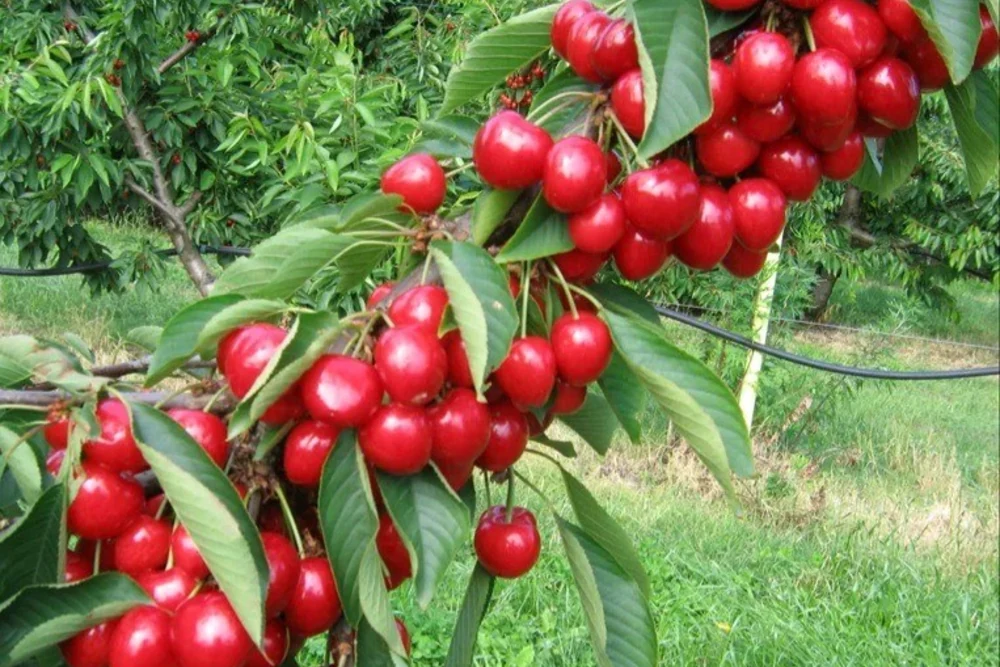
The visit focused on a cherry orchard of almost one hectare, in its fifth leaf, made up of several varieties of the Sweet series, including Aryana, Lorenz and Saretta. The trees are grafted onto Gisela 6 and protected by single-row rain and hail nets.
According to Biondi, the investment required was significant, but the results are confirming the validity of the choice. The production target is between 80 and 100 quintals per hectare and, so far, the profitability of the orchard has met expectations.
From organic to biodynamic
The path of the Romagna farmer stems from a non-linear personal story. After graduating as an agricultural technician and gaining experience as a firefighter, Biondi returned to the farm to work alongside his father.
The conversion to organic farming came immediately, at the end of the 1990s, at a stage when the sector was beginning to grow, also thanks to the role of Almaverde Bio. Over time, the farm tripled its surface area, up to the decision to adopt biodynamic farming.
What guided this evolution was above all an interest in the soil. For Biondi, in fact, fertility management cannot be limited to the input of organic fertilizers from outside, but must aim to build a more living soil, capable of supporting the plant in a balanced way.
Green manure, microbiota and organic matter
The heart of the method is work on the soil. The goal is to increase organic matter and, at the same time, stimulate the microbiota, that is, the combination of microflora and microfauna that contributes to the vitality of the soil.
This is where the constant attention to green manure comes from: choice of species, management of cover crops, lodging with tools such as the roller crimper and soil aeration with dedicated equipment.
The results, according to the farmer, are also evident in the numbers. The organic matter content has risen from 0.9% to almost 3%. An increase that is reflected in soil structure, root activity, overall fertility and the ability to manage water.
For Biondi, this condition allows young plants to get off to a better start right from transplanting, with more vigorous development than orchards managed with conventional systems.
Biodiversity as an ally of the orchard
In the model adopted by the farm, biodiversity is not an accessory element, but an agronomic component. The presence of a richer ecosystem contributes to the management of insect pests and improves the soil’s ability to fix and make nutrients available.
In Biondi’s account, the concept of living humus often returns. In biodynamic farming, this balance is also supported through horn manure, a phytohormonal preparation obtained by placing manure in bovine horns and leaving it to mature in the soil.
The farmer explains that the interaction with keratin, over the course of the months, generates a humus of particular quality, which is then diluted in water and distributed on the soil.
The challenge of fungal pathogens
The management of fungal diseases remains one of the most delicate aspects, especially in years marked by extreme weather events. Biondi emphasizes that the use of permitted plant protection products remains necessary, but must be included in a broader strategy, capable of considering plant, soil and environment together.
It is precisely this systemic approach that makes the experience interesting: not simple adherence to a method, but a technical path built on observation, field trials and agronomic knowledge.
A look beyond prejudices
Biodynamic farming continues to arouse different opinions, especially among those with a traditional agricultural background. However, experiences such as that of Massimo Biondi show that, when the method is applied with competence, rigor and ability to read the soil, it can offer concrete insights for the fruit growing of the future.
In the case of the cherry tree, a high-value crop but one increasingly exposed to climatic and plant health risks, the construction of fertility and resilience starts from what often remains invisible: the soil. And it is precisely there, beneath the surface, that a decisive part of production sustainability is played out.
Text and image source: www.italiafruit.net
Cherry Times - All rights reserved