After a record season in terms of volumes, the Chilean cherry sector is focusing on faster transit times, shipping punctuality and the cold chain.
Logistics is once again at the centre of the debate for the Chilean cherry industry. After a 2025-2026 season marked by high export volumes but economic returns below expectations, the sector is paying increasing attention to transit times to China, a market that absorbs more than 90% of Chile’s cherry shipments.
The issue was addressed during the seventh edition of the Global Cherry Summit, organised by Frutas de Chile at the Centro de Conferencias Monticello, south of Santiago. In a context of strong pressure on margins, the efficiency of the logistics chain is becoming a decisive lever for preserving quality, competitiveness and product value on arrival.
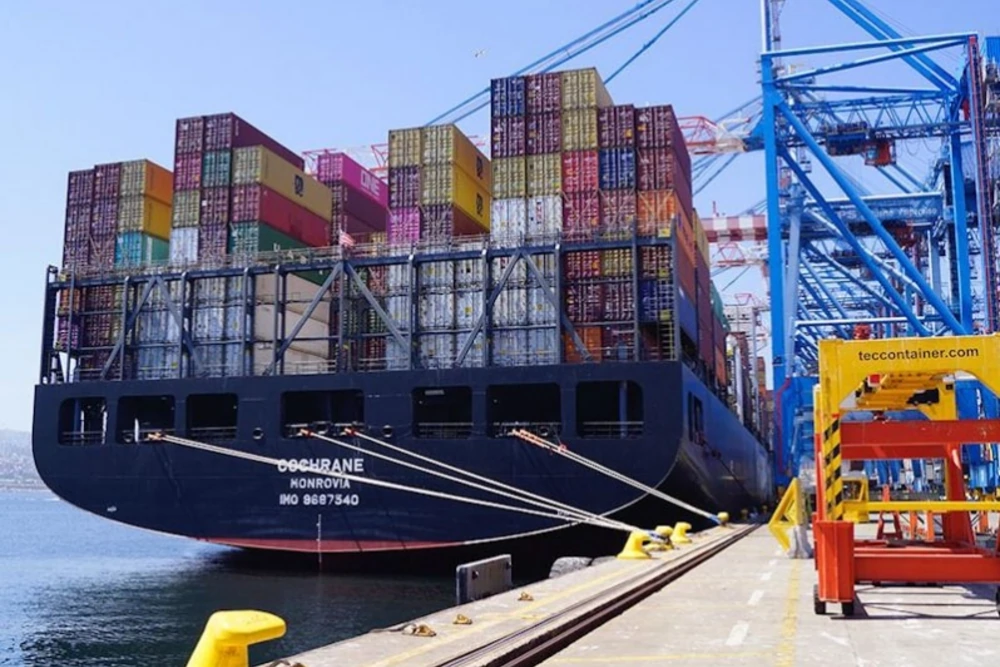
Travel time becomes a competitive factor
Iván Marambio, president of Frutas de Chile, drew attention to the distance between Chile and China, an element that makes every day of travel decisive for the final quality of cherries. “We need to improve every day, apply technology and shorten the number of days it takes us to reach the final consumer,” he said.
According to Marambio, even a minimal reduction in transit times can have important effects: “Even if it is half a day that we can take off this long journey… it is an infinite gain”.
For the sector, therefore, the issue is not only arriving earlier, but also ensuring greater reliability in promised delivery times and operational continuity along the entire route.
Ports and Cherry Express under scrutiny
During the summit, the performance of the port system and of the dedicated maritime services for cherries was also assessed. Marambio acknowledged the contribution of port terminals, stressing that “they have played a fundamental role… they have provided us with a top-quality service”, while also highlighting the need to keep improving.
A positive assessment was also given to the shipping offer, particularly the “Cherry Express” services, which were considered satisfactory during the latest campaign. “I have the impression that the shipping offer… was good,” he stated.
However, strict compliance with the announced transit times remains central: “If the Cherry Express is going to take 23 days, we need it to be 23 days”.
Cold chain: no alarm, but room for improvement
Another crucial issue concerns the cold chain, especially in container transport. Marambio clarified that no serious problems had emerged, but that some imperfections need to be corrected to ensure the product arrives in China in the best possible condition.
Temperature control is among the industry’s strategic priorities, together with quality, phytosanitary aspects, logistics, reputation and promotion.
High volumes and demand to be rebalanced
In the 2025-2026 season, Chile exported more than 445,000 tonnes of cherries, generating returns of US$3.575 billion (around €3.289 billion). The product thus confirms its position as Chile’s leading fruit export in terms of value.
However, the increase in supply has put pressure on the relationship with demand. “We come from two very challenging years, with quite a few problems, in which we have been hit because we have not had the returns we expected to have,” Marambio observed.
More moderate growth in the coming years
Forecasts now point to more controlled expansion. For the 2026-2027 season, exports are estimated at between 132 and 133 million boxes, with a possible stabilisation at around 140 million by 2028-2029.
“It is a number we can manage… the industry is not expected to reach 200 million boxes, as was previously suggested,” Marambio explained, stressing that consumption has not grown at the same pace as production.
The challenge, therefore, will not only be to produce more, but to arrive better, with greater precision and with logistics standards capable of supporting the positioning of Chilean cherries on the Chinese market. “We are ambitious… the logistics chain must also be challenged and must rise to what Chile requires,” Marambio concluded.
Source: logistica360chile.cl
Image source: Mundo Maritimo
Cherry Times - All rights reserved